Serving Menomonee Falls, WI & nearby
(262) 216-2782
Menomonee Falls, WI

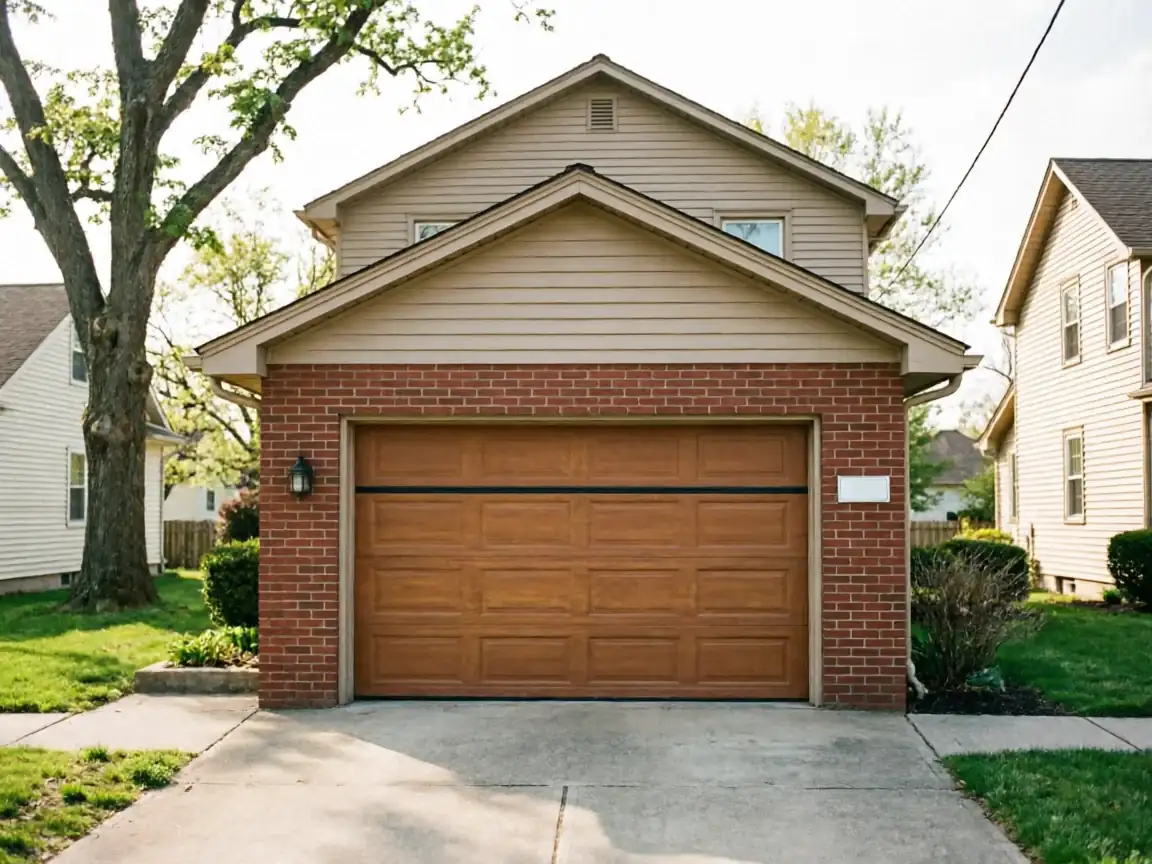
Attached or Detached: Why It Matters for Your Garage Door Here

How Menomonee Falls' 1960s-70s housing stock and cold winters change what detached and attached garage doors need, and what a repair or swap actually costs here.

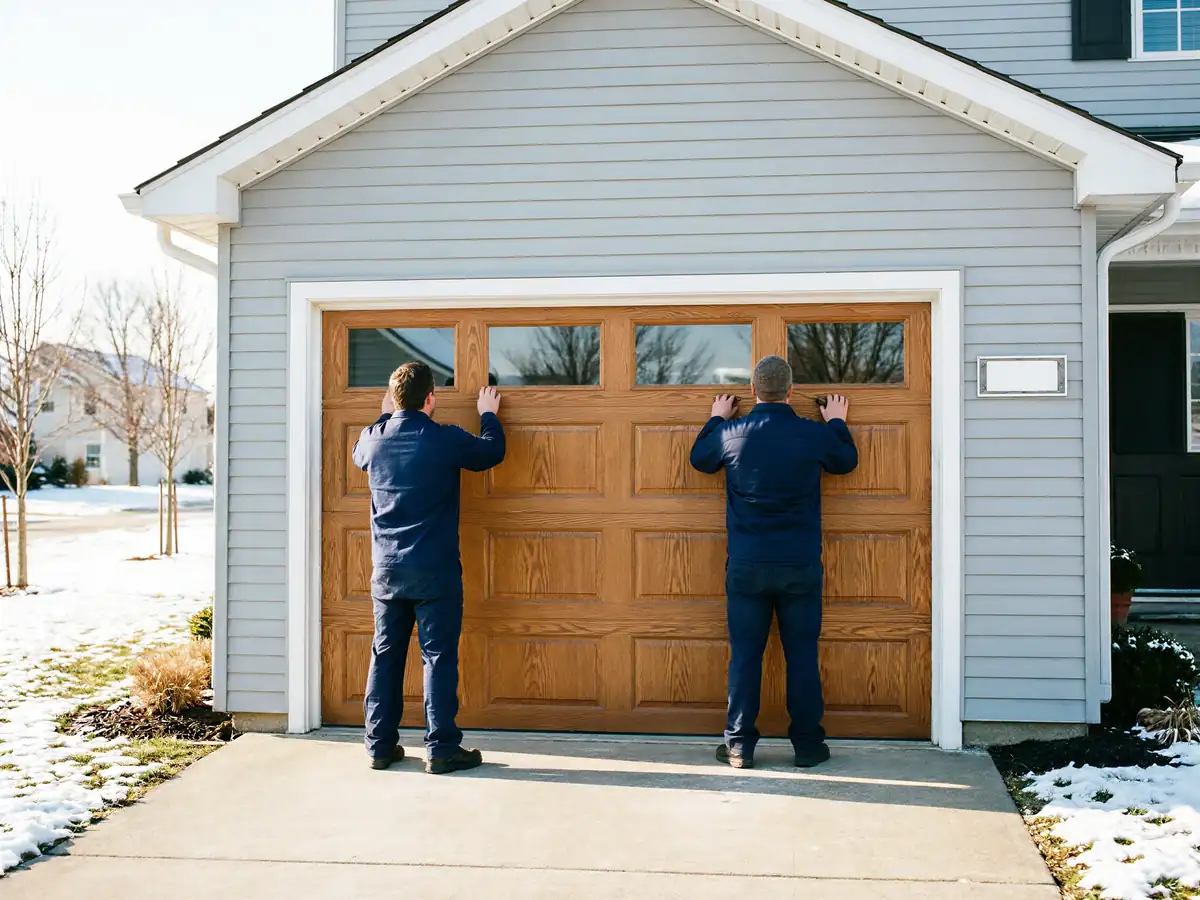
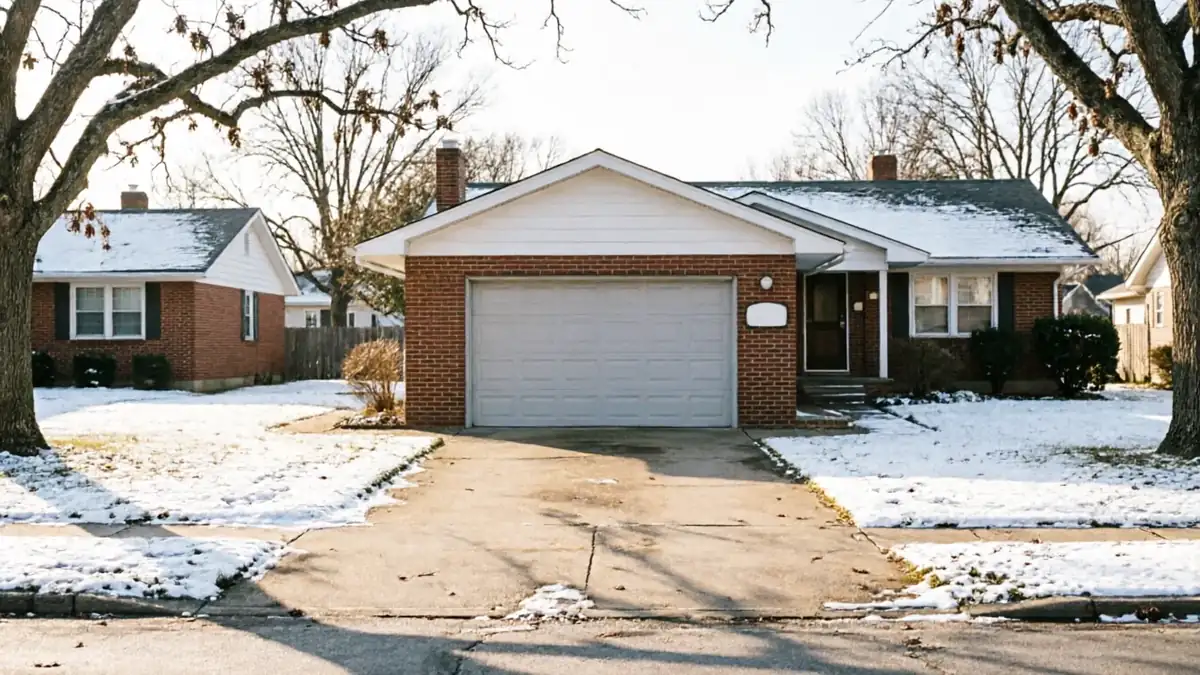
A brick house with a white garage door and a snowy lawn.

The Cost of This Job

We don't post a flat number here because the two jobs aren't the same job. A detached garage built the same era as most of this town's housing - 1938 to 2000, with the bulk going up in the 1960s and '70s - usually has a single door, a short track run, and an opener mounted on exposed joists with no drywall in the way. That's a straightforward swap. An attached garage door, by contrast, often shares a wall with a finished room, which means insulation matters more, noise matters more, and sometimes the header above the opening isn't built for a heavier insulated panel without reinforcement. We price the job after we see the opening, not before, because a detached garage from this era can run cheaper simply because there's nothing to protect behind it. Household income across the area sits around $104,337, and most owners we talk to want the door that fits the garage they actually have, not the most expensive option. One honest limit: if your detached garage's framing has shifted with age, a new door won't fix that - you're looking at carpentry first.

What Is Going On

Menomonee Falls homes mostly date to the 1960s and '70s, and that build era shows up differently depending on whether the garage is attached or stands alone. Detached garages from this period were often framed light, since they weren't heated and nobody expected them to hold a modern insulated door. Attached garages from the same years were tied into the house's structure, which means the door opening is more likely to have settled evenly with the foundation - but it also means any gap at the bottom lets cold air straight into a shared wall. We see this split constantly: a detached garage with a sagging track from decades of thermal movement, next door to an attached garage with a door that's fine but a bottom seal that's given up. Neither problem is dramatic on its own. Both get worse because the structures they're mounted to are now 50 to 85 years old, built to a standard nobody was writing with a modern insulated door in mind.

What the Weather Here Does to It

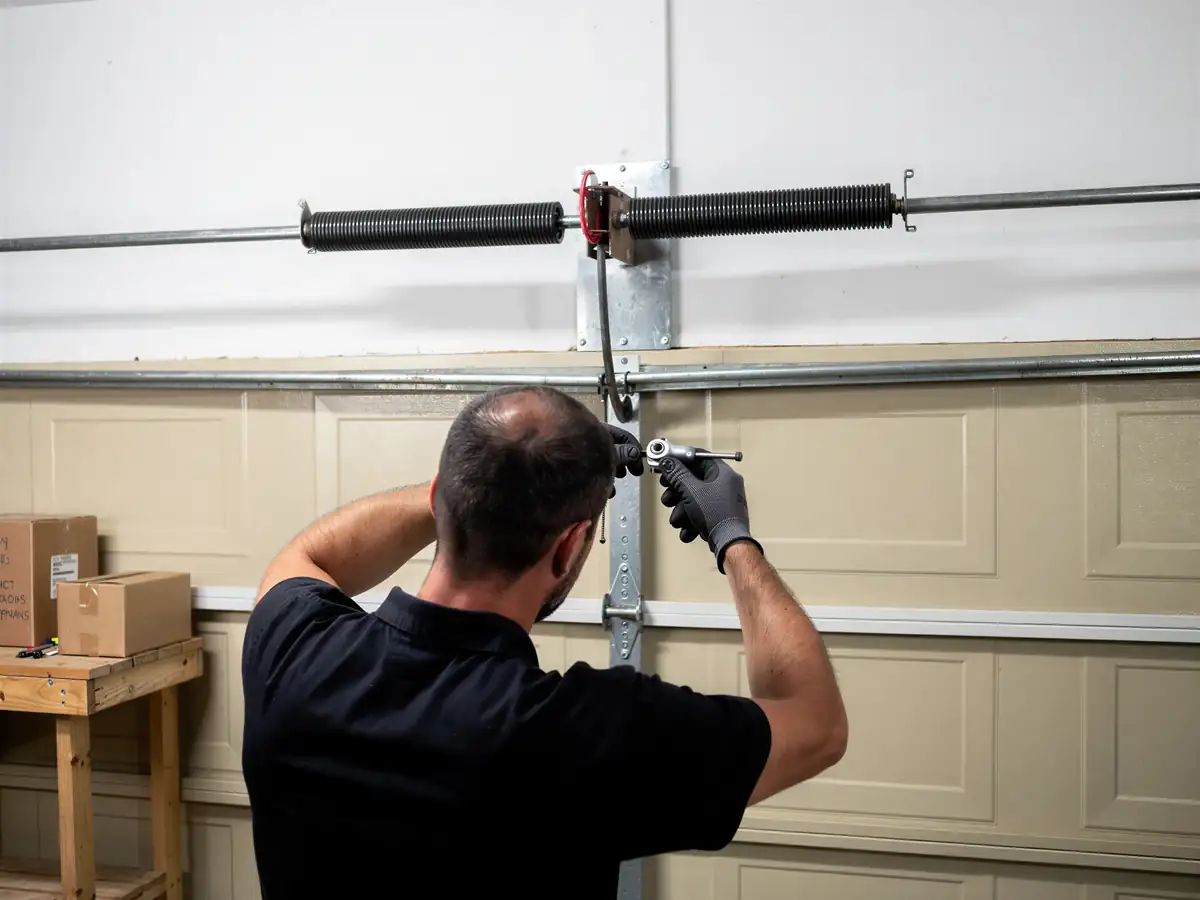
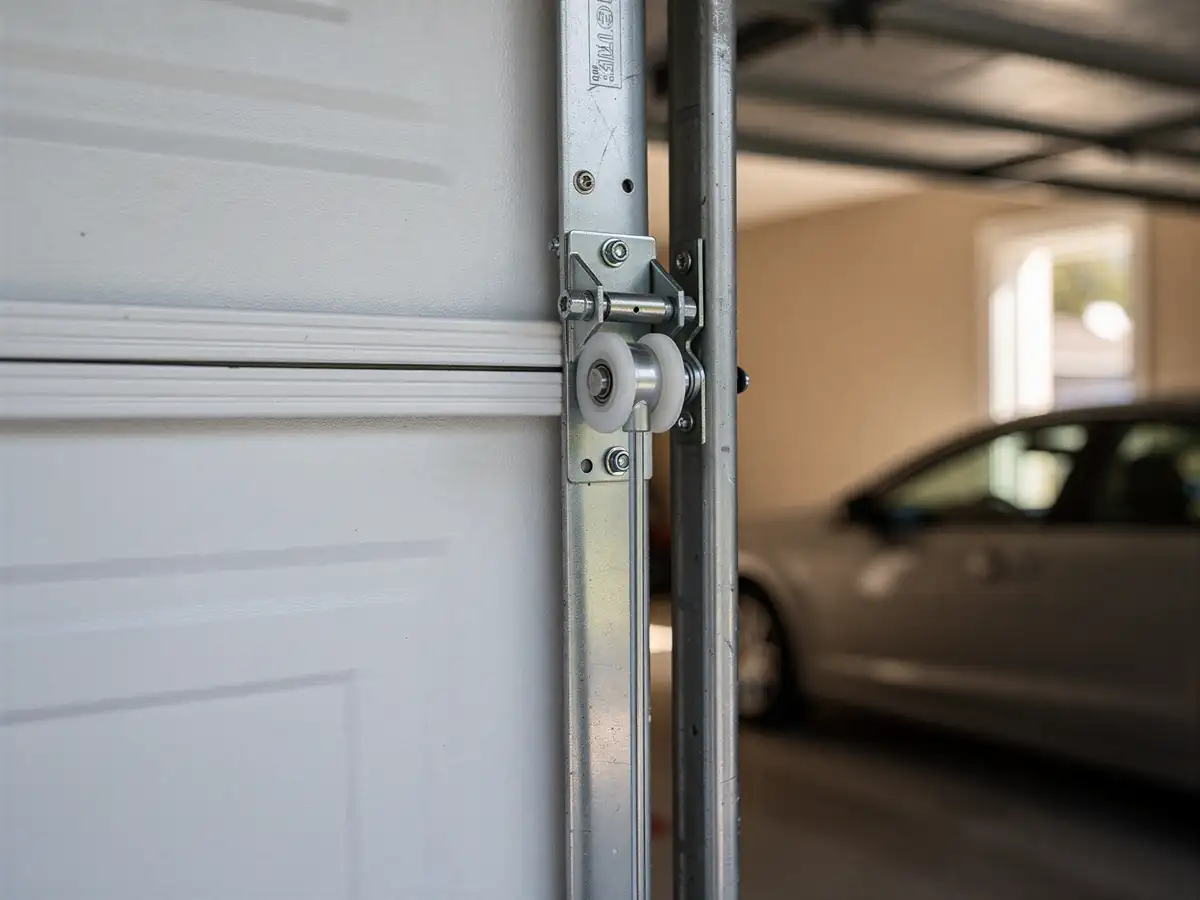
This is a severe cold climate, and the detached-versus-attached difference changes how that cold does damage. A detached garage has no heat source at all, so metal contracts hard every winter - tracks tighten, torsion springs lose a little tension faster, and panel seams that were fine in August can gap by January. An attached garage usually gets some residual heat through the shared wall, which softens that cycle but doesn't eliminate it. What it does instead is create condensation at the door itself, where warm air inside meets a cold steel panel, and that moisture finds every weak weld and rust spot over a winter or two. Either way, the failure mode is the same part doing the dying: springs and rollers taking the brunt of repeated contraction, just on different schedules depending on which side of the wall the cold is working from.
The Seasonal Bit

The hardest stretch for both garage types is the same window: first hard freeze through the worst of January. For a detached garage, that's when a spring that's been losing tension all fall finally snaps, usually on the coldest morning you own, because cold steel is brittle steel. For an attached garage, that's when the condensation that built up through early winter turns to frost on the bottom seal and the door won't seat right, or worse, freezes to the slab. Neither is predictable to the week, but both are predictable to the season - and in a town where most garages are 50-plus years old, we'd rather get a call in November about a noisy opener than one in January about a door that won't move at all.

How it works

From “it’s stuck” to “it’s fixed”

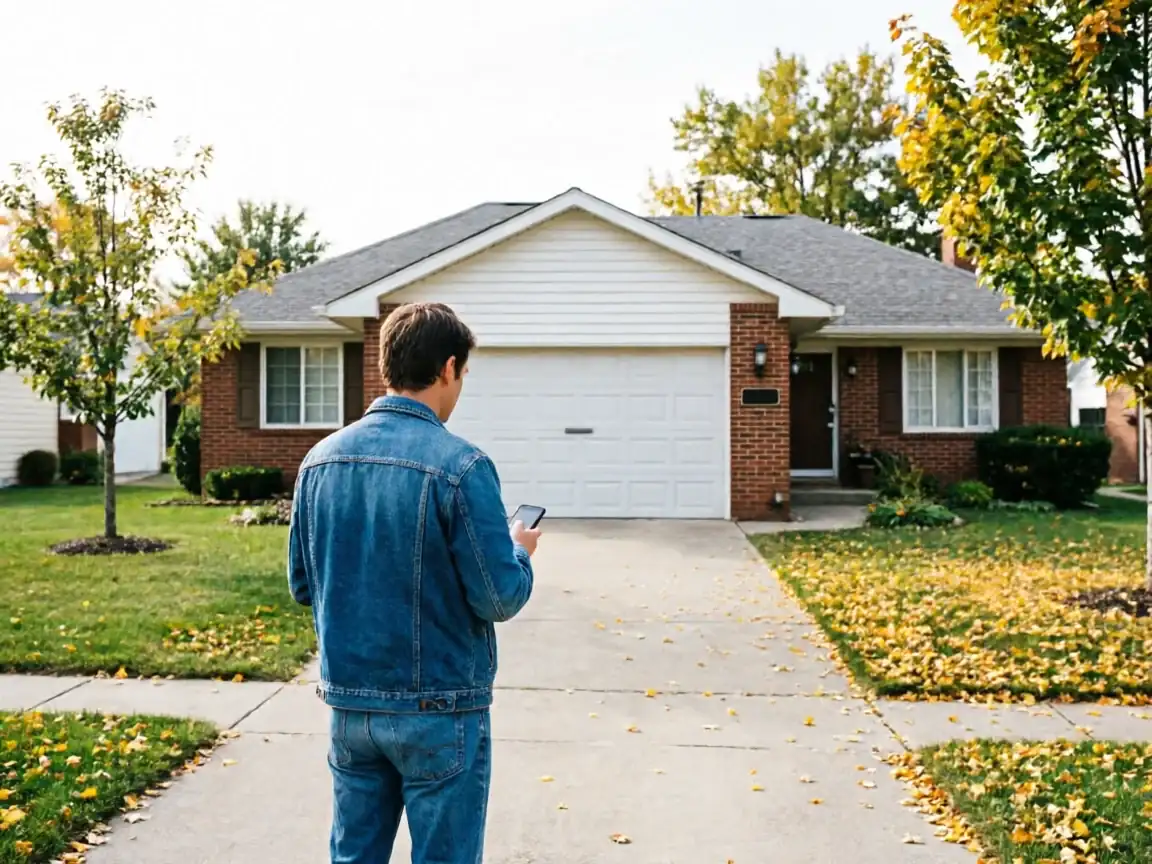
A man in a denim jacket stands in a driveway looking at his phone.

Tell us what’s wrong

Describe the symptom - won’t open, loud bang, opener runs but the door won’t move.

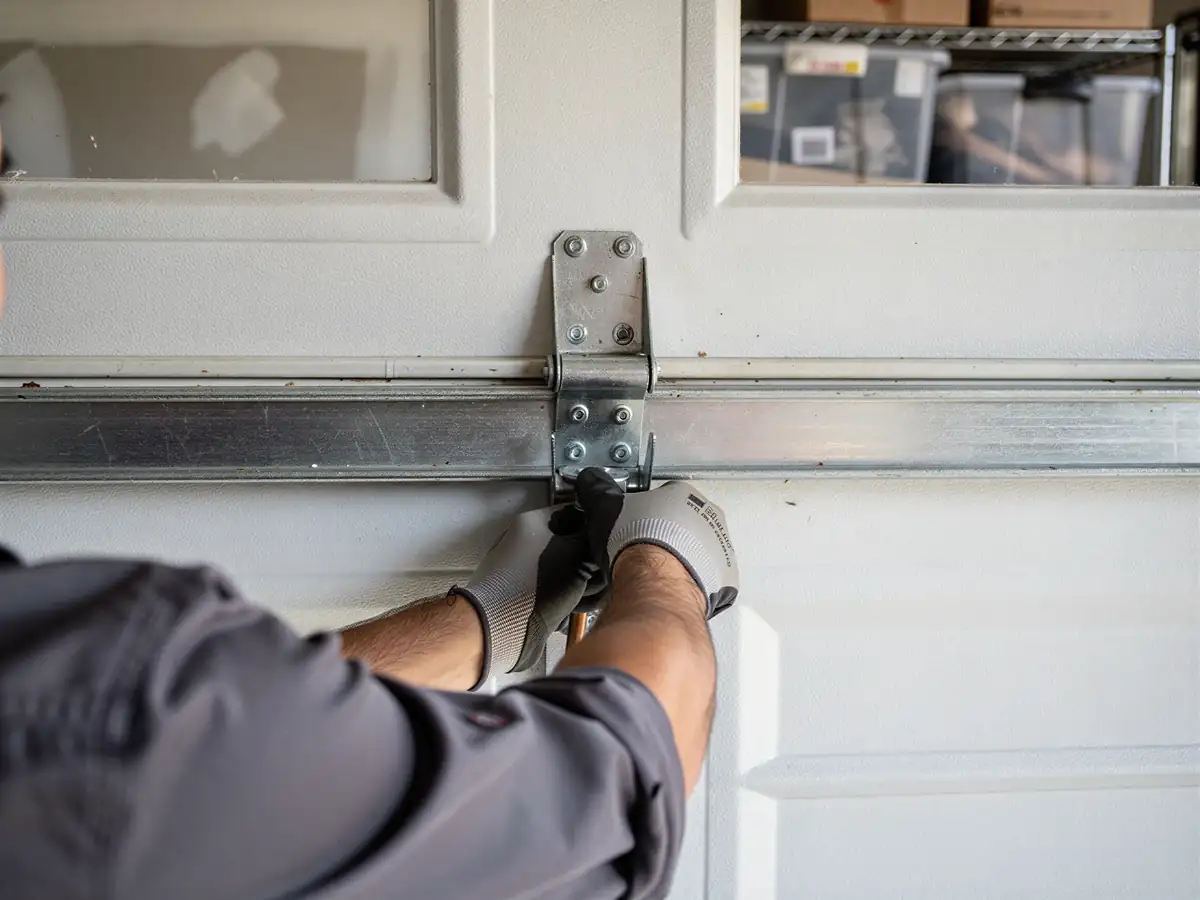
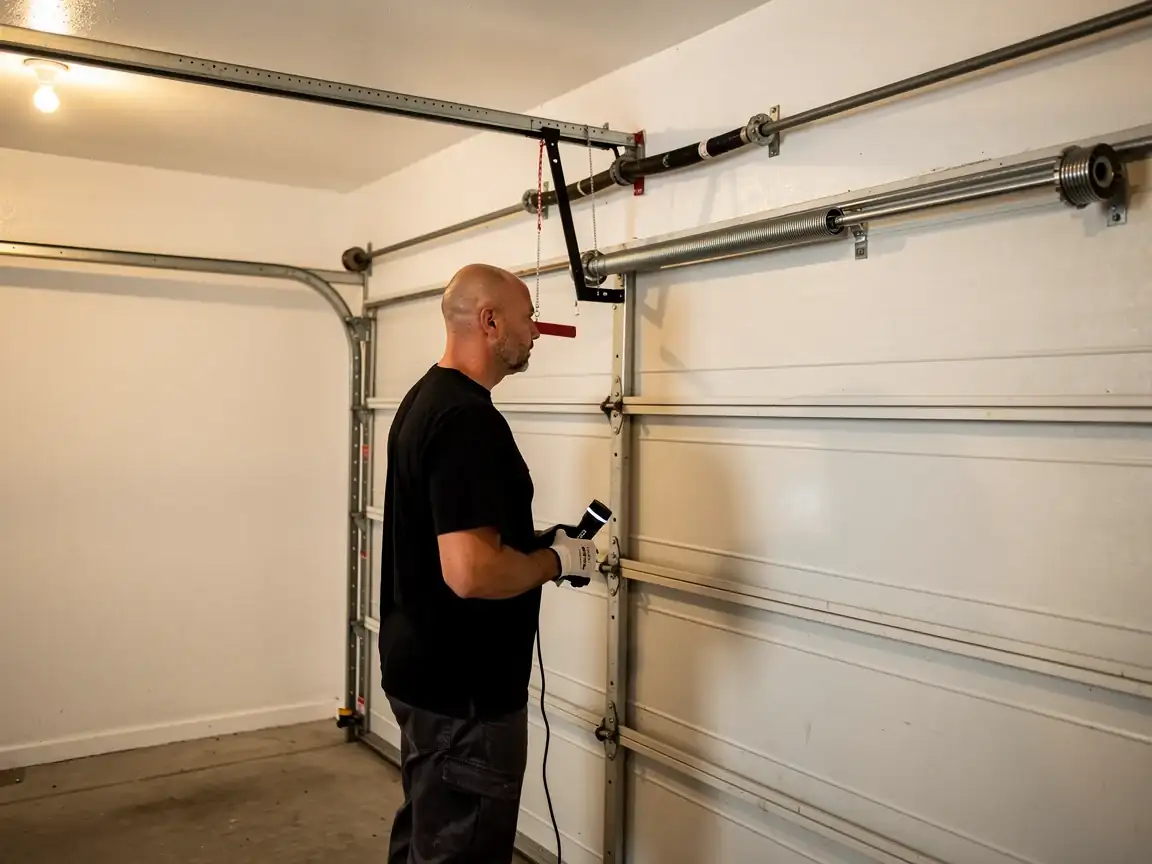
A technician works on a white garage door with visible springs and tracks.

On-site diagnosis

A technician tests the door under power and by hand and finds what actually failed.

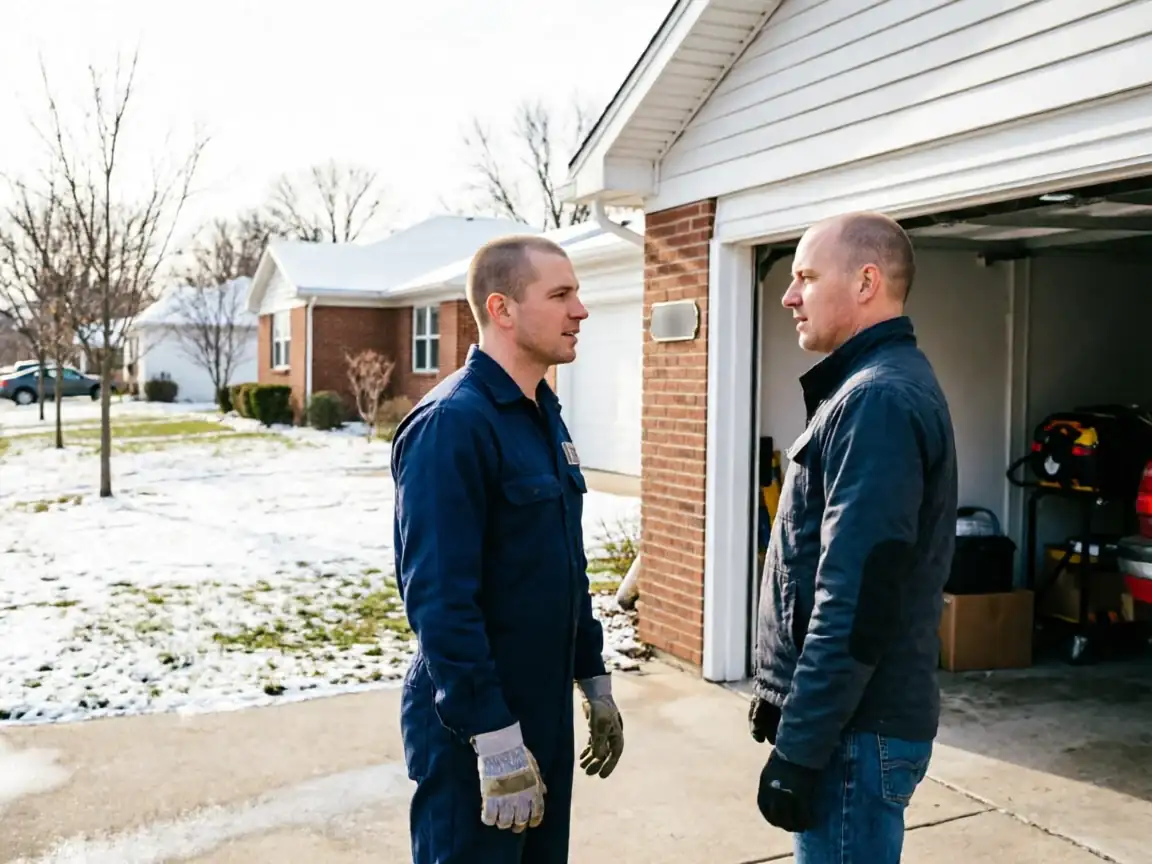
A technician in a blue jumpsuit talks to a man in front of a garage.

Clear, up-front plan

You get the fix that’s needed and what drives the cost - before any work starts.

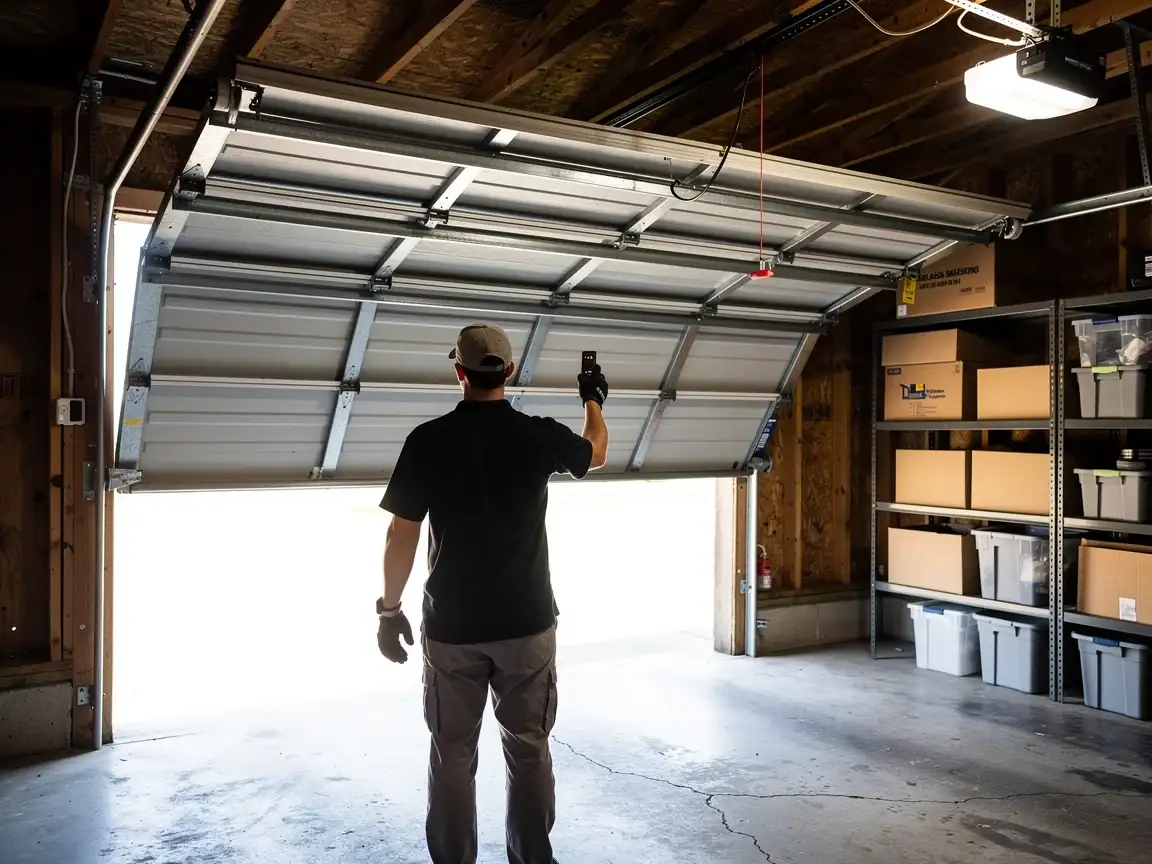
A technician operates a partially open garage door with a remote control.

Repaired & tested

The repair is done, the door is set true and tested, and the work area left clean.

Not sure which repair your door needs in Menomonee Falls, WI? Describe what it’s doing - every job starts with a diagnosis.

How we work

What to expect

A straight, honest approach on every Menomonee Falls job - diagnosis first, the right parts, and clean work.

01

Diagnosis first

Every visit starts by finding what actually failed - not a pre-written parts list.

02

The right part for the door

Springs and openers matched to the door’s weight and age, so the fix holds up.

03

Straight answers

When a repair makes more sense than a replacement - or the reverse - you hear it plainly.

04

Clean, careful work

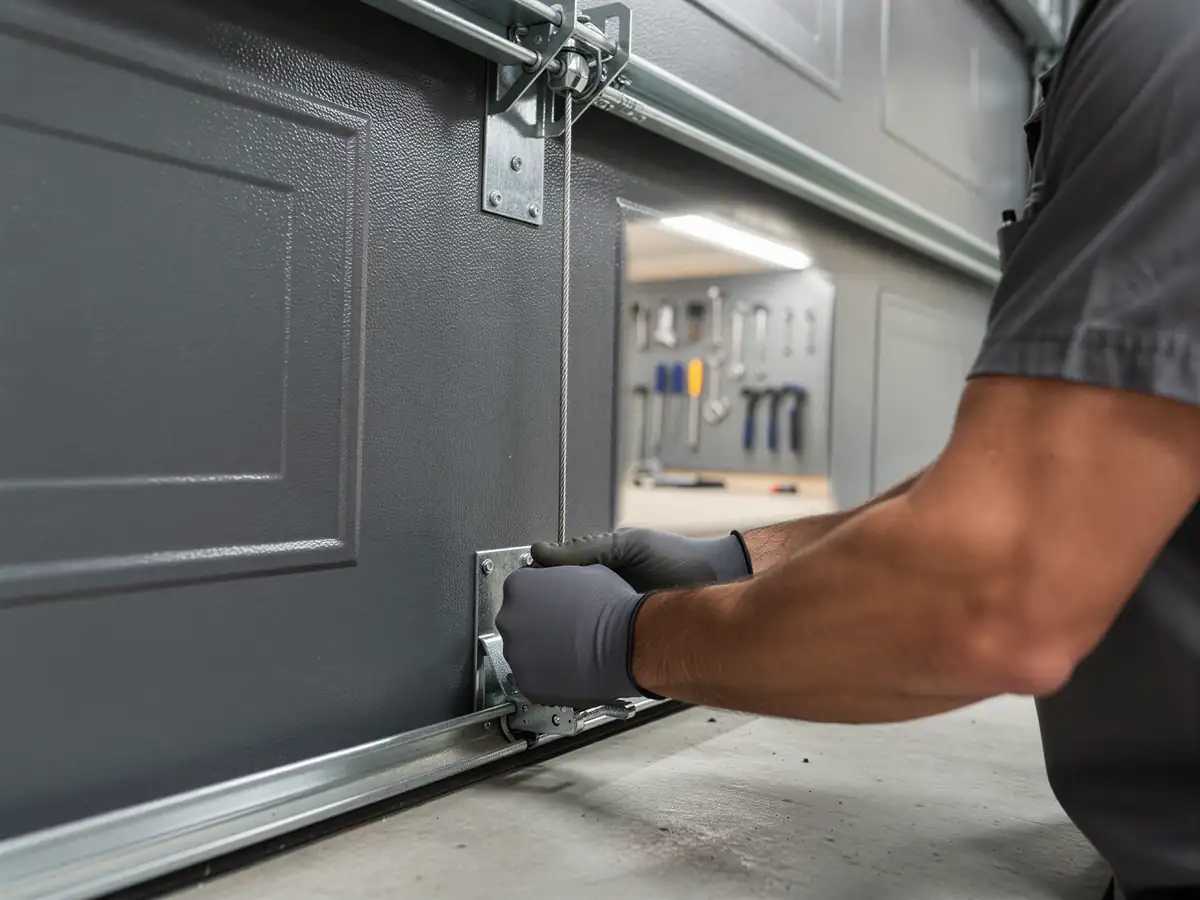
Tension released safely, hardware set true, the door tested under power before we leave.

What we do

Garage Door Services

Repair and installation work for Menomonee Falls homes and businesses.

Questions

Frequently asked

Straight answers about garage door repair in Menomonee Falls. Still unsure? Ask us directly.

Does a detached garage need a different kind of door than an attached one?

Not a different kind, but often a different spec. Detached garages here usually don't need the same insulation level since there's no shared wall to protect, so owners often choose a lighter panel. Attached garages benefit more from insulation and a tighter bottom seal, since that's the barrier between outside cold and a room you heat.

Why does my detached garage door freeze shut more than my neighbor's attached one?

A detached garage gets zero residual heat, so the slab and the door bottom sit right at outdoor temperature all winter. Without any warmth working against it, melt-and-refreeze cycles from snow tracked in or minor condensation can seal the bottom seal to the slab overnight, especially during this area's severe cold stretches.

Is it worth insulating an old detached garage door?

Depends on what the garage is for. If it's just parking and storage, the return is small. If you're in there working or it backs onto a room you heat, it can cut down on the frost and condensation problems common in this area's older, lightly-framed detached structures.

Ready to get your garage door sorted?

Tell us what it’s doing and where you are in Menomonee Falls - we’ll take it from there.

Request a QuoteCall