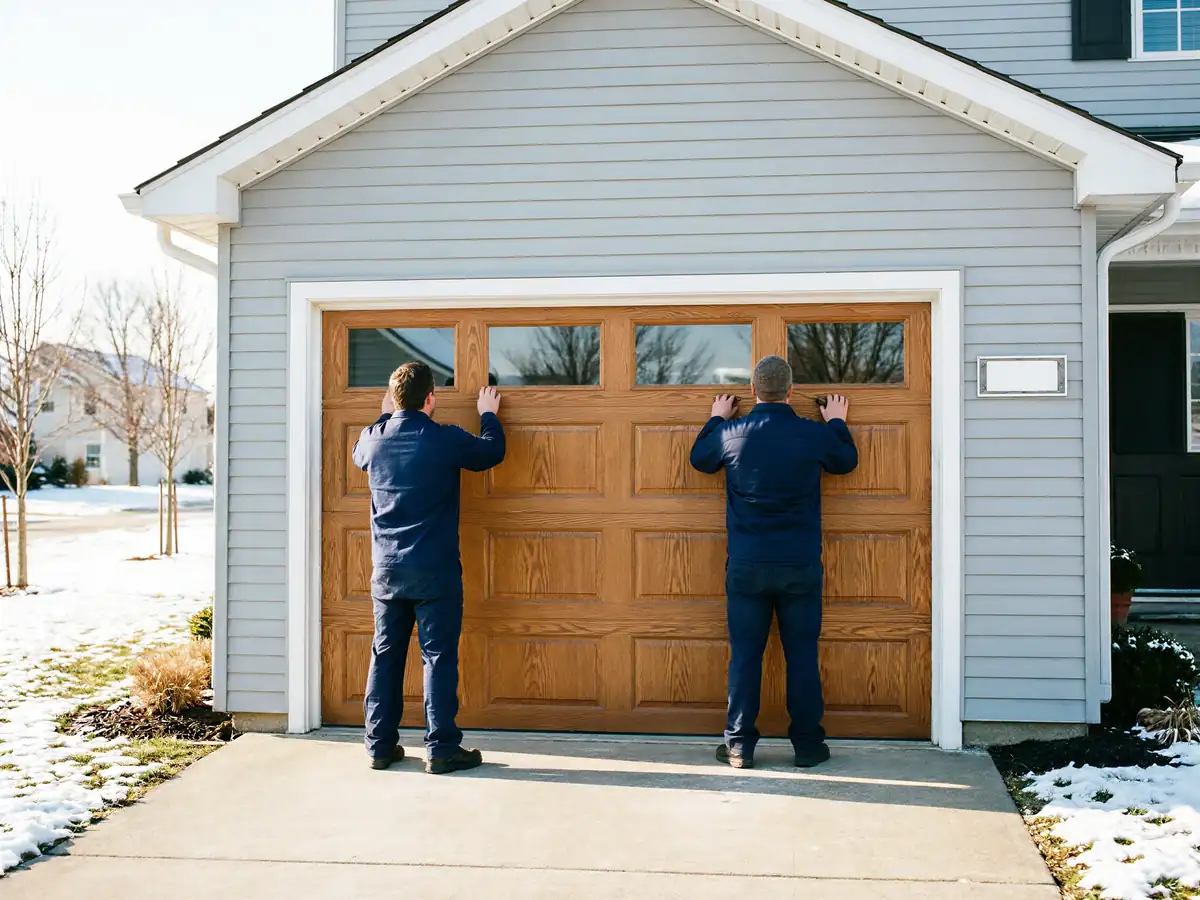
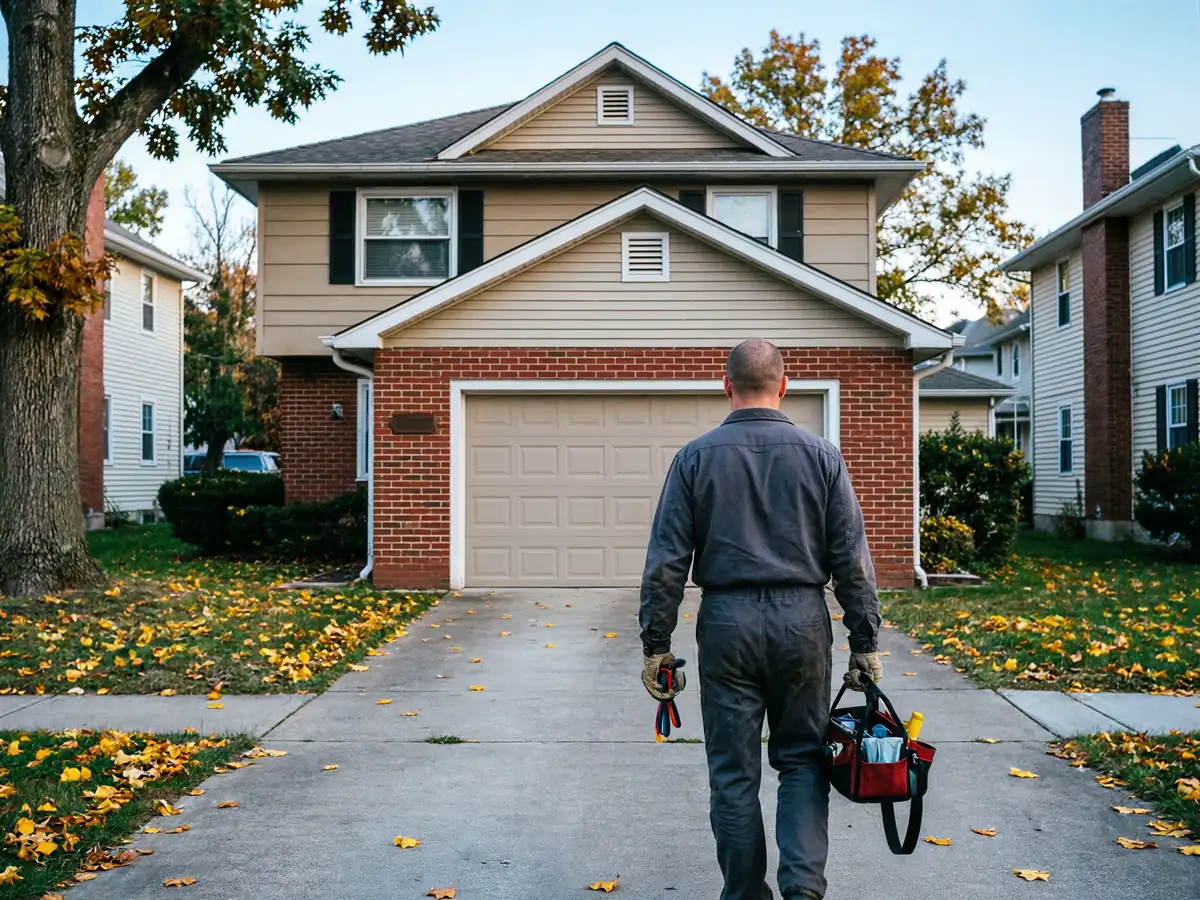
Call or send the request through the site and tell us what the door is doing: won't open, hangs crooked, one side dropped, or a cable is visibly off the drum. A snapped or frayed lift cable is not a job to force through with the opener - that strains the opposite cable and the drum, and turns a cable job into a track-and-drum job. If you can, note whether the door is single or double wide and roughly how old the house is. That one detail tells us a lot before we ever pull into the driveway, since houses in this corner of the Milwaukee area were mostly built between 1938 and 2000, median year 1976, and the cable hardware changed more than once in that stretch. We carry common cable sizes and drums for that era of door on the truck. Less common spring-and-drum combinations sometimes mean a short parts wait - we'll tell you straight if that's the case rather than guess and leave you with the wrong part installed.
What You Are Seeing
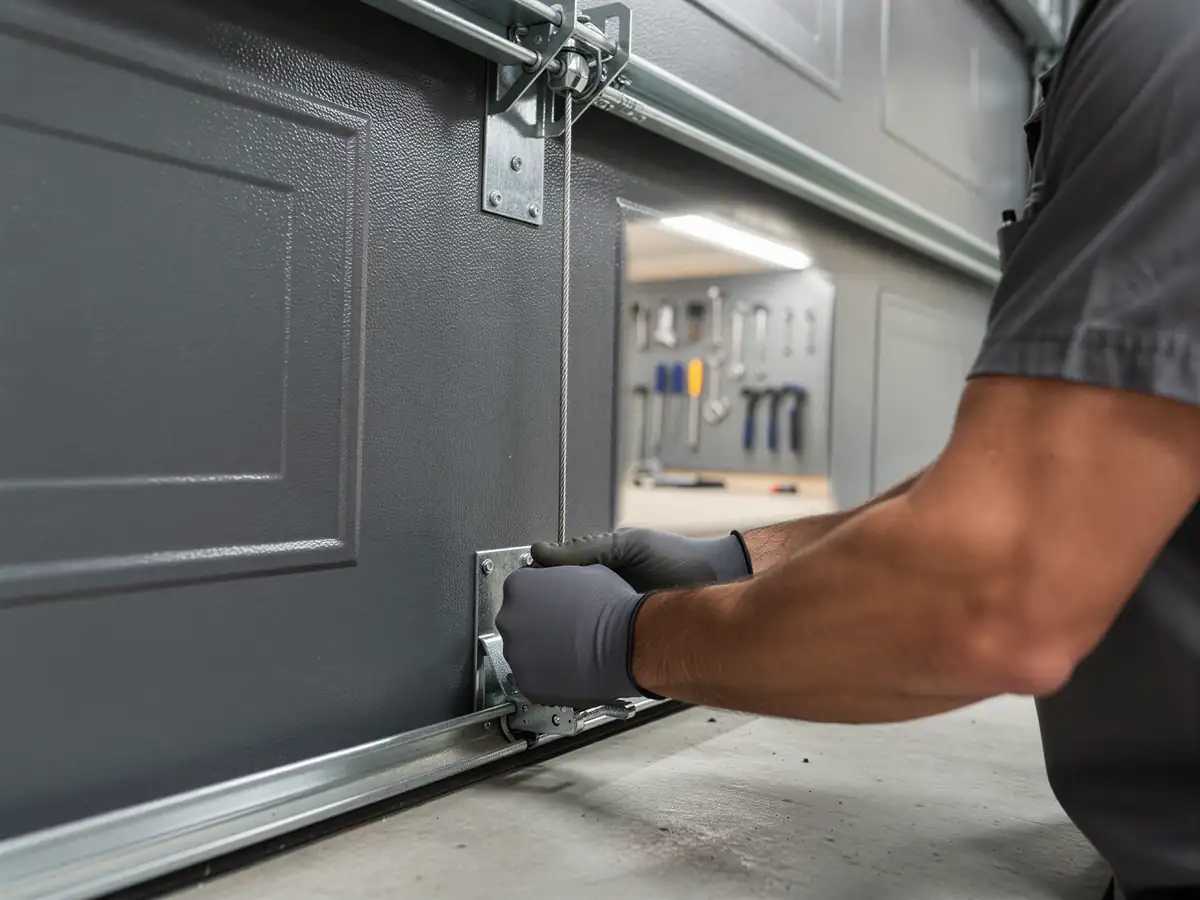
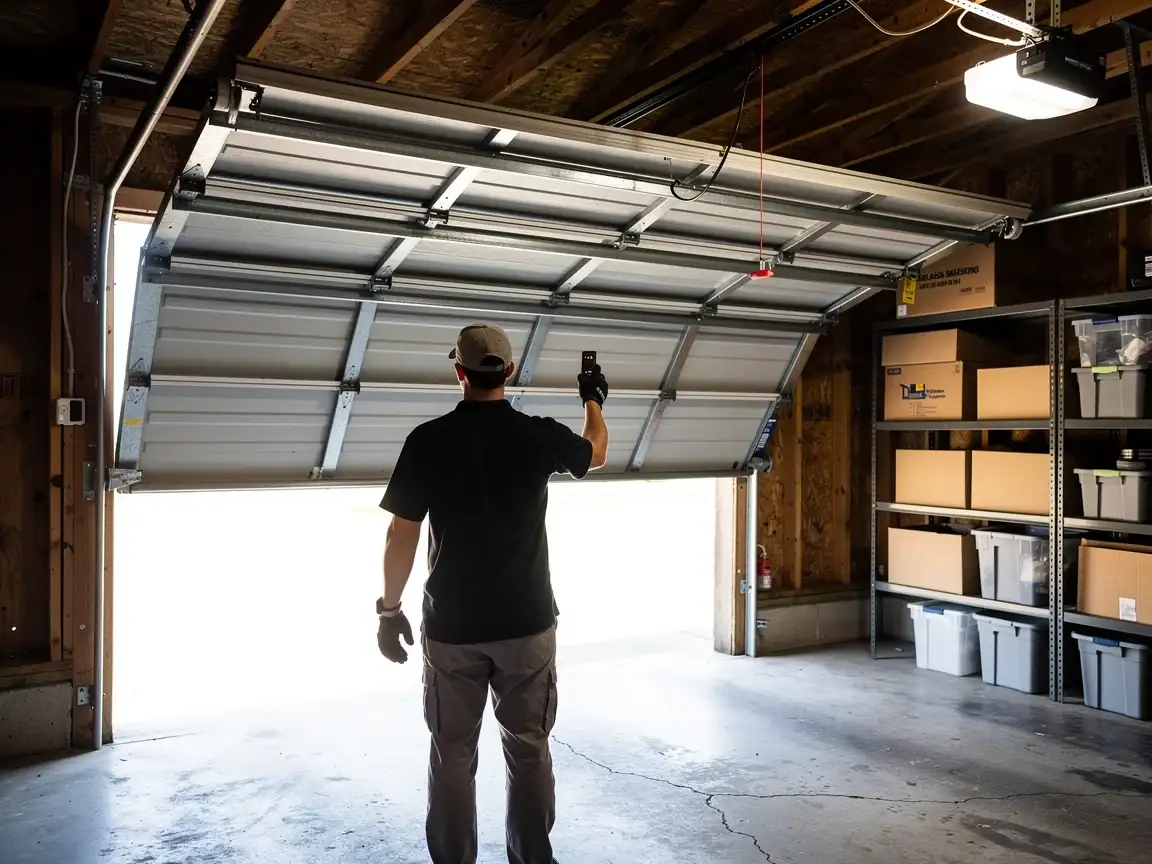
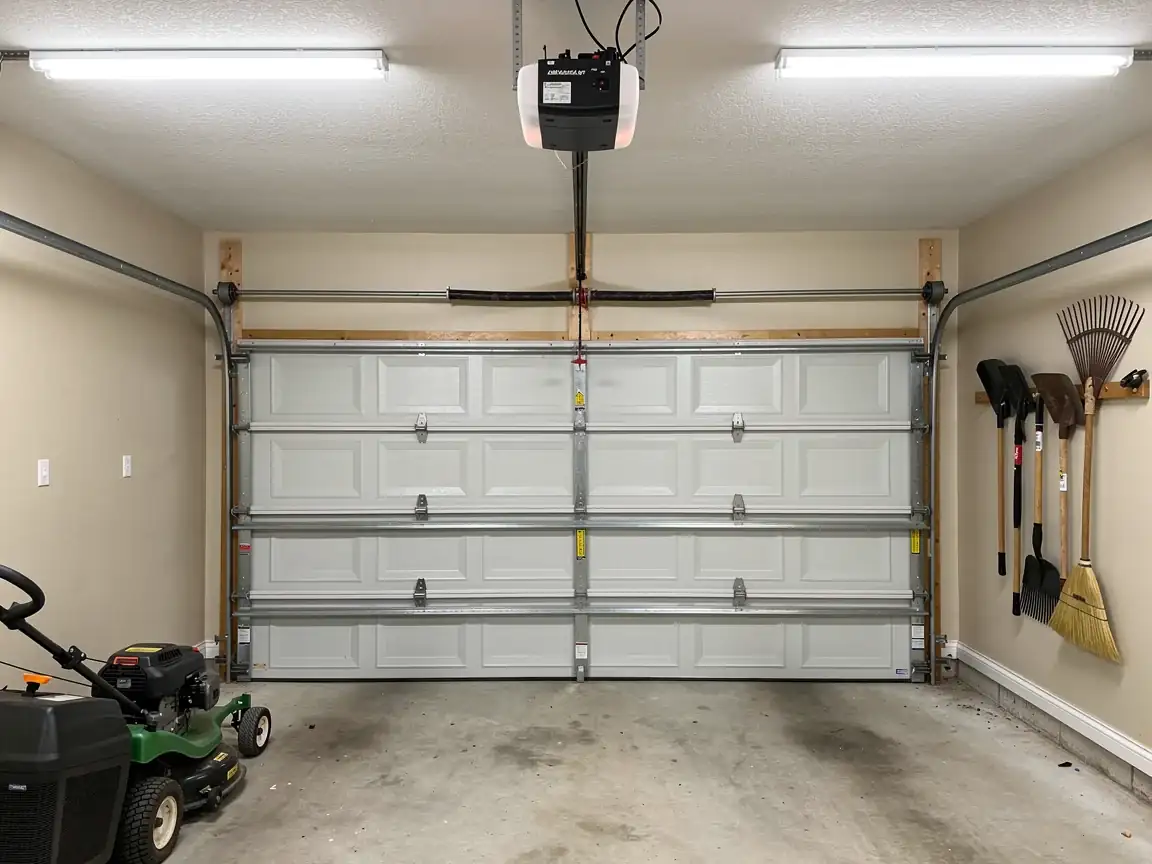
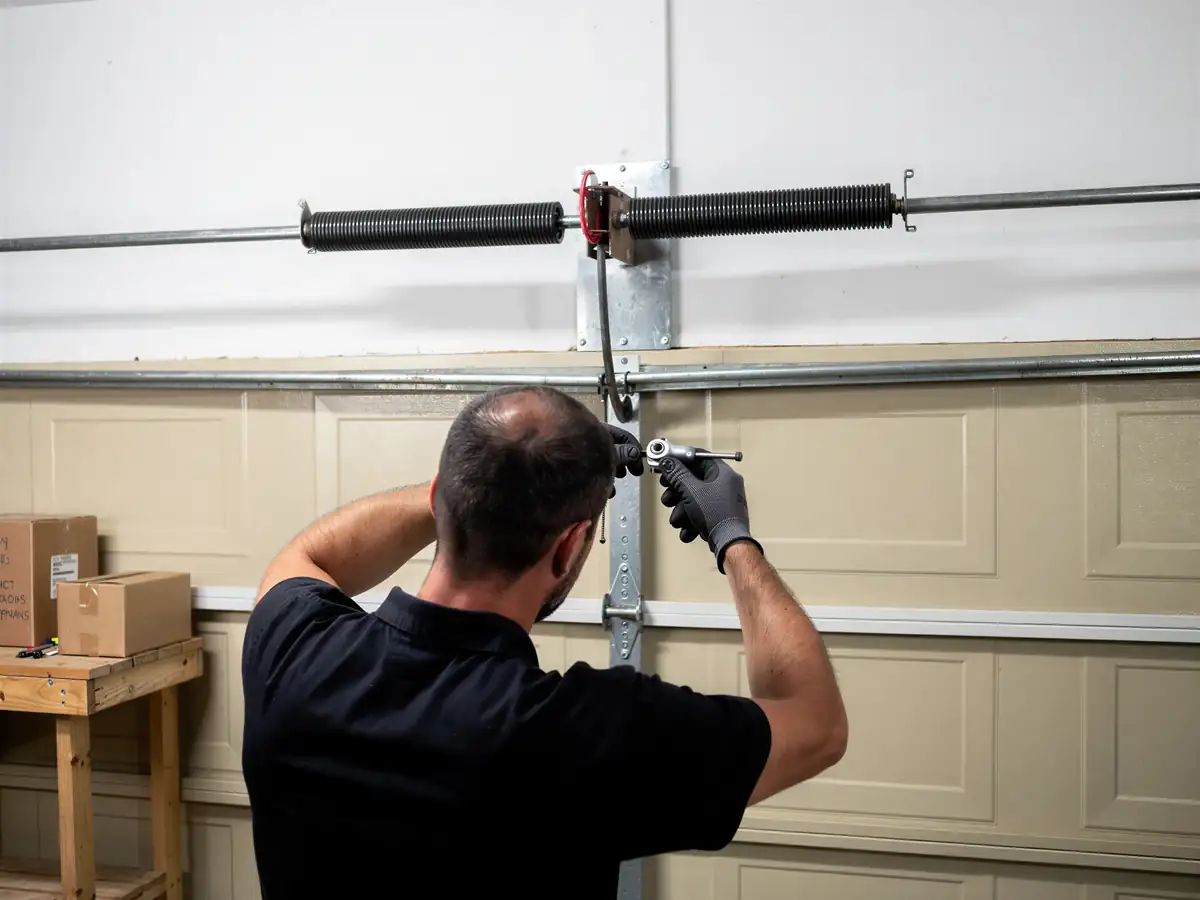
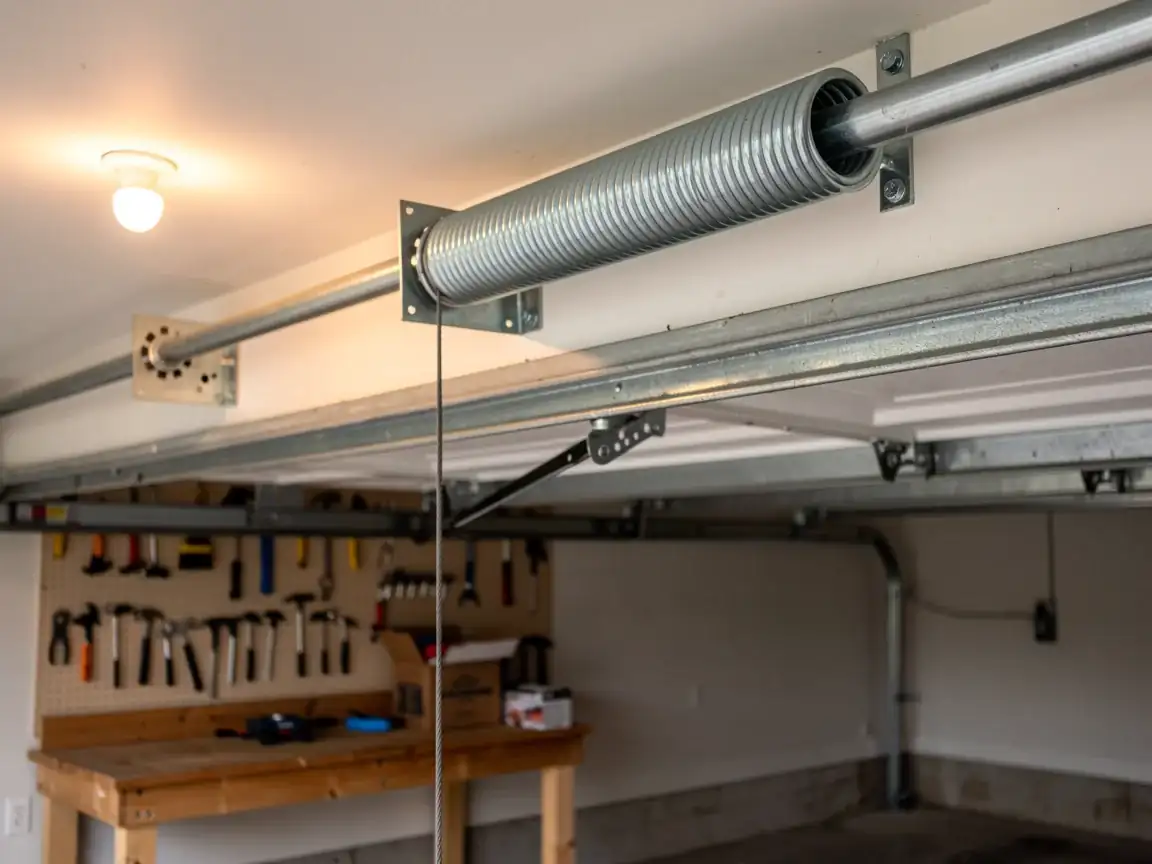
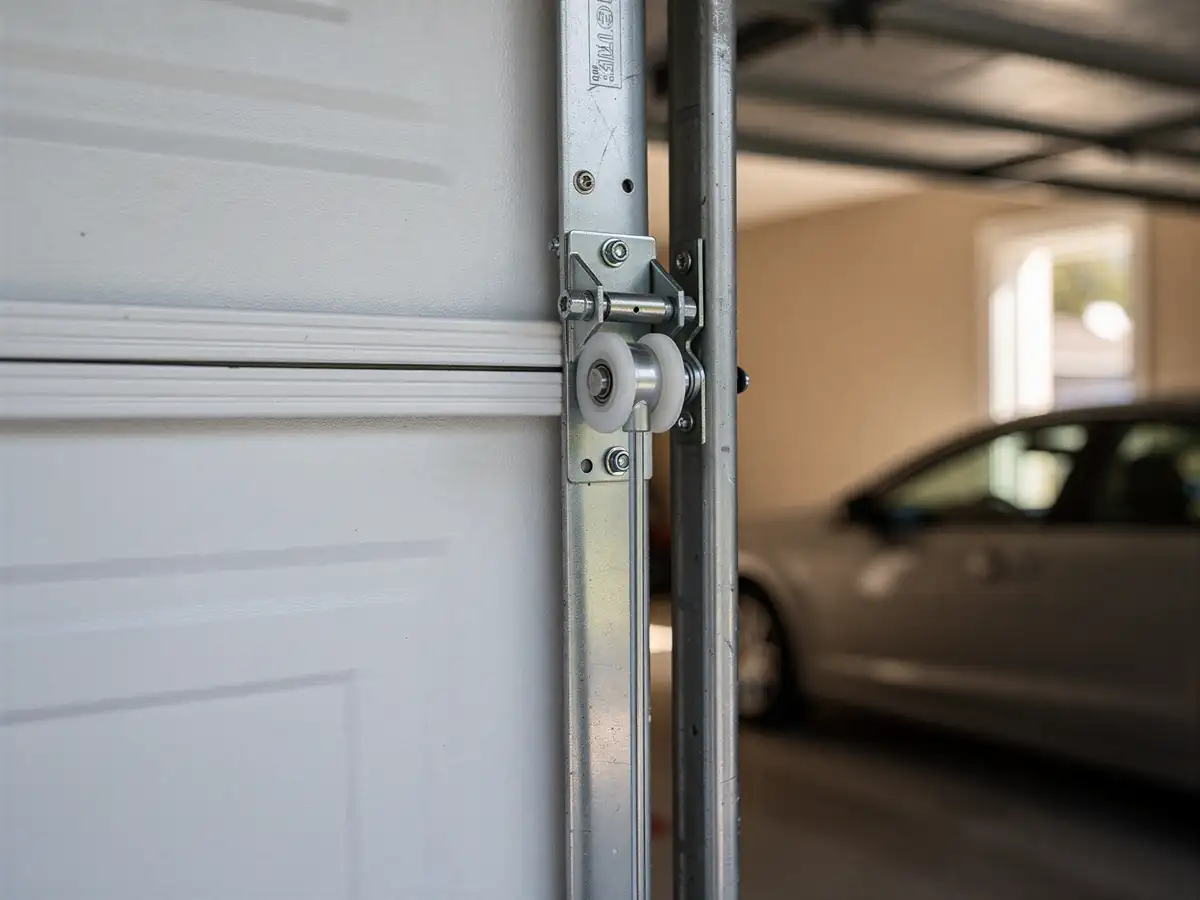
A garage door cable rarely just snaps out of nowhere. It frays first - thin wire strands peeling back where the cable wraps the drum or runs through the bottom bracket pulley, until the last strands give under tension, usually on the coldest morning of the week. You'll see one corner of the door sitting lower than the other, a door that won't lift square, or loose cable hanging slack off the drum while the opener strains and clicks. Sometimes the cable has jumped the drum groove entirely and bunched up, which can also take the bottom bracket or a roller with it. None of this is safe to push through manually. A door under spring tension with one cable gone can drop fast and hard, and the torsion spring on the working side is now doing a job it wasn't built to do alone. If the door came off the track at the same time, that's a separate problem layered on top of the cable failure, and we'll check both before calling the job done.
How We Fix It
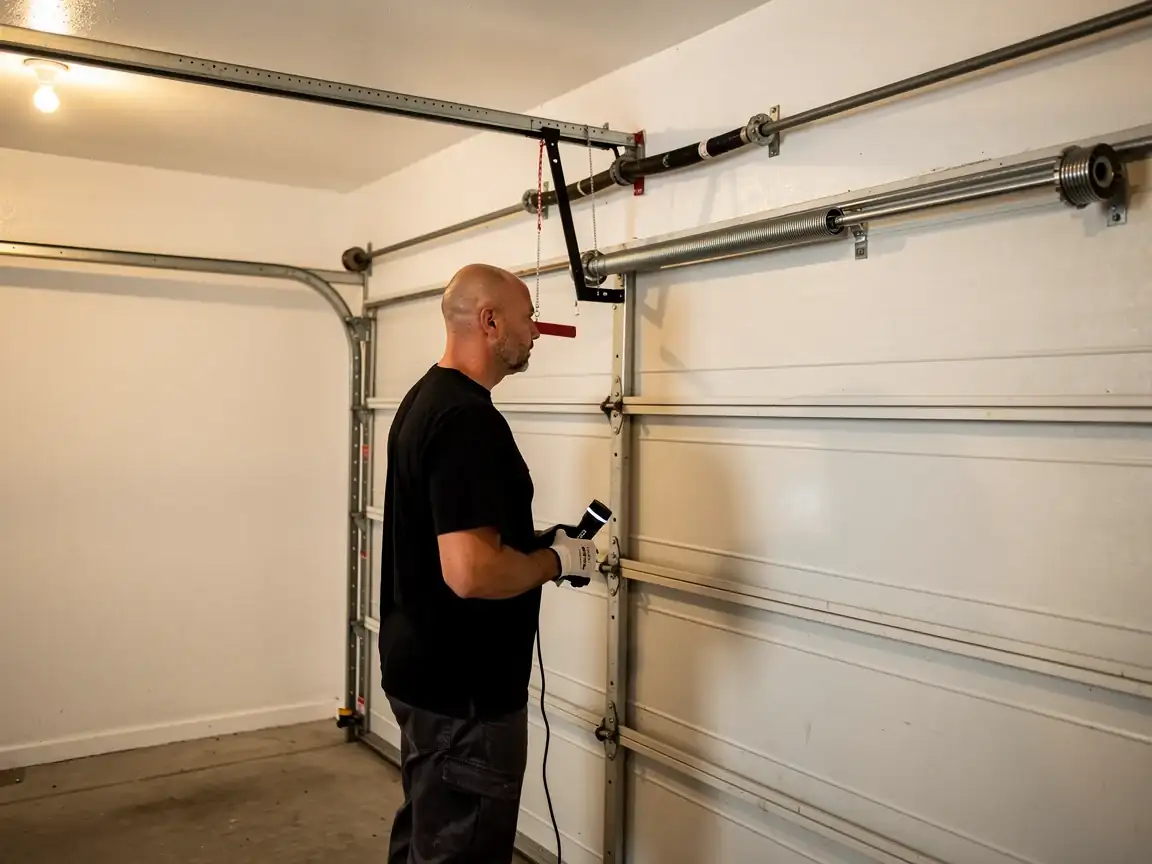
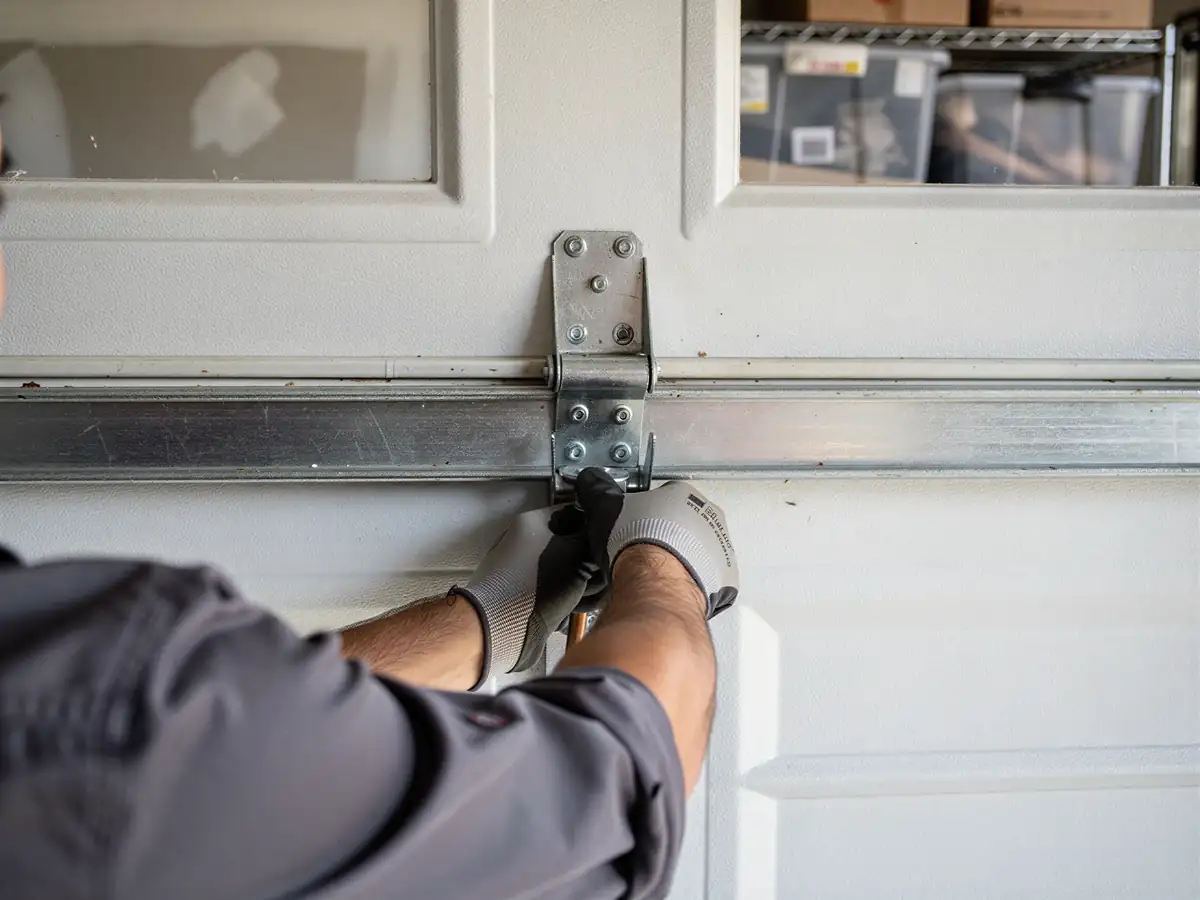
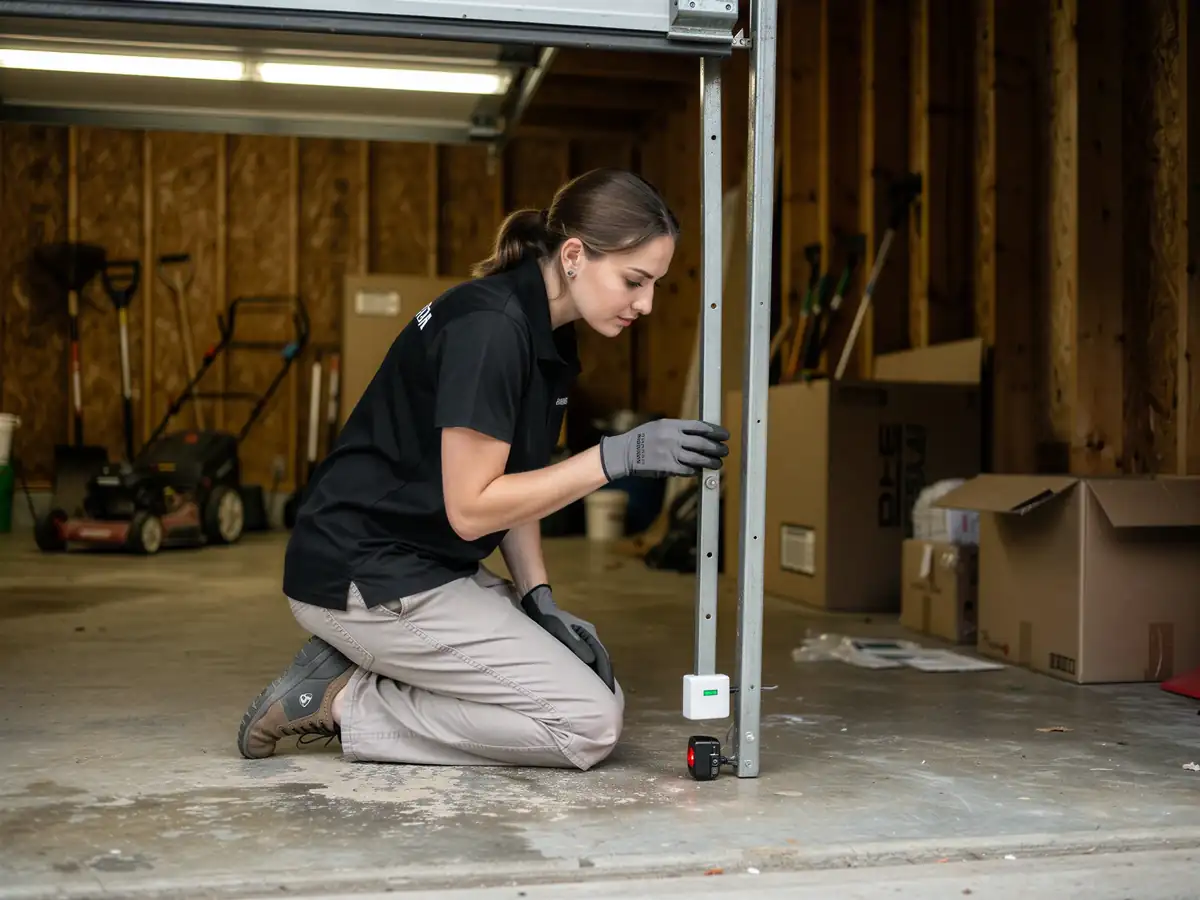
We release spring tension safely, pull the old cable and drum, and check the bottom bracket, rollers, and track alignment while the door is already open and unloaded - a frayed cable often isn't traveling alone, and a bent bracket or worn roller will fray the next cable just as fast if we leave it. We install matched cables on both sides, even when only one has failed, because mismatched cable tension on a torsion door is how the next side goes. The drum gets checked for grooves worn by the old frayed strands; a scored drum will shred a new cable in months, so we replace it rather than reuse it. Once both cables and the drum are set, we re-balance the spring tension and run the door through a full cycle under load before we leave. One limitation worth saying plainly: if the door is older and the drum or spring assembly is a discontinued size, matching parts can take time to source, and in a few cases a straight cable swap isn't worth it against replacing the whole spring-and-drum assembly. We'll tell you which situation you're in before we quote it.
Why This Fails Locally
The housing stock feeding this service area runs mostly 1938 to 2000, median build year 1976, concentrated in 1960s-70s construction across the 49 named areas we work. That means a lot of original or first-replacement galvanized cable still on the drum, sized to specs that were common decades ago and aren't always what's stocked on a shelf today. Layer the climate on top of that: this region sits in a COLD-severe band, and sustained sub-zero stretches make steel cable brittle right at the point it bends over the drum and the bottom bracket pulley - the same spot that takes the most flex every single cycle. A cable that would have another two or three years of life in a milder climate gives out here in one hard freeze. Across the 178,487 households in this area, with 89,448 of them owner-occupied houses, that adds up to a lot of original hardware reaching the end of its run at the same time of year, every year. It's a predictable failure, not a random one, which is exactly why we check both cables and the drum together instead of swapping the one that broke and calling it finished.
How it works
From “it’s stuck” to “it’s fixed”
01
Tell us what’s wrong
Describe the symptom - won’t open, loud bang, opener runs but the door won’t move.
02
On-site diagnosis
A technician tests the door under power and by hand and finds what actually failed.
03
Clear, up-front plan
You get the fix that’s needed and what drives the cost - before any work starts.
04
Repaired & tested
The repair is done, the door is set true and tested, and the work area left clean.
Not sure which repair your door needs in Menomonee Falls, WI? Describe what it’s doing - every job starts with a diagnosis.
Why did my garage door cable snap in winter and not some other time?
Cold makes steel cable brittle at the point it bends around the drum and bottom bracket, and this area sits in a severe cold-climate band with sustained sub-zero stretches. A cable that's already frayed from age usually gives out on one of those cold mornings, not during a mild stretch, because the metal has less give left in it.
Can I just replace the one cable that broke?
We don't recommend it. If one cable has frayed from age, the other side is usually close behind, and running mismatched cable tension on a torsion door puts uneven strain on the spring and track. We replace both sides together so the door balances correctly and you're not back out here in a few months for the second one.
How old does a cable usually get before it fails?
It depends more on cycles and exposure than a fixed number of years, but a lot of the original cable on houses built in the 1960s and 70s in this area is reaching the end of its service life now, and cold winters accelerate the fraying. If your door is original to a house from that era, it's worth having the cable and drum checked before it fails outright.
Ready to get your garage door sorted?
Tell us what it’s doing and where you are in Menomonee Falls - we’ll take it from there.