The Cost of This Job
We don't quote a number over the phone, and that's not a dodge
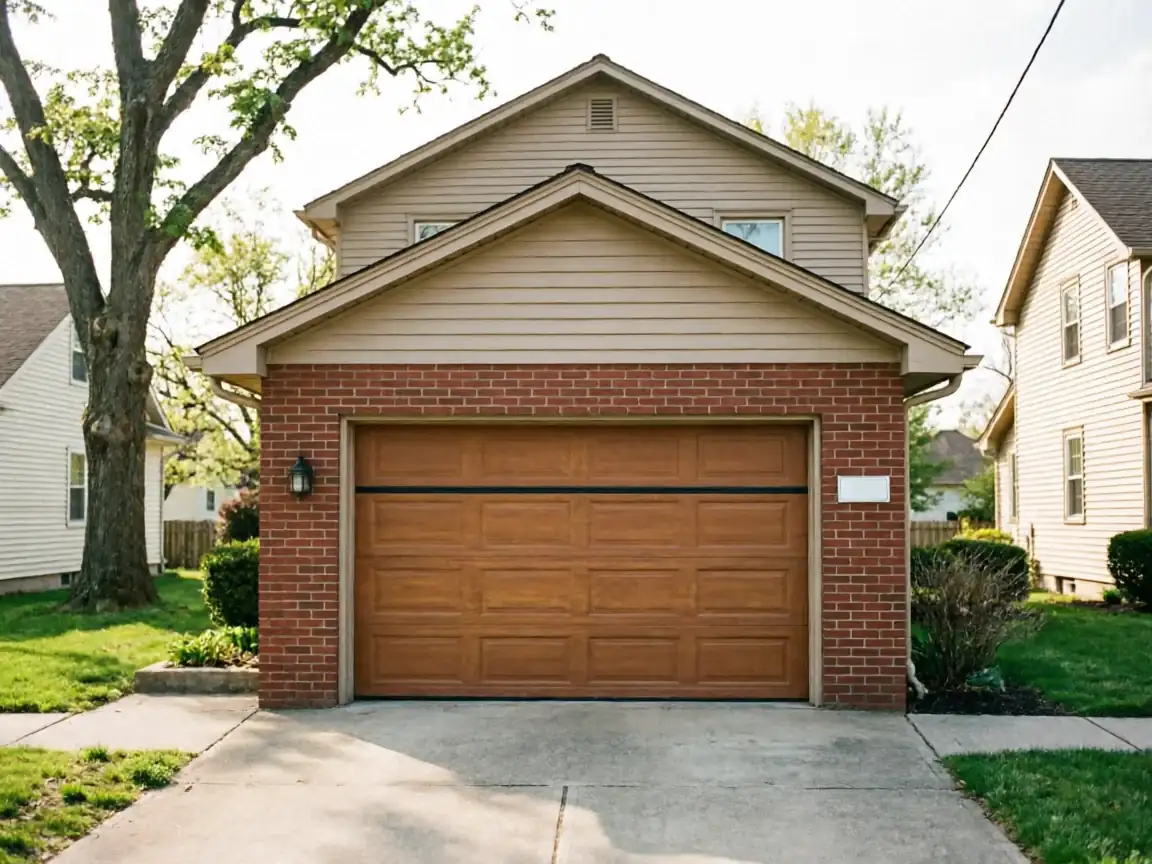
A broken spring on a door built in 1965 with a non-standard track length costs different money than the same repair on a 2005 build with a factory-matched opener. A lot of the housing out here landed between 1938 and 2000, median build year 1976, which means a technician often opens the garage to parts nobody stocks on the truck as standard - older torsion hardware, discontinued panel profiles, openers that were replaced once already by a previous owner with whatever was cheap at the time.
What we can tell you is what drives the number up or down
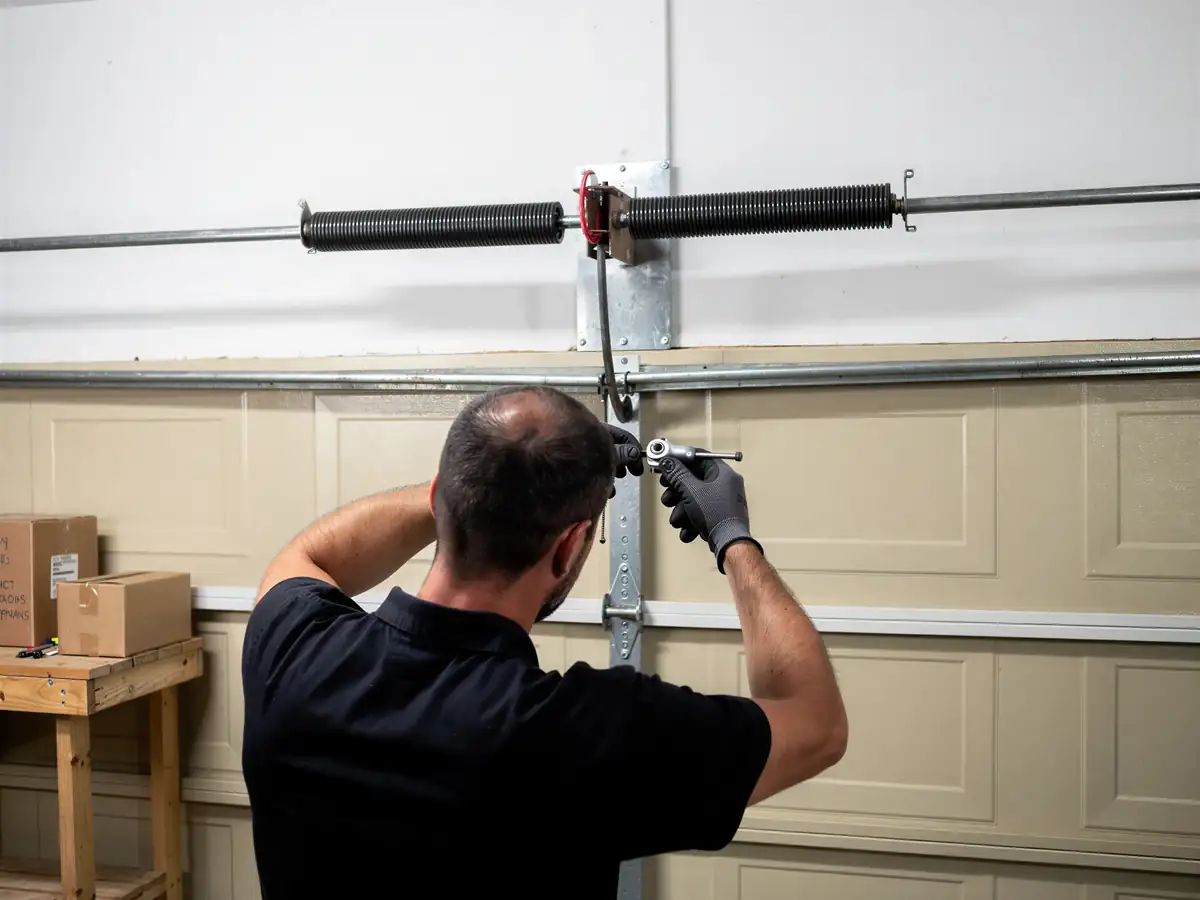
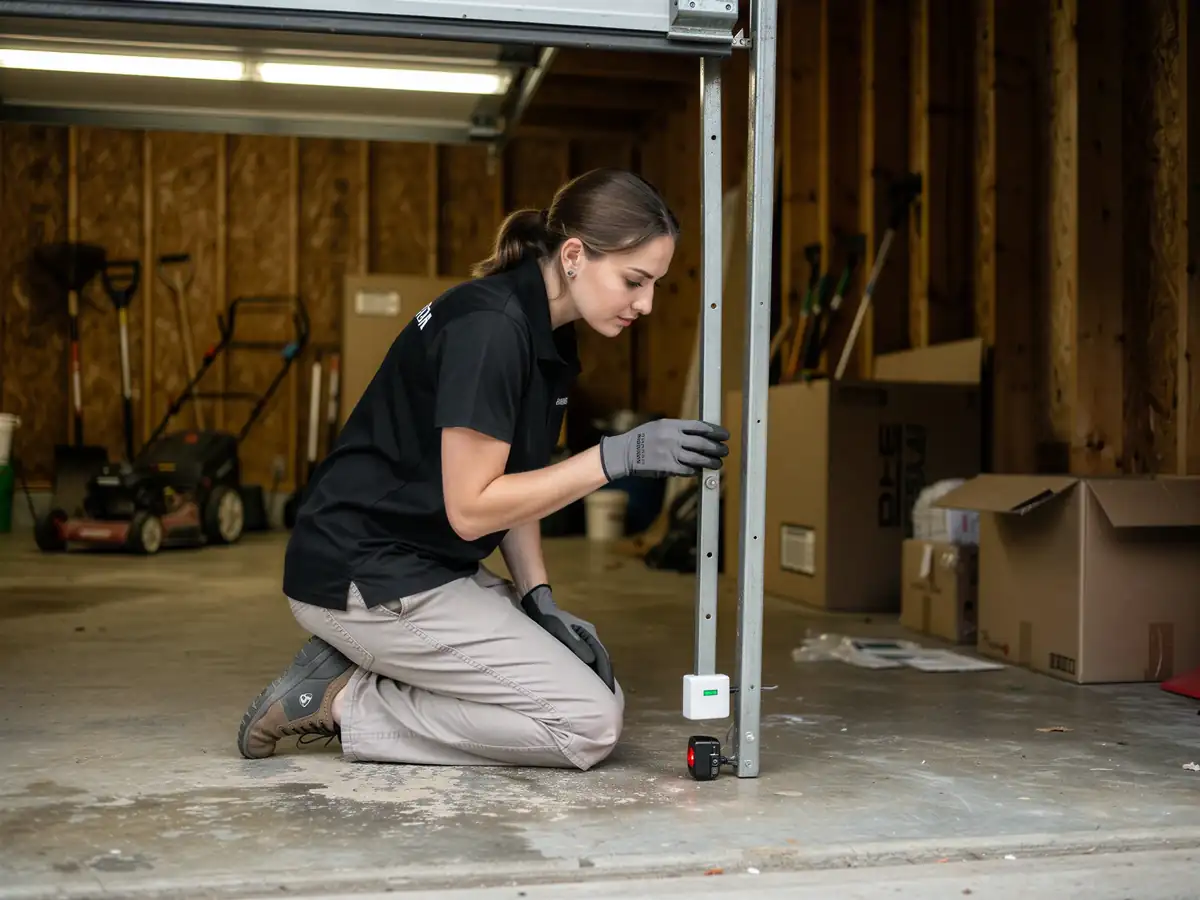
Whether it's one spring or two, whether the drum or cable needs replacing alongside it, whether the track is bent enough to need swapping instead of straightening, and whether the opener is original or already a replacement. On a lot of the older stock in this area, the honest call is sometimes to replace the opener rather than keep patching a 20-year-old unit - parts for some of those models are getting hard to source, and we'll say so instead of billing you for a repair that won't hold.
What Is Going On
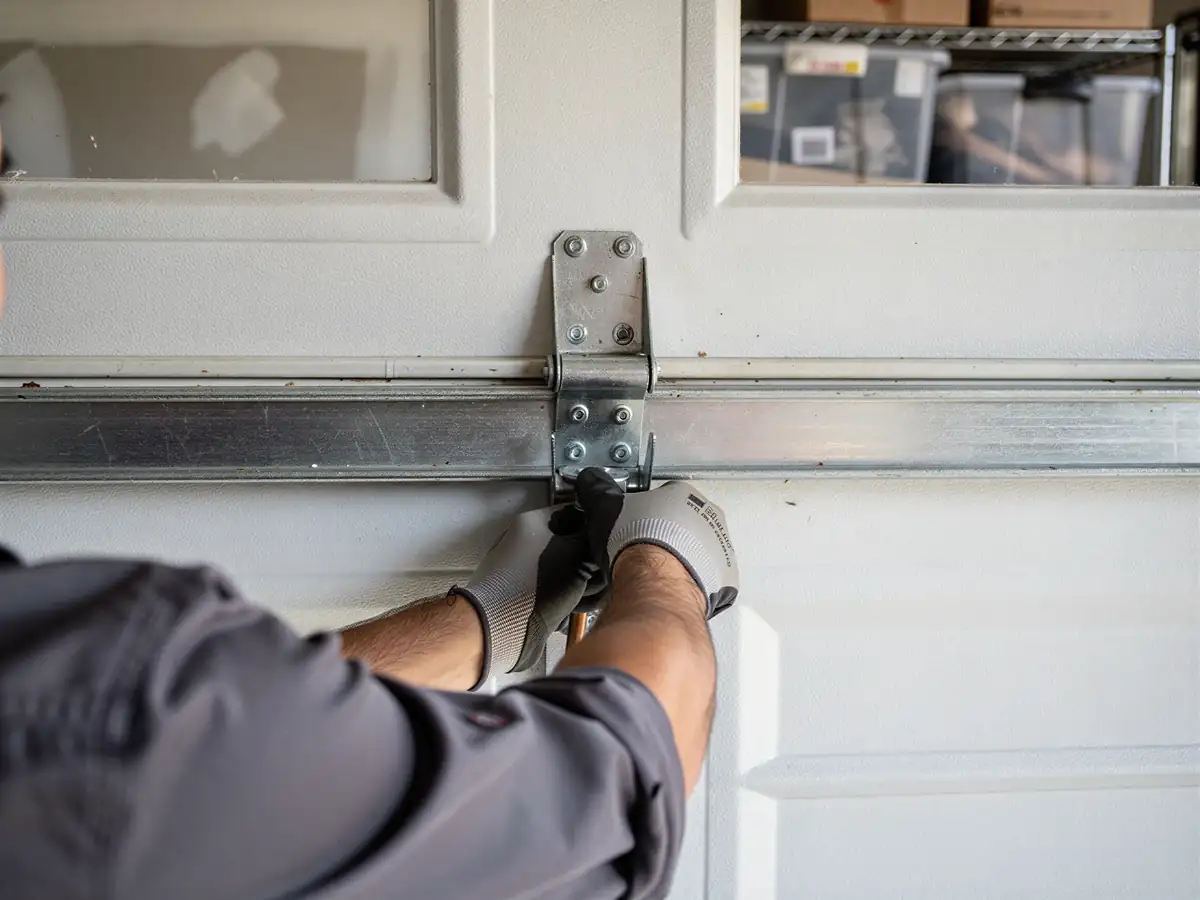
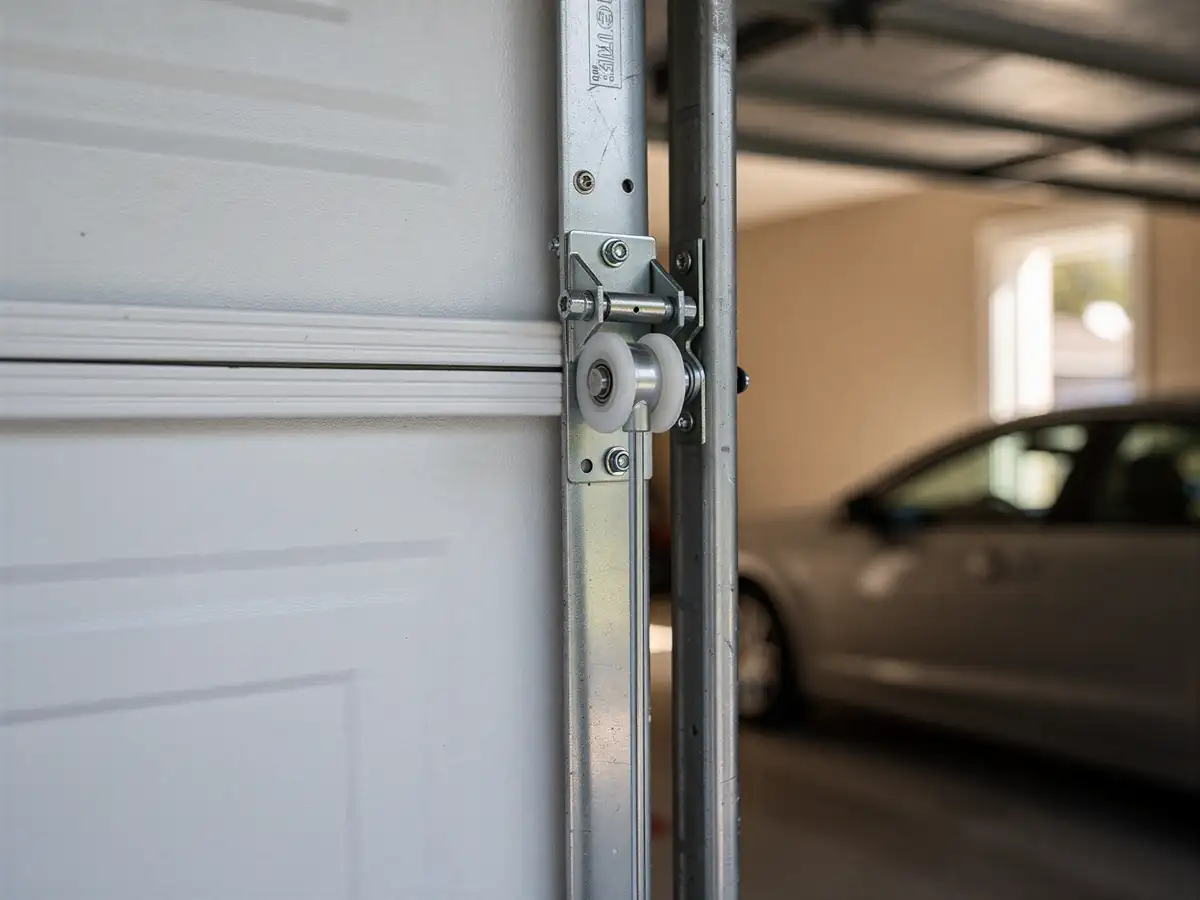
Most of the noise complaints we get trace straight back to the age of the stock here. Across the named areas in this service territory, the bulk of homes were built in the 1960s and 70s, and those doors were never engineered with the insulation or hardware tolerances that later codes required. A rattle on a door from that era is often just a worn roller finally giving out, or a track bolt that's backed out after decades of thermal cycling.
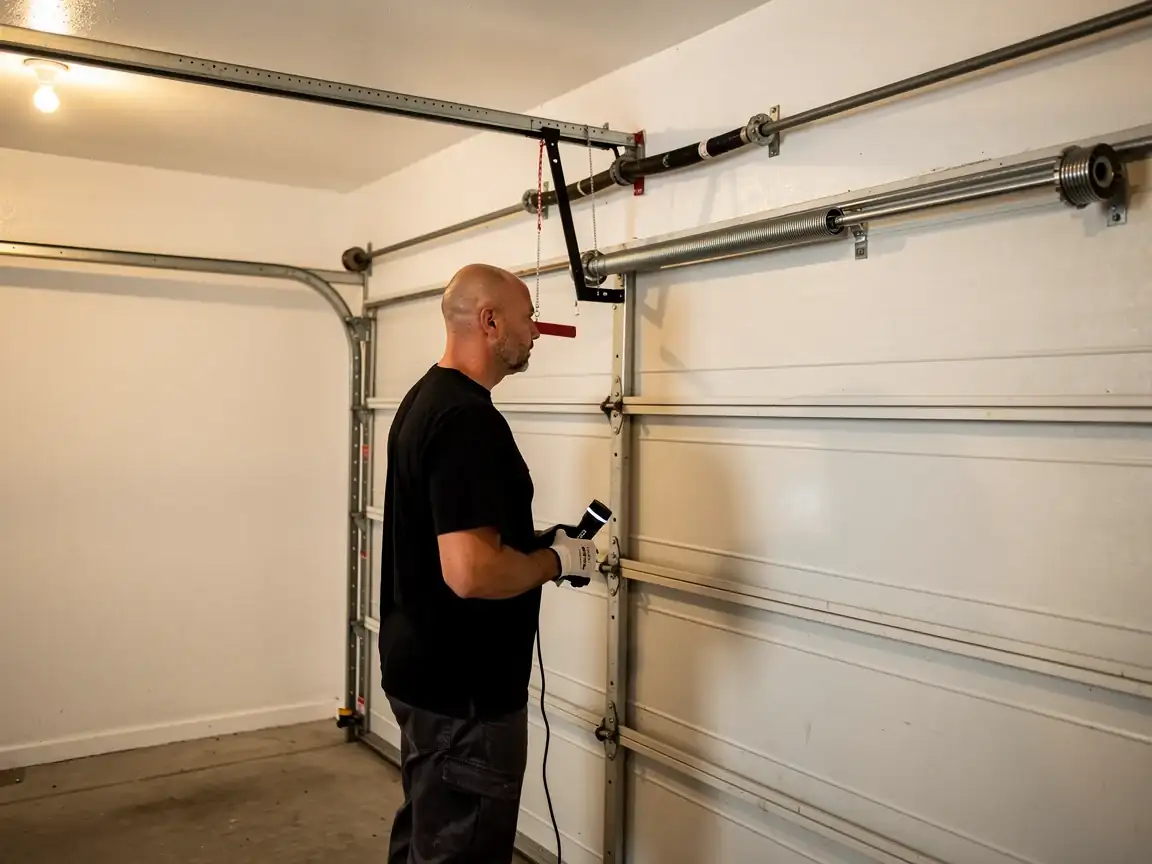
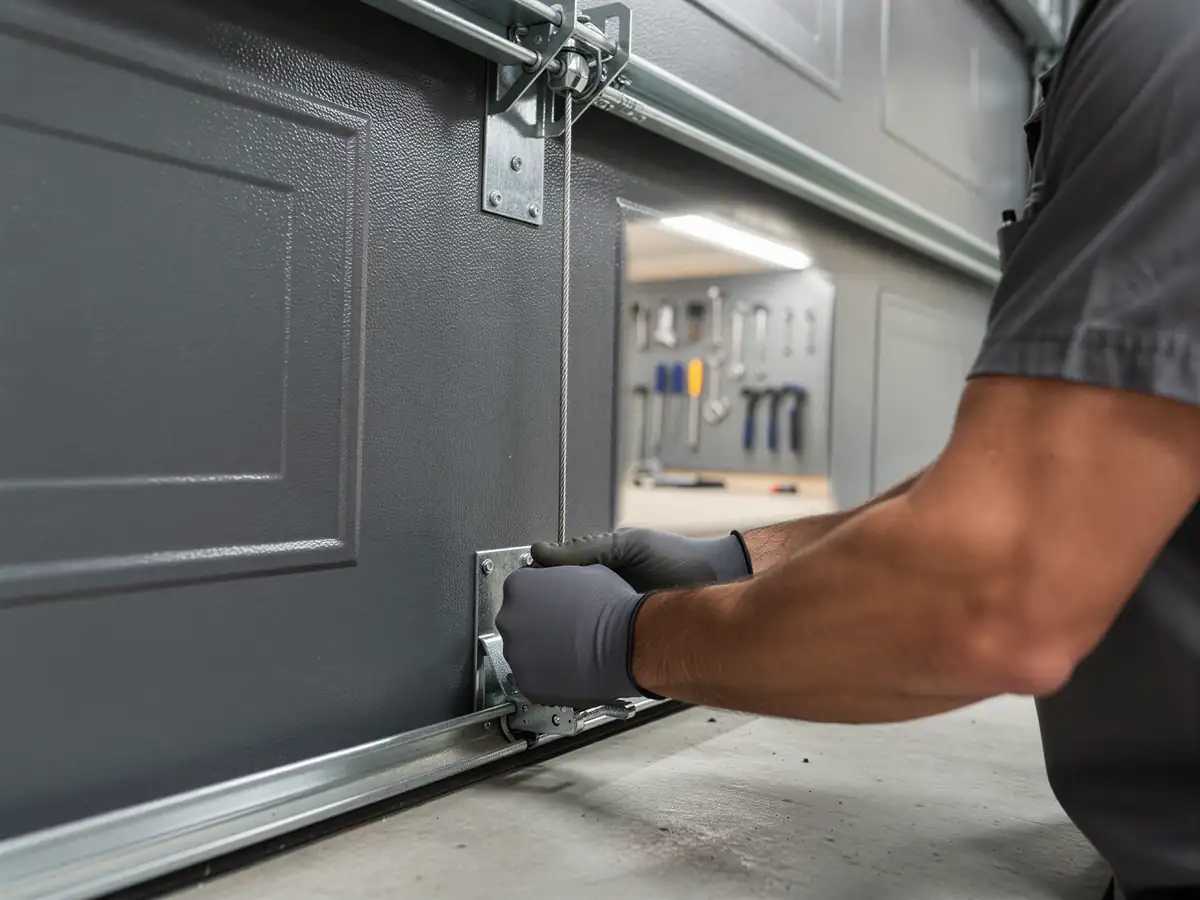
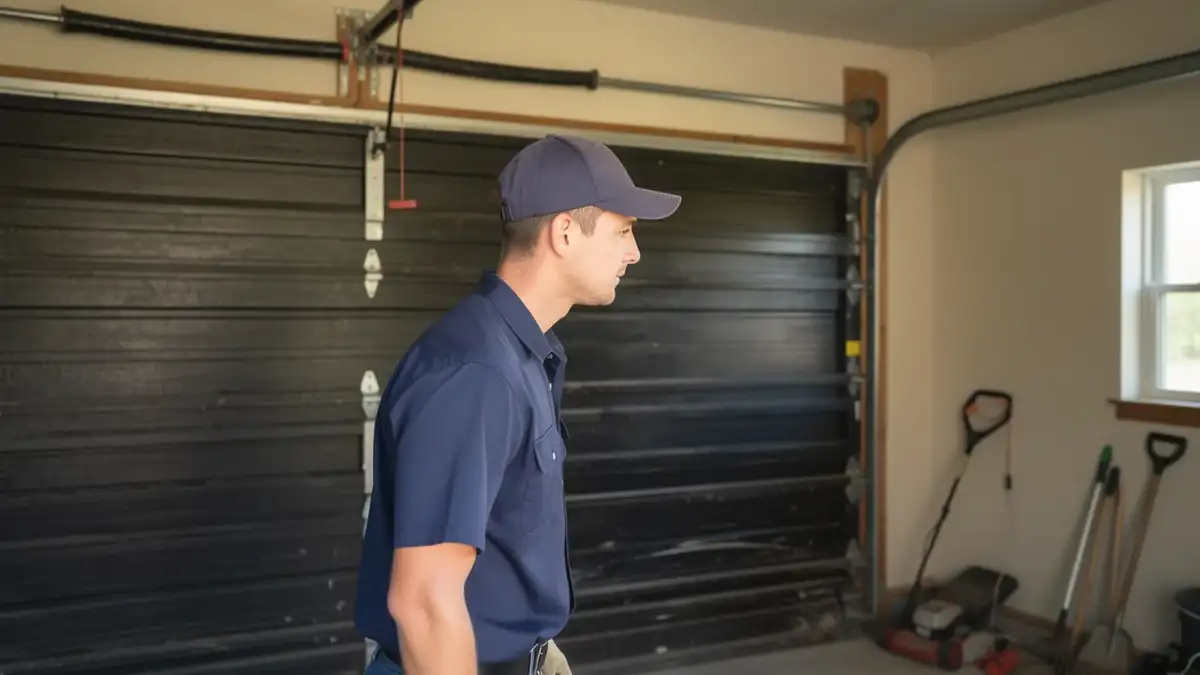
A grinding sound usually means a bearing plate has worn through, which is common once a torsion spring system hits the age range typical of houses built before 1980 around here. A slam or bang partway through the cycle points to a cable that's started to fray, which on original hardware from this build era is overdue rather than surprising. None of this is dramatic - it's just what 50-plus-year-old steel and bearings do. The fix is rarely complicated, but ignoring it on a door this old tends to end with a spring letting go while the door's halfway up, which is the one failure mode that can actually hurt someone.
What the Weather Here Does to It
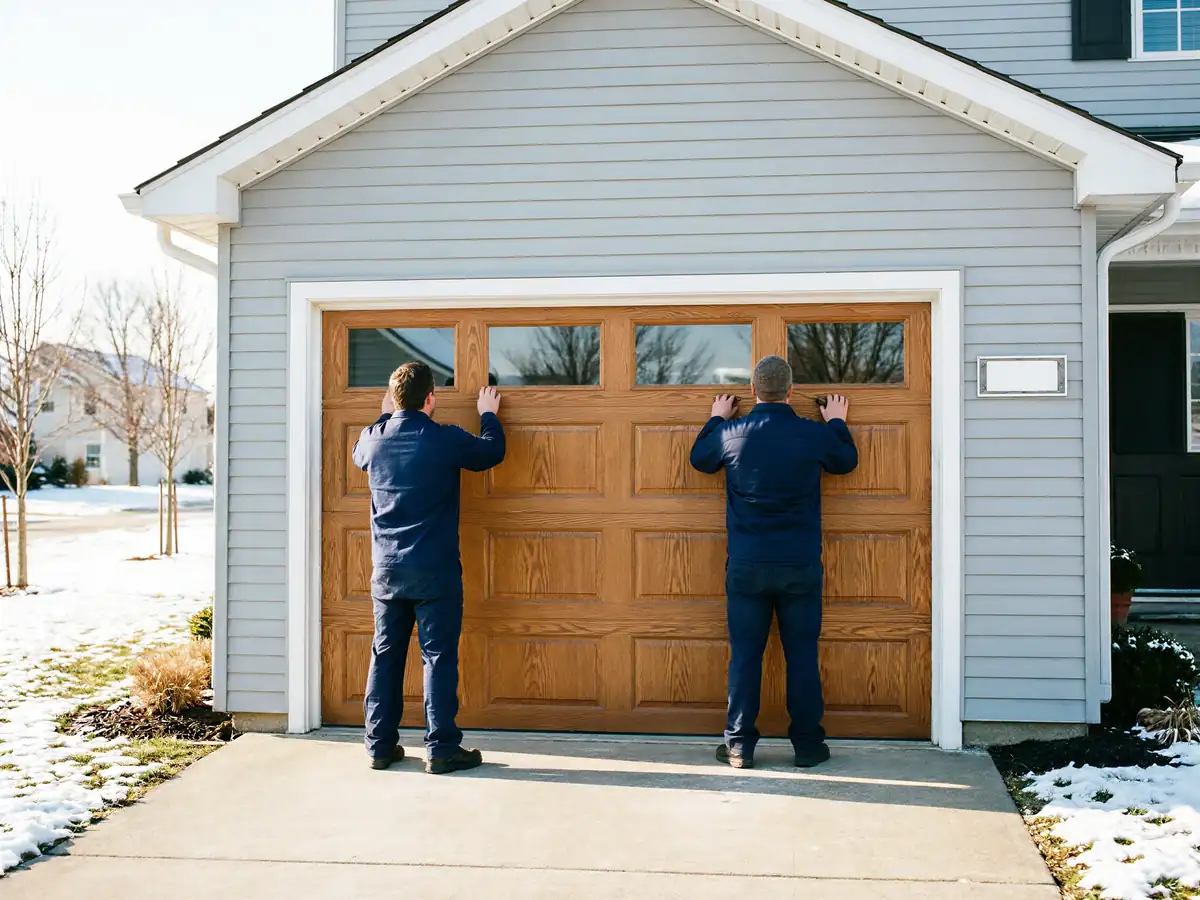
This area sits in a cold, severe climate band, and that's the single biggest factor in what breaks and when. Hard freeze-thaw cycles through the winter shrink and swell the rubber astragal at the bottom of the door, and on older doors that seal was never designed to flex that much - it cracks, lets in cold air, and stiffens up the whole bottom panel.
The bigger issue is torsion spring lubrication. Grease that's fine in October turns thick and sluggish once temperatures drop hard, and a spring that's working against stiffened lube puts extra strain on the opener's gearing every single cycle. On a door that's already running original 1970s-era hardware, that extra strain is what finally snaps a spring instead of it just wearing out gracefully. Cold also makes steel contract, which is why a track that was fine all summer suddenly binds or pops a roller the first hard-freeze week of the season.
The Seasonal Bit
The shift that matters most here is the first real cold snap after a mild fall
That's when years of slow wear on an older door - the kind built in the 1976-ish median era common to this area - show up all at once, because stiff lube, a brittle seal, and a worn bearing all hit their limit on the same cold morning.
Spring thaw is the second pressure point
Moisture that worked into bolt holes and hinge plates over winter speeds up corrosion on hardware that's already decades old, and a door that seemed fine in January can start sagging on one side by April. If your door's opener or spring hardware is original to a house built well before 2000, it's worth a look before the first hard freeze rather than after, since a service call in October is a lot less urgent than one in January when the spring's already gone and the door won't move.