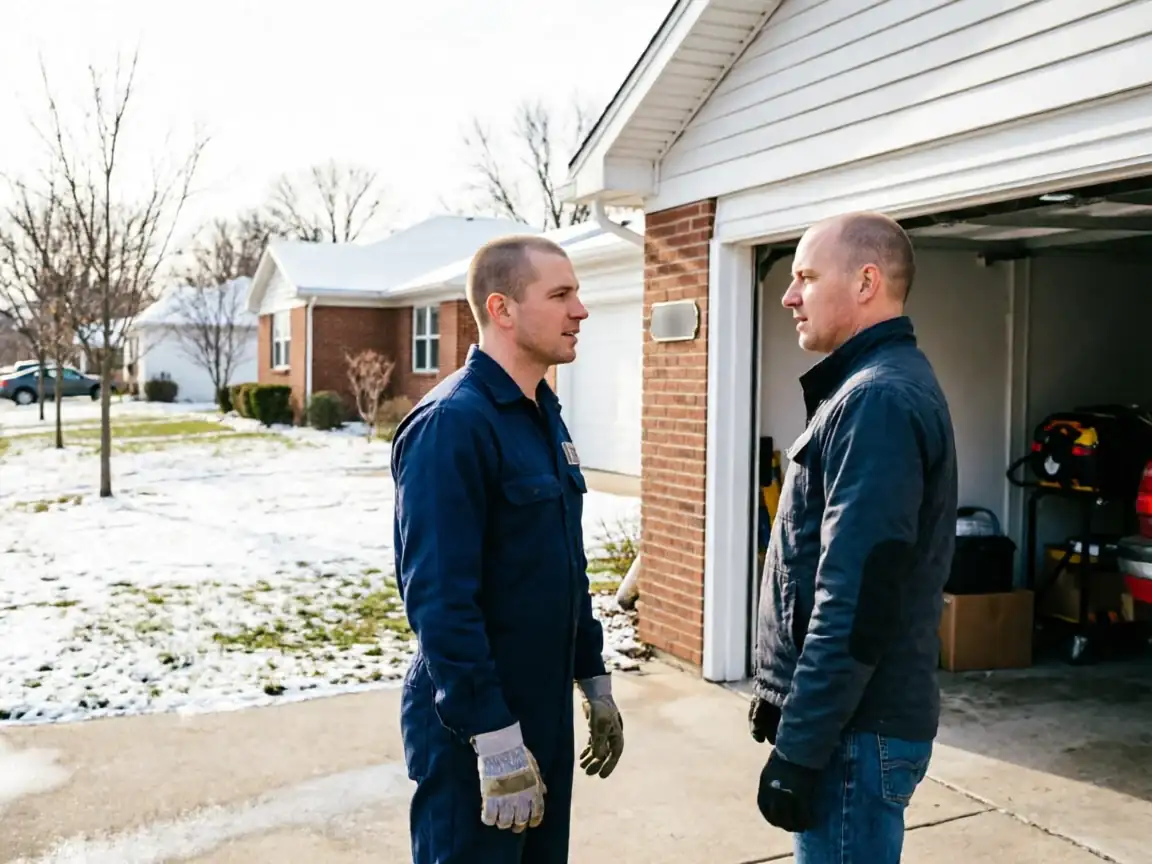
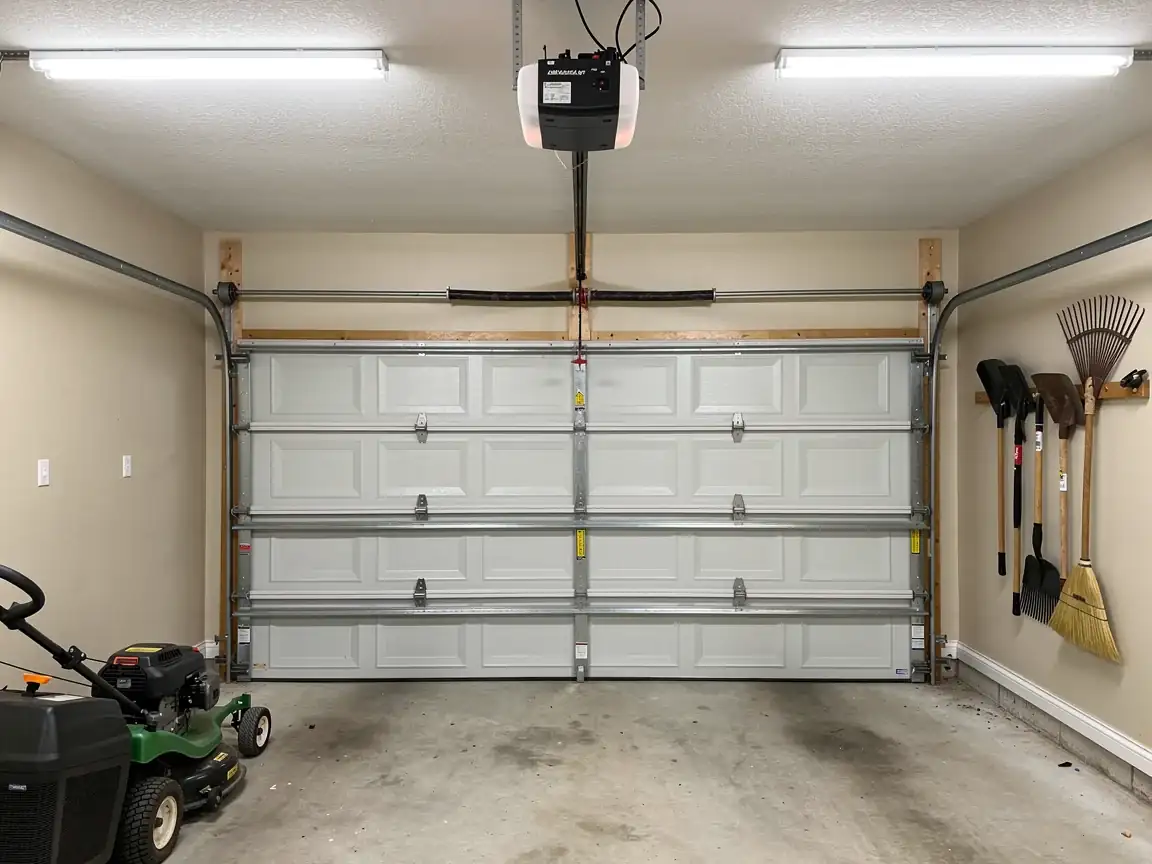
Call and tell us what the door is doing - won't open, won't close, makes a bang, drifts off track. We ask your approximate house age because it tells us a lot before we even get in the truck. A lot of Menomonee Falls homes were built between 1938 and 2000, with the bulk of that stock going up through the 1960s and 70s, and that era of construction tends to carry specific torsion and opener setups. We'll give you a window for the day, not a vague "sometime this week." If the spring is broken and the door is stuck down, say so when you call - that moves you up the list, because a stuck door usually means a car trapped inside a garage that won't open by hand either. We work across the Falls and into the nearby towns listed on our service area, from Lannon and Butler in close to Germantown and Sussex a bit further out.
What You Are Seeing
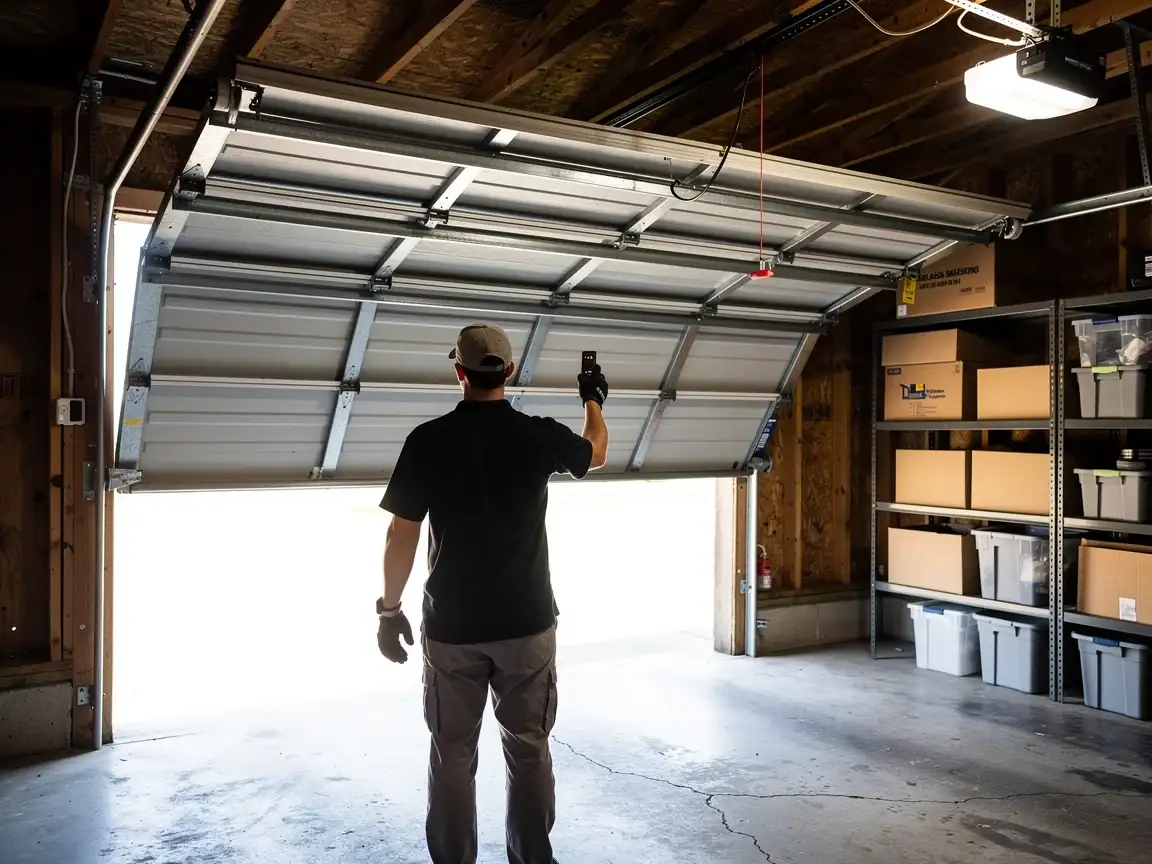
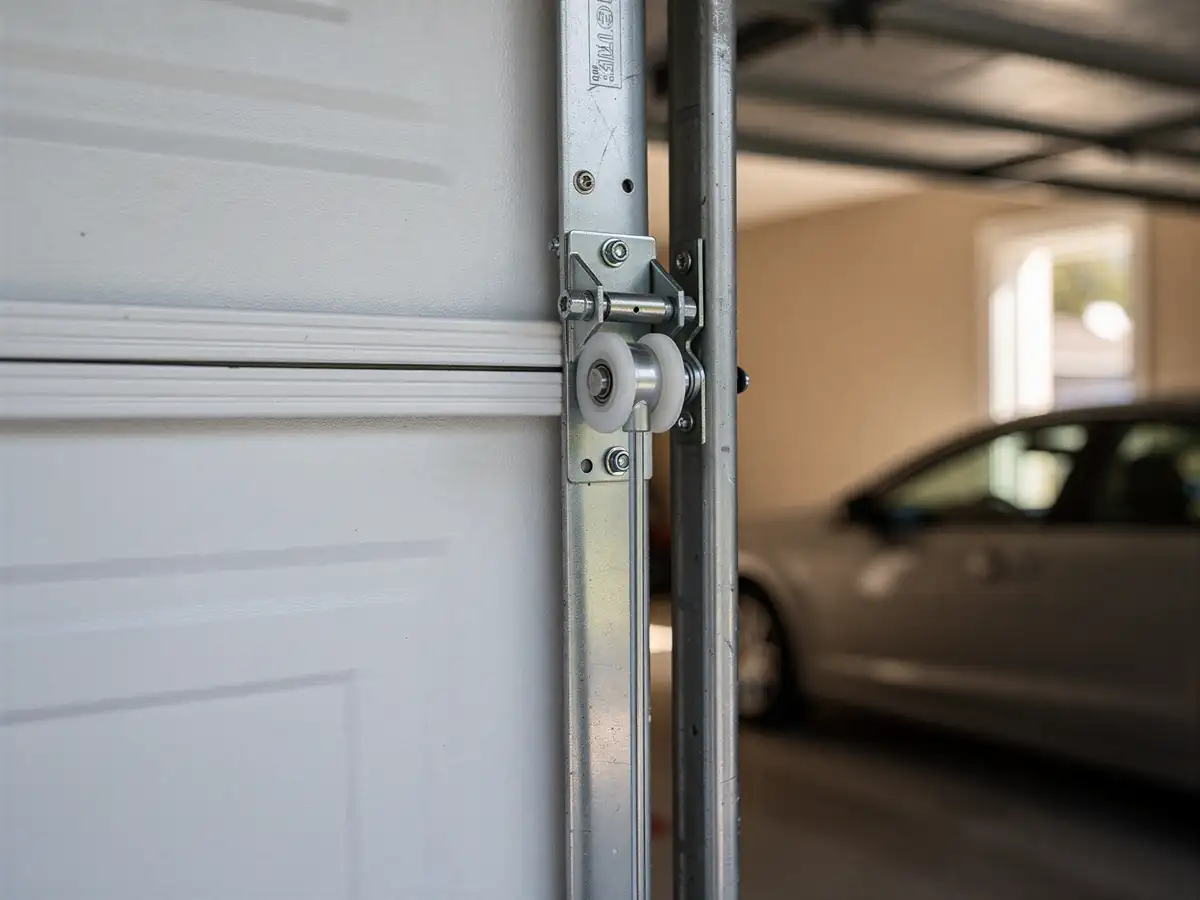
The door won't lift, or it lifts six inches and stalls, or it slams down fast on the last foot of travel. Sometimes it's a loud bang from the garage followed by a door that won't move at all - that's almost always a torsion spring letting go. Other times it's an opener that runs but the door doesn't move, which usually means the trolley has disconnected from the carriage, not the motor. On older one-piece or older sectional doors common in the Falls housing stock from the 60s and 70s, you'll also see rollers binding in tracks that have worked slightly out of plumb over fifty-plus winters of frost heave under the slab. None of these are emergencies in the sense of danger to the house, but a door stuck open is a security problem and a door stuck shut with a car inside is a daily-life problem, so we treat both as same-week work, not someday work.
How We Fix It
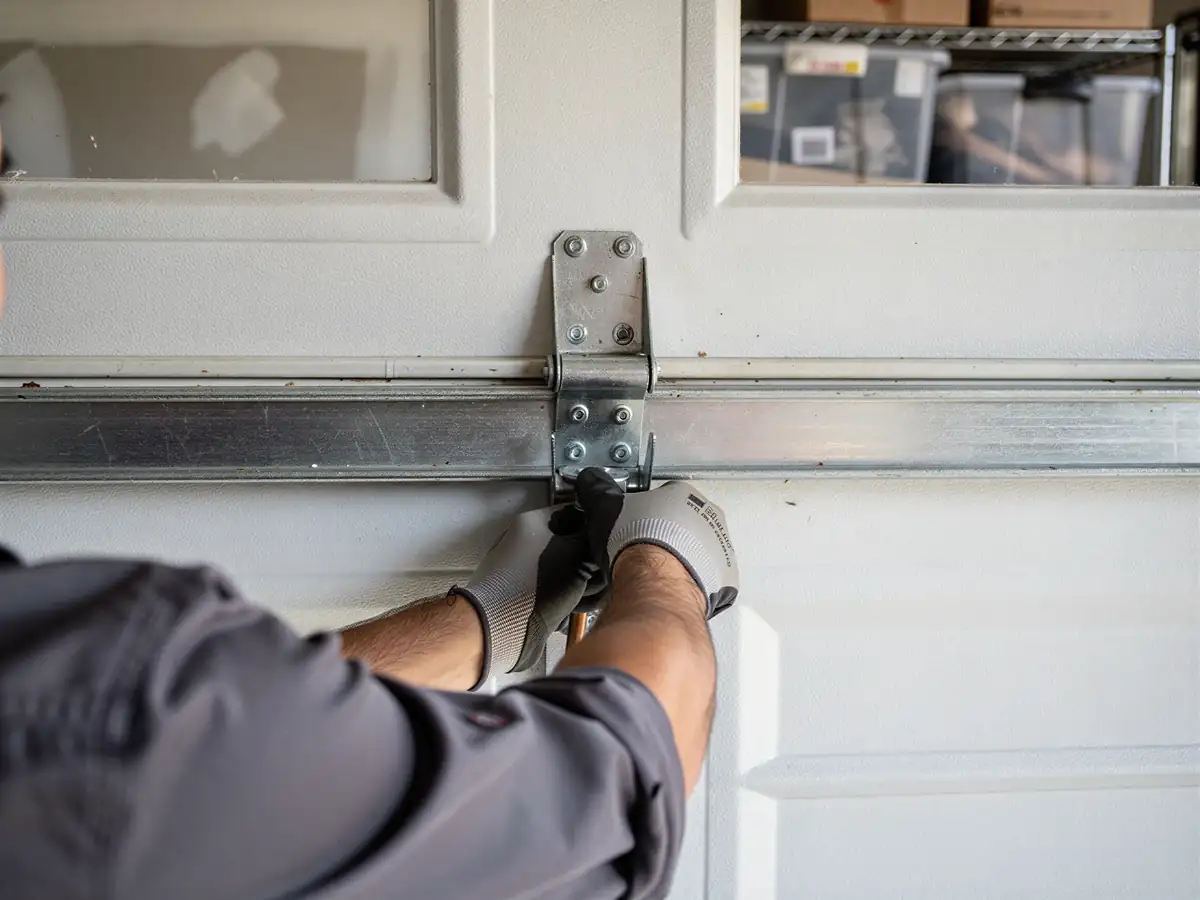
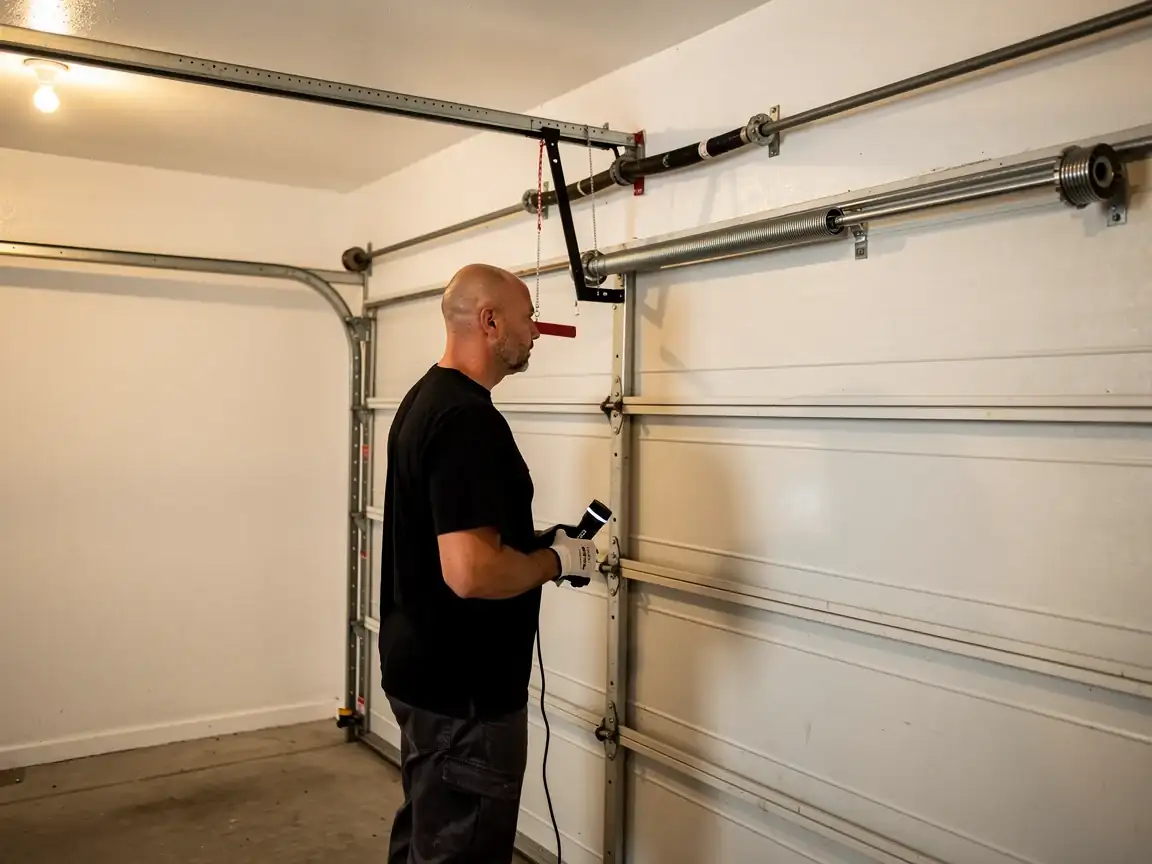
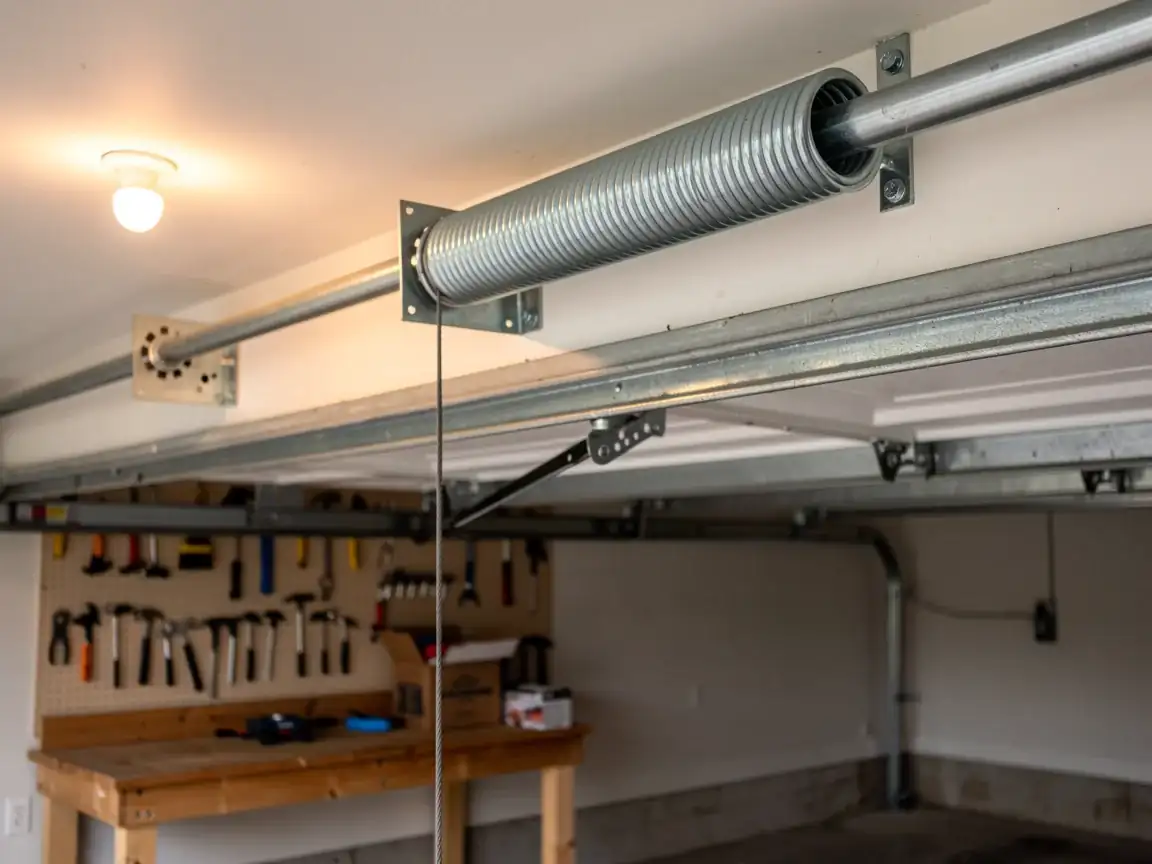
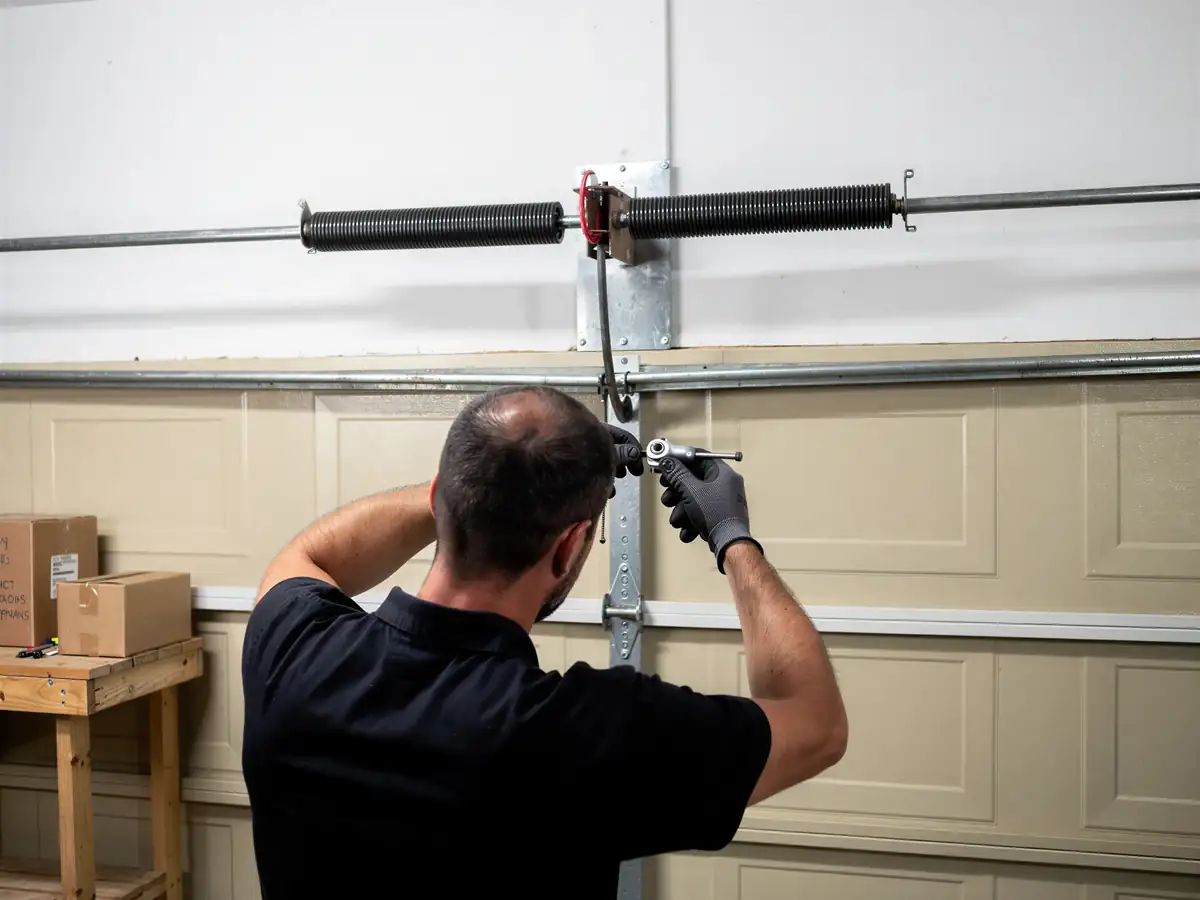
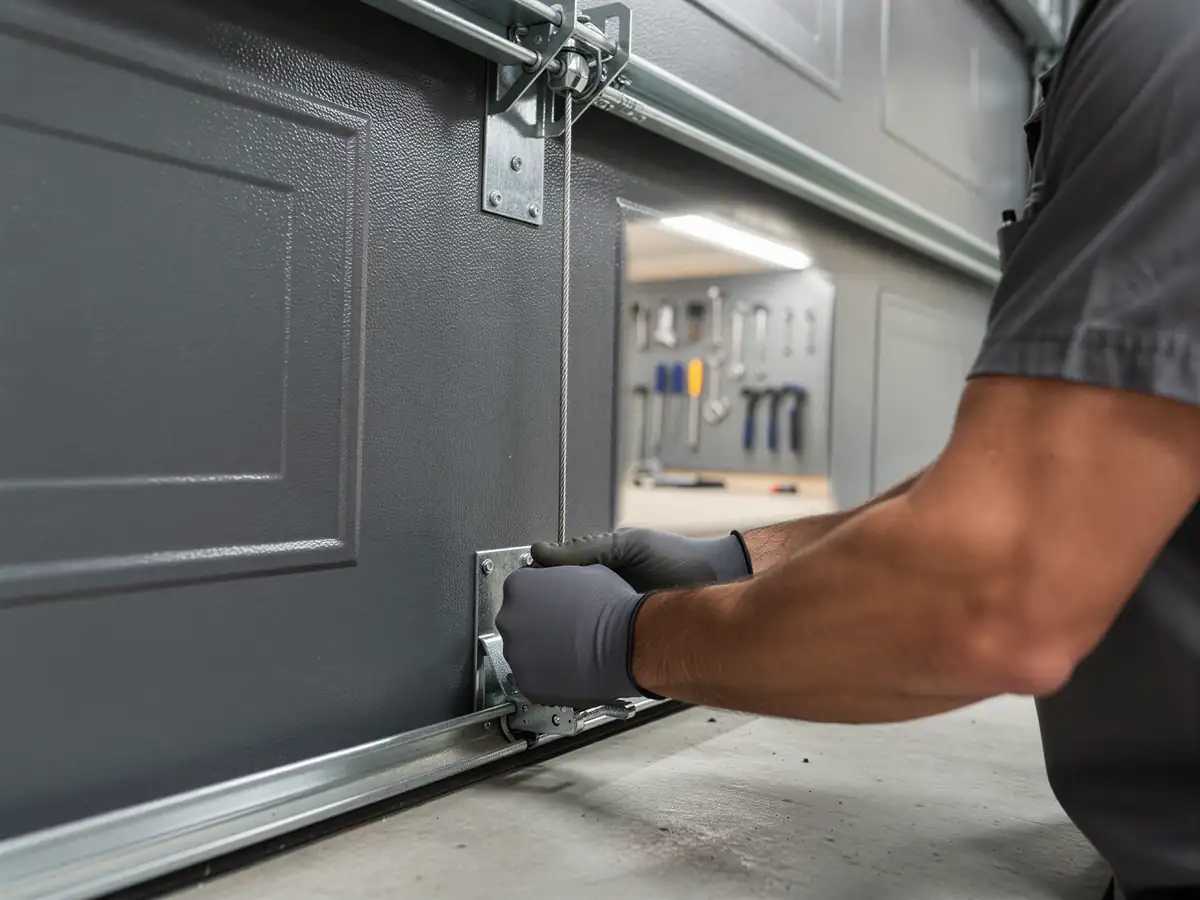
Torsion spring replacement is the most common call: we match the wire size and wind count to your door's weight rather than grabbing a generic spring off the shelf, because an undersized spring just means another snap in a year or two. For opener issues, we check the trolley connection, the travel limits, and the force setting before we touch the motor - a lot of "dead opener" calls turn out to be a disconnected carriage, which is a ten-minute fix, not a new unit. Where the track has pulled out of alignment, we re-set and re-shim it against the framing rather than just bending it back, since bent track that's been bent back tends to bind again within a season. One limitation worth saying plainly: if your door is original to a house built in the 1950s or 60s and the track or hardware is no longer made, we'll tell you that up front rather than chase parts that don't exist anymore - at that point replacement is the honest answer, not another repair.
Why This Fails Locally
This isn't a generic wear-and-tear story. Menomonee Falls sits in a severe cold climate band, and a torsion spring that's rated for a certain number of cycles loses tension faster through repeated deep-freeze and thaw cycling than it would somewhere milder - the steel itself behaves differently at single-digit temperatures, and so does the lubricant on the rollers. Pair that with a housing stock where the median build year is 1976 and a large share of homes across the 49 named areas we work in went up in the 1960s and 70s: that's forty to sixty years of hardware aging through Wisconsin winters on the same torsion bar and the same roller tracks. Add in that most of these are owner-occupied houses rather than rentals, so the original door and opener often never got swapped out the way a landlord might do on a turnover. The combination - old hardware, cold-climate spring fatigue, and a door that's been the original equipment for decades - is exactly why this call comes in so often here, and why a quick DIY tension adjustment rarely holds.
How it works
From “it’s stuck” to “it’s fixed”
01
Tell us what’s wrong
Describe the symptom - won’t open, loud bang, opener runs but the door won’t move.
02
On-site diagnosis
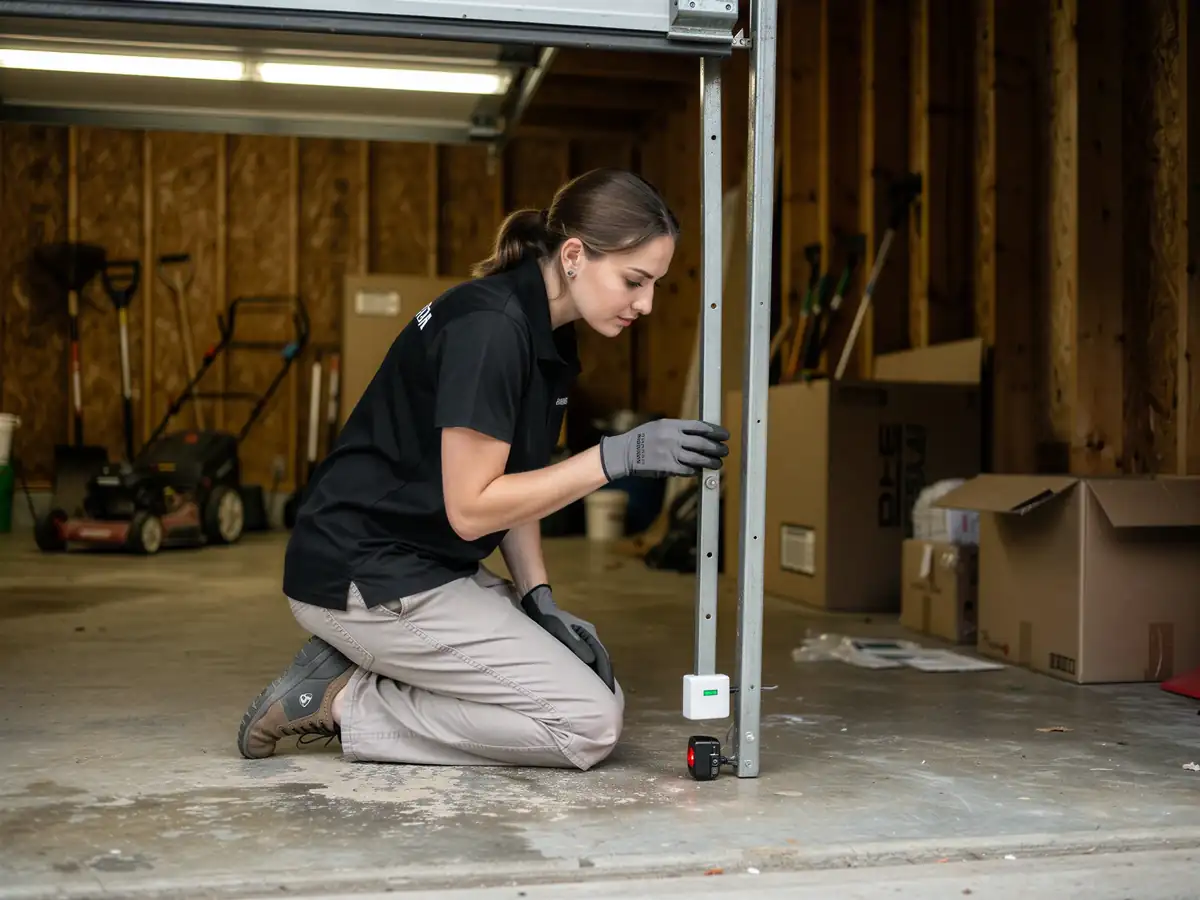
A technician tests the door under power and by hand and finds what actually failed.
03
Clear, up-front plan
You get the fix that’s needed and what drives the cost - before any work starts.
04
Repaired & tested
The repair is done, the door is set true and tested, and the work area left clean.
Not sure which repair your door needs in Menomonee Falls, WI? Describe what it’s doing - every job starts with a diagnosis.
Why did my garage door spring snap in the middle of winter?
Cold makes the steel in a torsion spring more brittle and speeds up fatigue from repeated cycling. In a severe cold climate like Menomonee Falls, a spring nearing the end of its rated life is far more likely to let go on a subzero morning than in warmer months. It's not a coincidence - the stress on the metal is genuinely higher in the cold.
My house was built in the 1960s - can you still get parts for the original door?
Sometimes. A lot of homes in the Falls area date from the 1960s and 70s, and original track or hardware on those doors is often no longer manufactured. We'll check before we quote a repair. If the part doesn't exist anymore, we'll say so rather than string along a job that won't hold.
Do you work outside Menomonee Falls itself?
Yes, we cover the surrounding area including Lannon, Butler, Germantown, Sussex, Lisbon, and towns further out like Mequon, Pewaukee, and Hartland. Call and give us your address and we'll tell you straight away if you're in range.
Is a stuck-closed door an emergency?
If a car is trapped inside and you need it that day, yes - call and say so, and we'll prioritize it. If the car's out and the door is just stuck, it's still worth same-week attention since a door stuck in any position is a security gap, but it's not a middle-of-the-night call.
Ready to get your garage door sorted?
Tell us what it’s doing and where you are in Menomonee Falls - we’ll take it from there.