How to Book
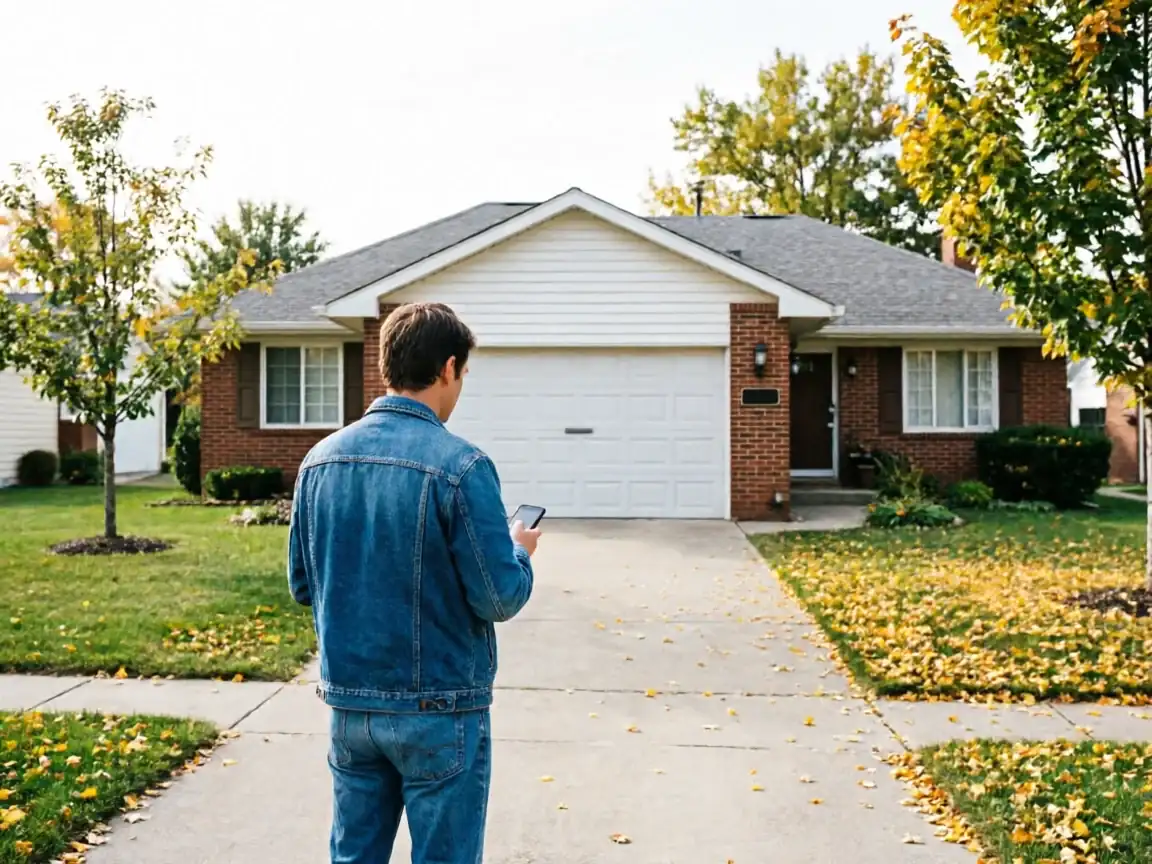
Call us and tell us what the door is doing
Won't open, won't close, came off the track, spring snapped with a bang. We need the symptom, the door's rough age if you know it, and whether anyone is trapped behind a stuck door with a car inside. That's it. We don't need the make and model over the phone; we'll confirm that on the truck.
If the opener light is blinking a code, read us the number of flashes before you call
It narrows down the fault before we're in the driveway. If the door is physically off its tracks or a cable has let go, don't try to force it with the opener. Running the motor against a jammed door strips the gear or burns the capacitor, and now you've got two repairs instead of one.
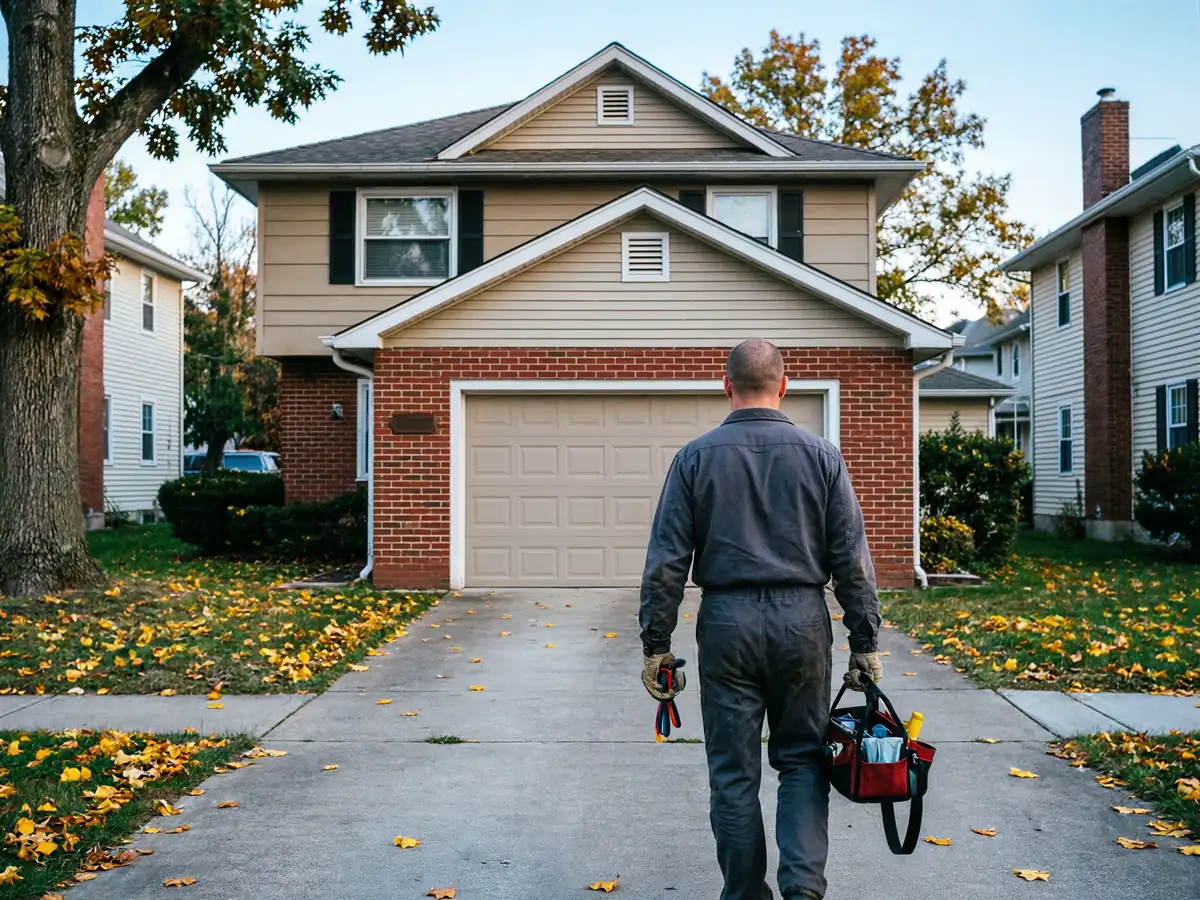
We cover Menomonee Falls and the surrounding area out to places like Lannon, Butler, Germantown, Sussex, and Lisbon, and farther out toward Pewaukee, Mequon, and Cedarburg
Distance from our shop changes how fast we can get there, not whether we'll come.
What You Are Seeing
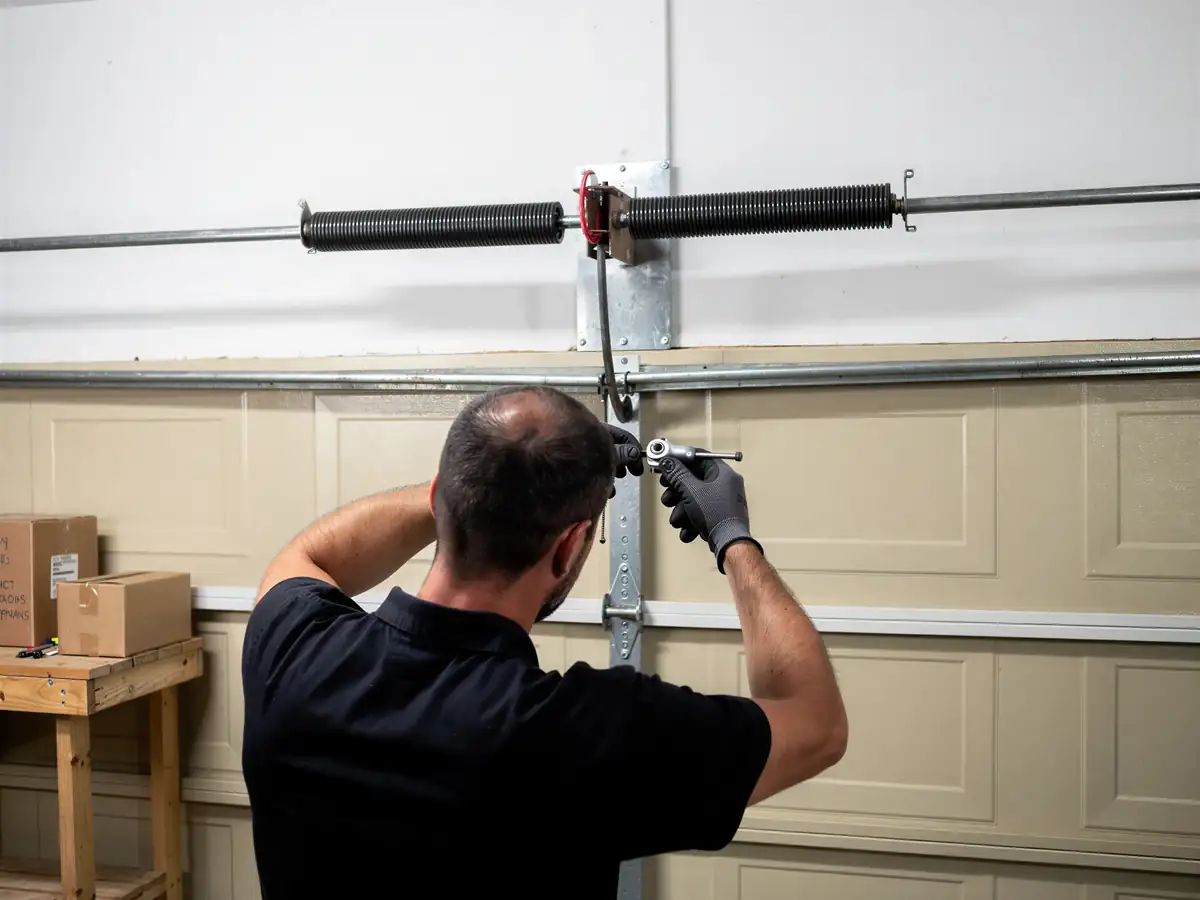
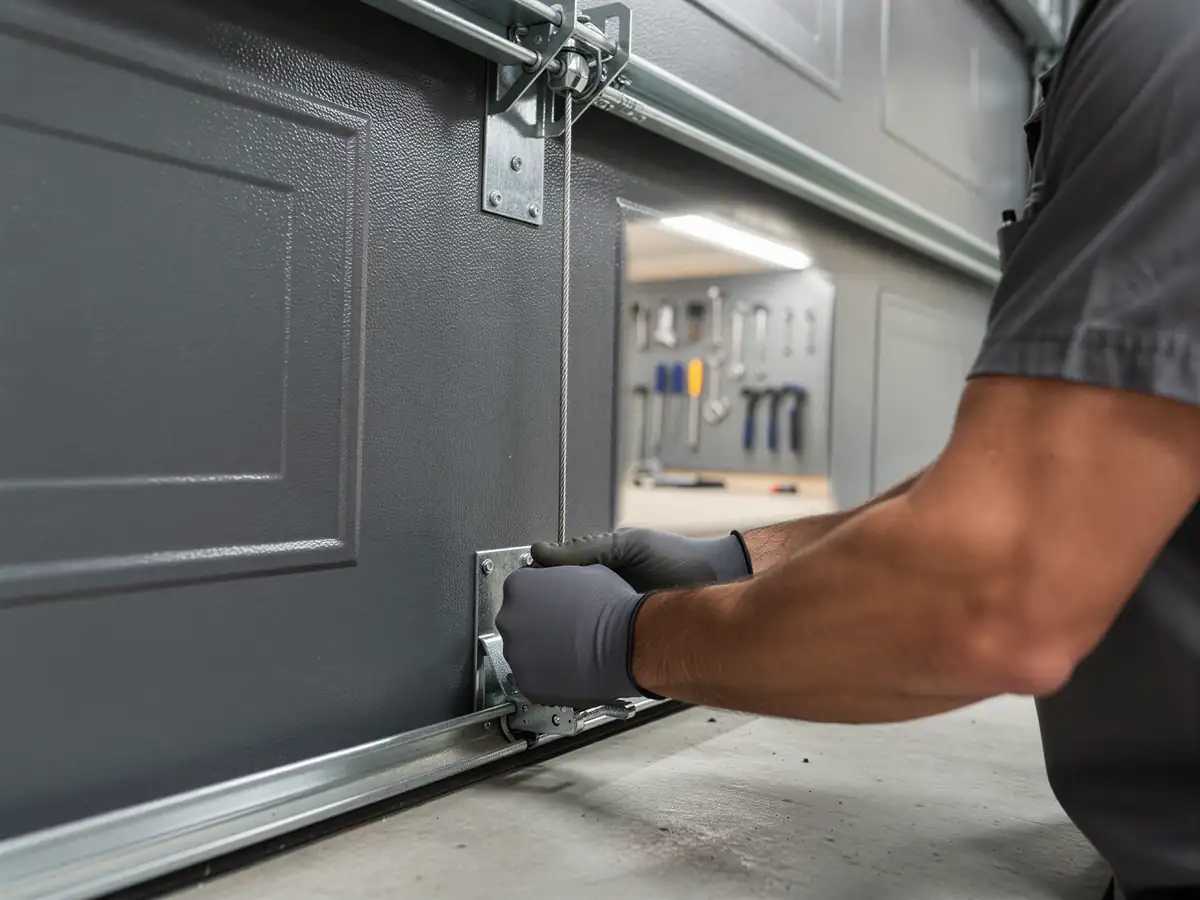
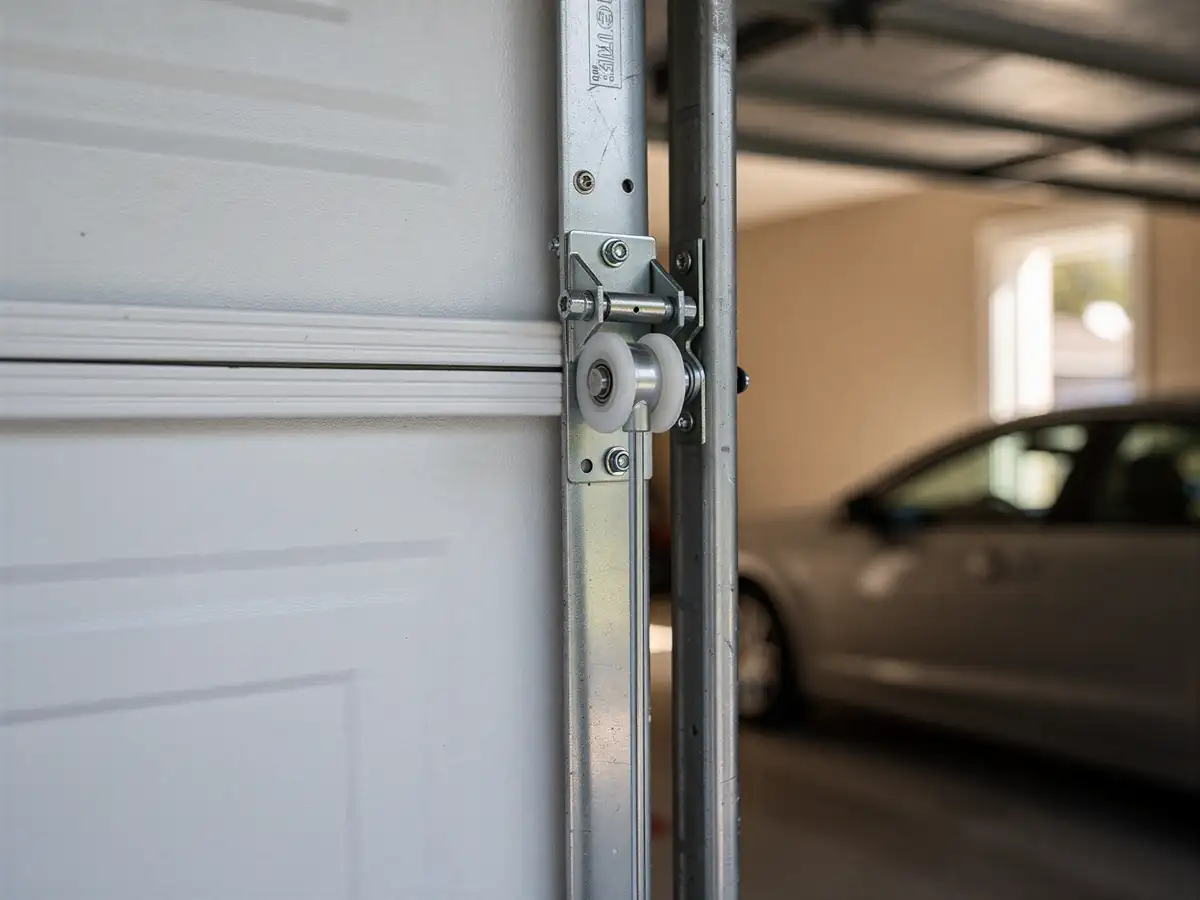
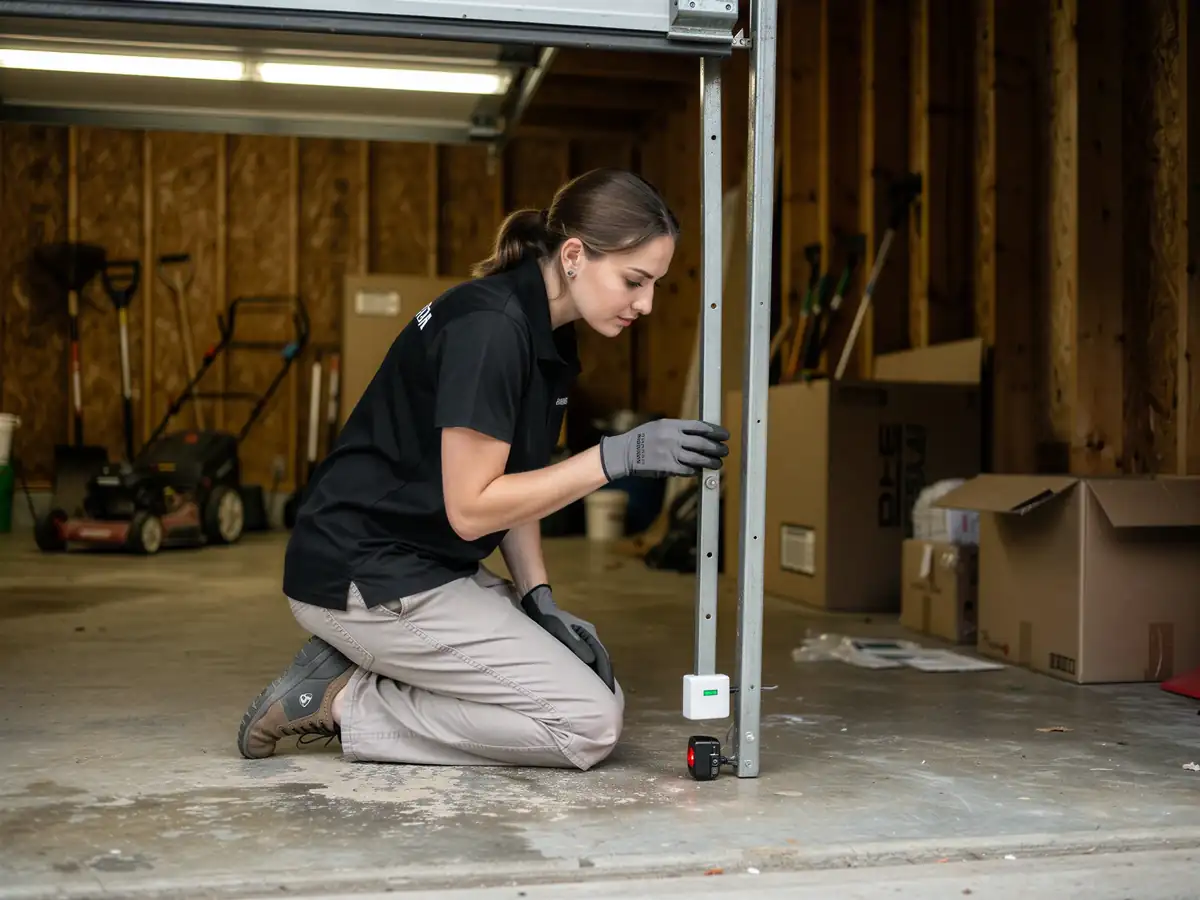
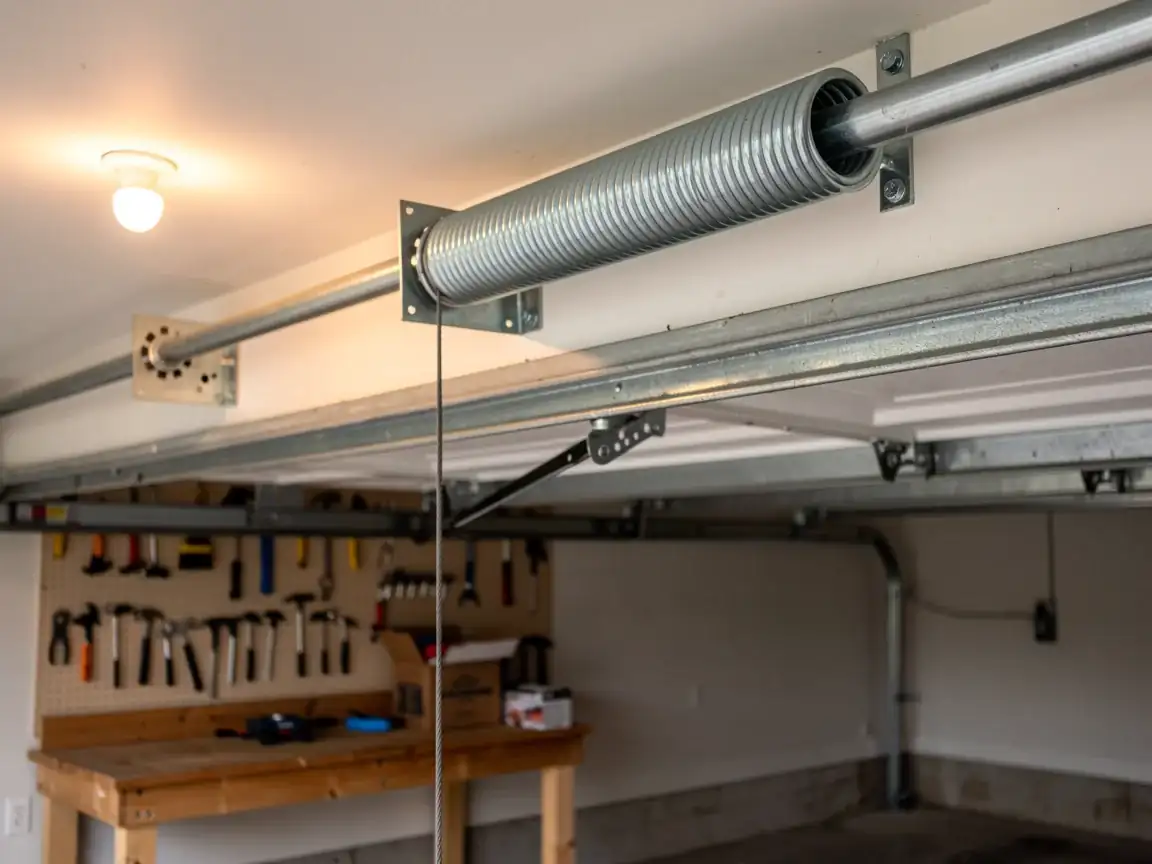
Most emergency calls here break down to a handful of patterns: a torsion spring that snapped (loud bang, door won't budge or slams down fast), a cable that frayed and let go on one side (door hangs crooked), rollers that jumped the track after years of wear, or an opener that's straining and clicking instead of lifting.
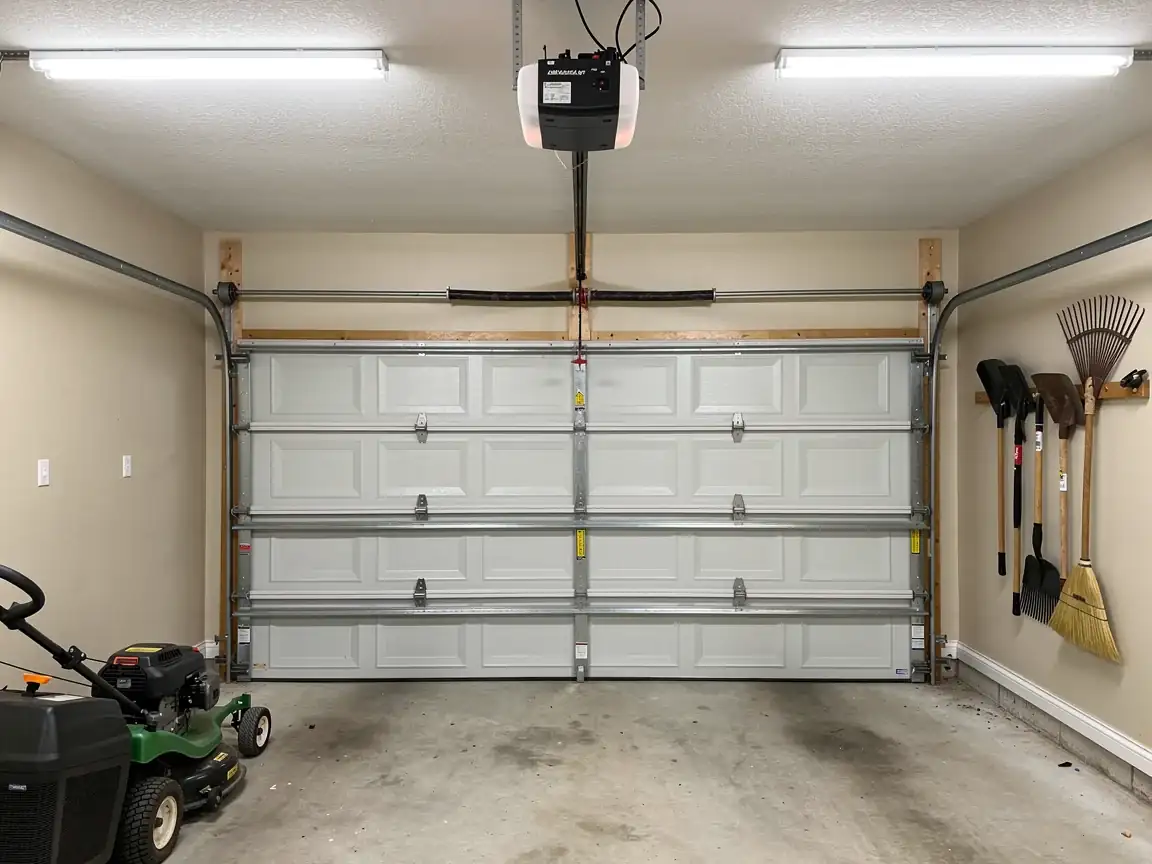
Housing stock across this service area runs mostly 1938 to 2000, with the bulk built in the 1960s and 70s. A lot of those garages still carry their original one-piece doors or early sectional setups with side-mounted torsion springs - hardware that's decades past its rated cycle count and not something the big box stores stock anymore. When that spring finally goes, it usually goes without warning, often on the coldest morning of the year.
That timing isn't coincidence. This is a cold-climate zone with hard winters, and steel springs and cables lose flex and strength as the temperature drops. A spring that's been creaking along fine in September can snap clean in January because the metal's gotten brittle and the last bit of lift was already gone.
How We Fix It
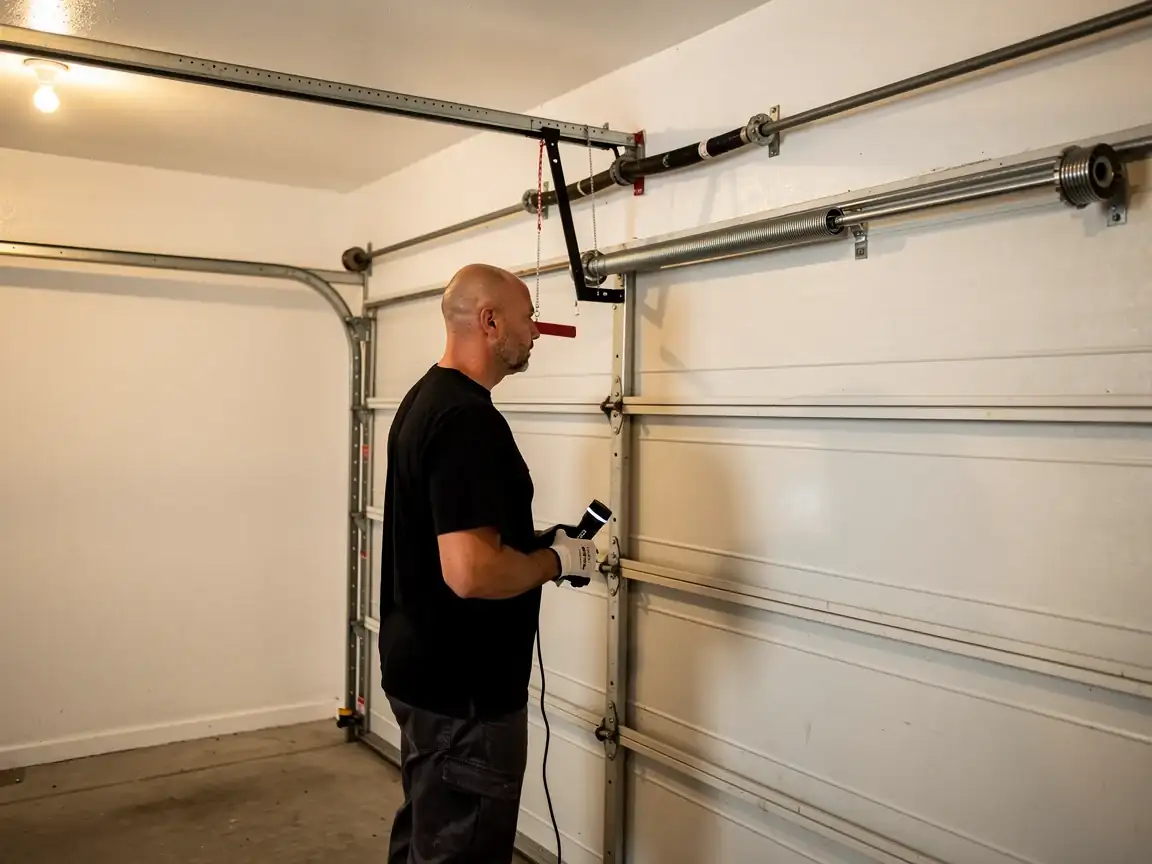
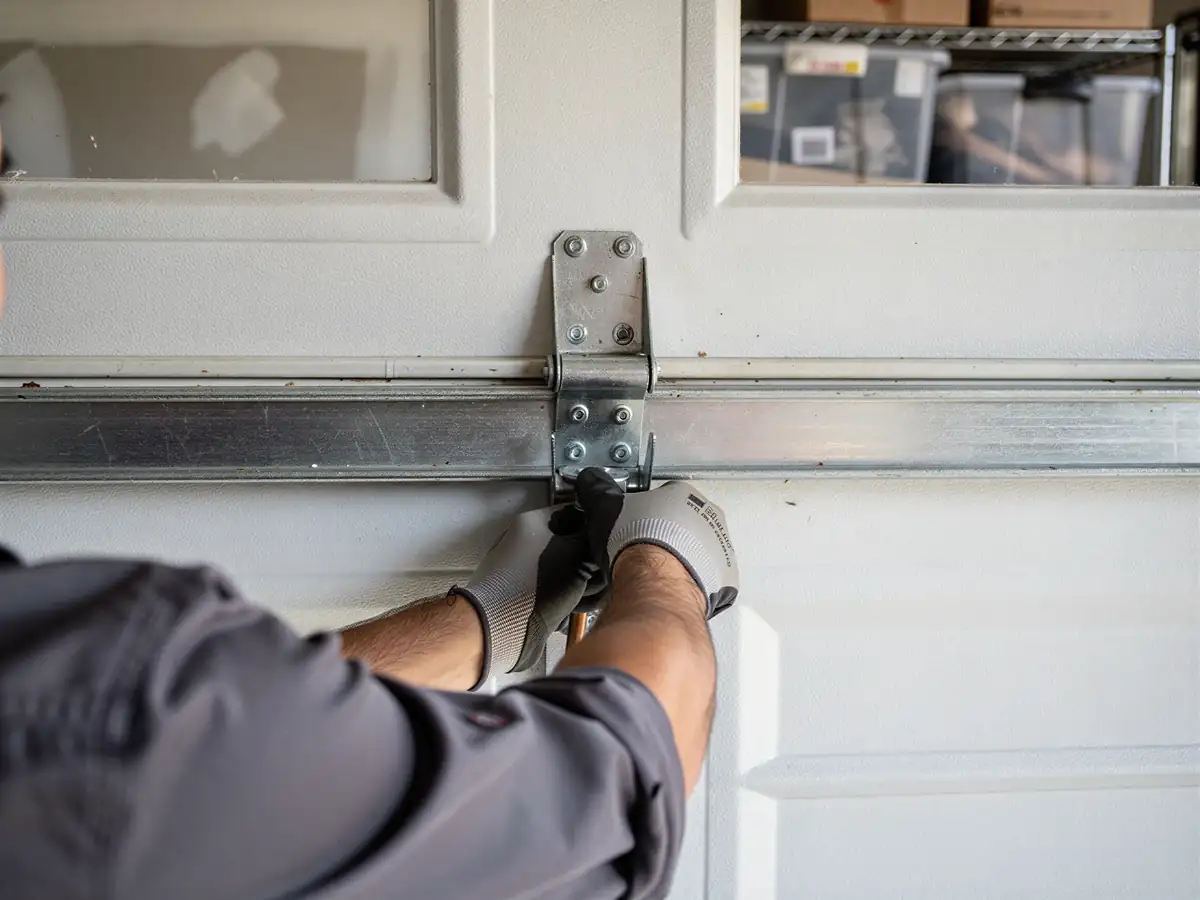
We replace springs matched to the door's weight and the drum size on the shaft, not a generic one-size spring that strains the opener again in a year. Same for cables - we replace both sides even if only one broke, because the other one is the same age and already fatigued.
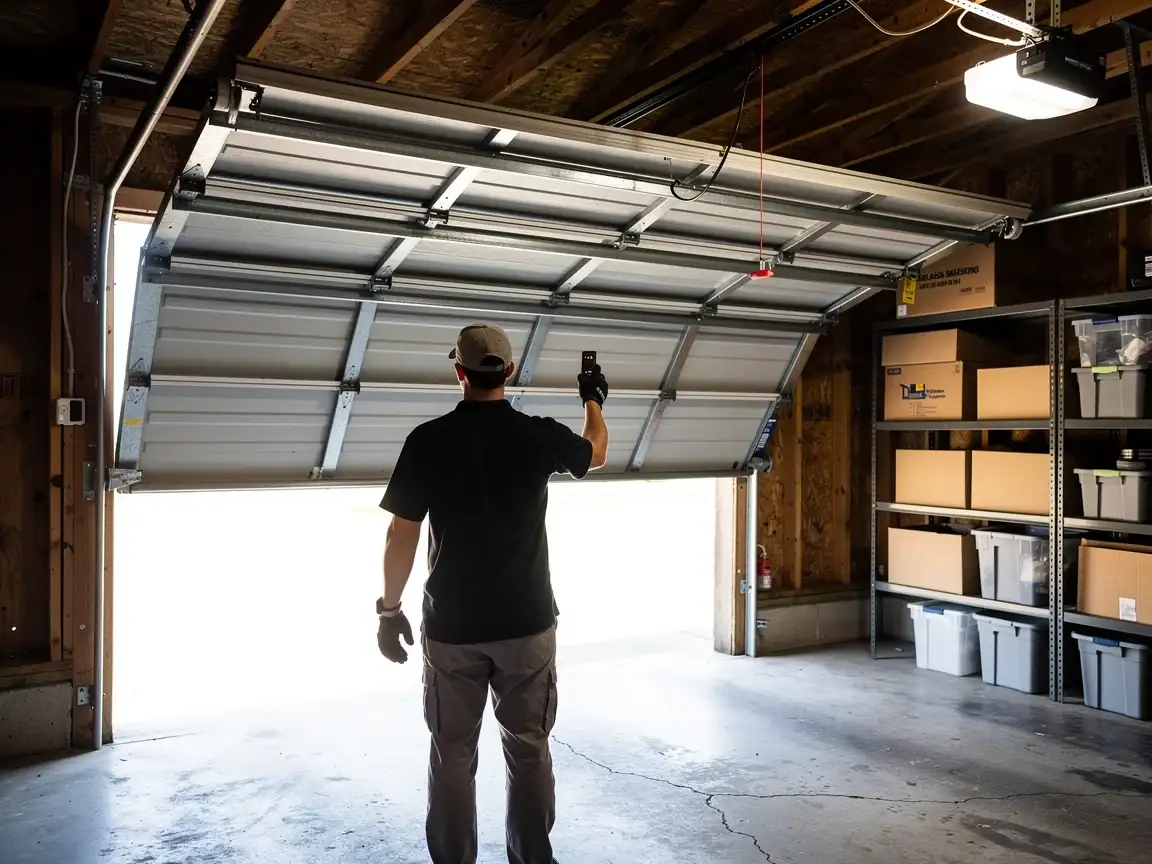
If rollers jumped the track, we check whether the track itself bent on the way off, which happens more than people expect. A bent track looks fixable by eye but keeps throwing rollers until it's swapped or straightened properly.
For openers, we test the logic board, the capacitor, and the gear before replacing anything, because a lot of "the opener's dead" calls turn out to be a $20 part, not a new unit. We won't sell you a new opener because the old one is loud or old-looking if the motor and gears are still sound. That said, on original 1960s-70s doors that are heavier, thicker-gauge steel than anything made today, some older openers just aren't built to lift that weight reliably anymore - in that case we'll say so and tell you why.
Why This Fails Locally
The failure pattern here ties directly to two things: the age of the housing and the winters
A door built or installed when a house went up in the 1960s or 70s has had fifty-plus years of temperature swings working on the same torsion spring, the same galvanized cable, the same steel track. Cold-climate winters here put real stress on that hardware every season - metal contracts, grease stiffens, and the one extra pound of resistance from the cold is enough to finish off a spring that was already near its cycle limit.
It's also why these emergencies cluster in cold months
A spring near end-of-life might hold through a mild fall and let go the first hard-freeze week. We see the same thing on original one-piece doors across the area - Menomonee Falls, and out toward Lannon, Germantown, and Sussex - because the housing ages are similar and the winters hit everyone the same way.
One limitation worth saying plainly
If a door is original to a house built in that 1938-2000 window and the track, hinges, and panels are all showing their age together, patching one failed part is sometimes just delaying the next one. We'll tell you when replacement makes more sense than another repair call.