What Is Going On
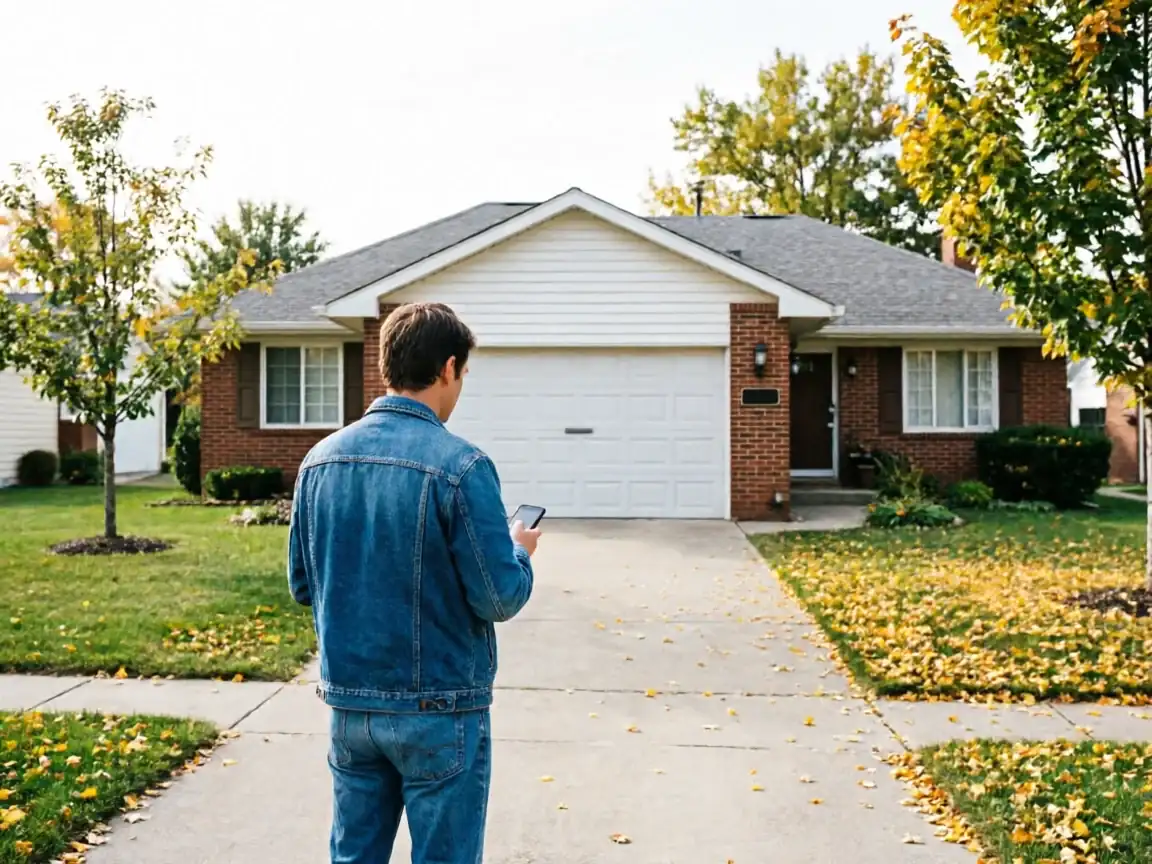
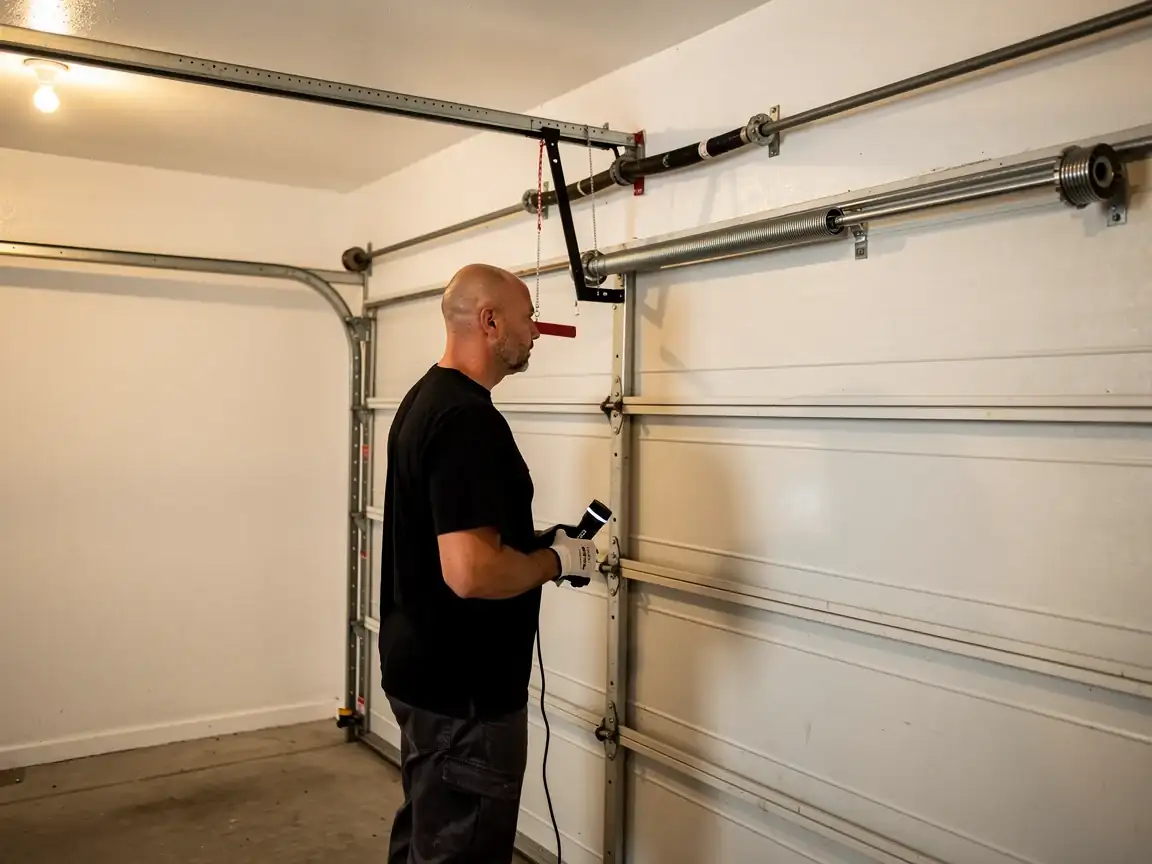
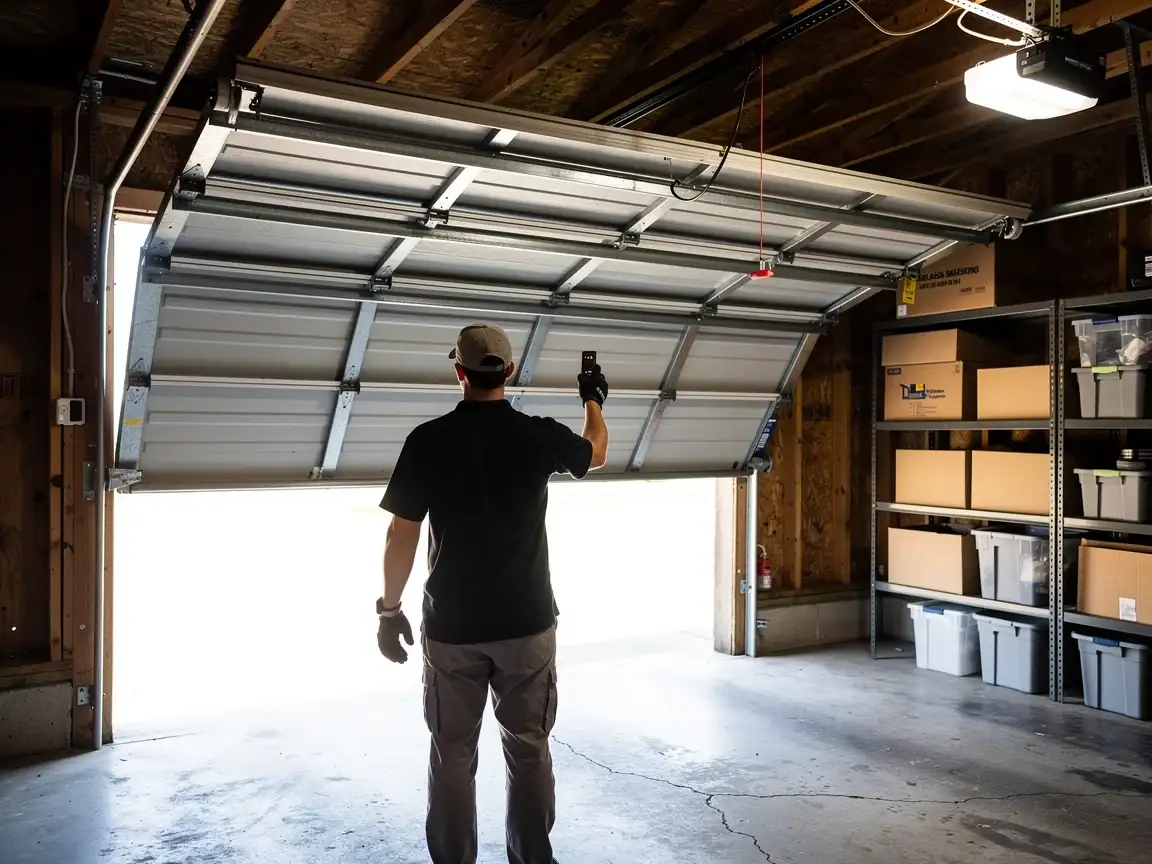
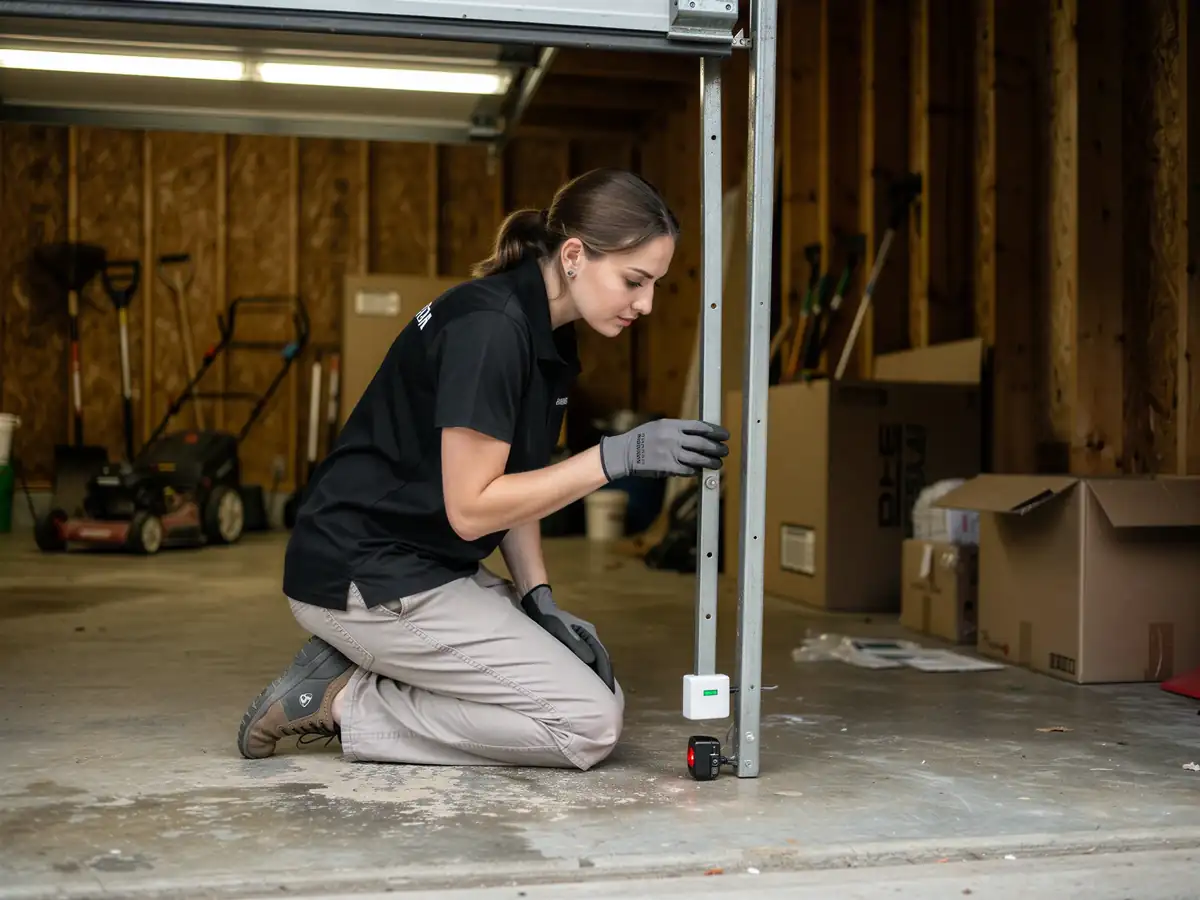
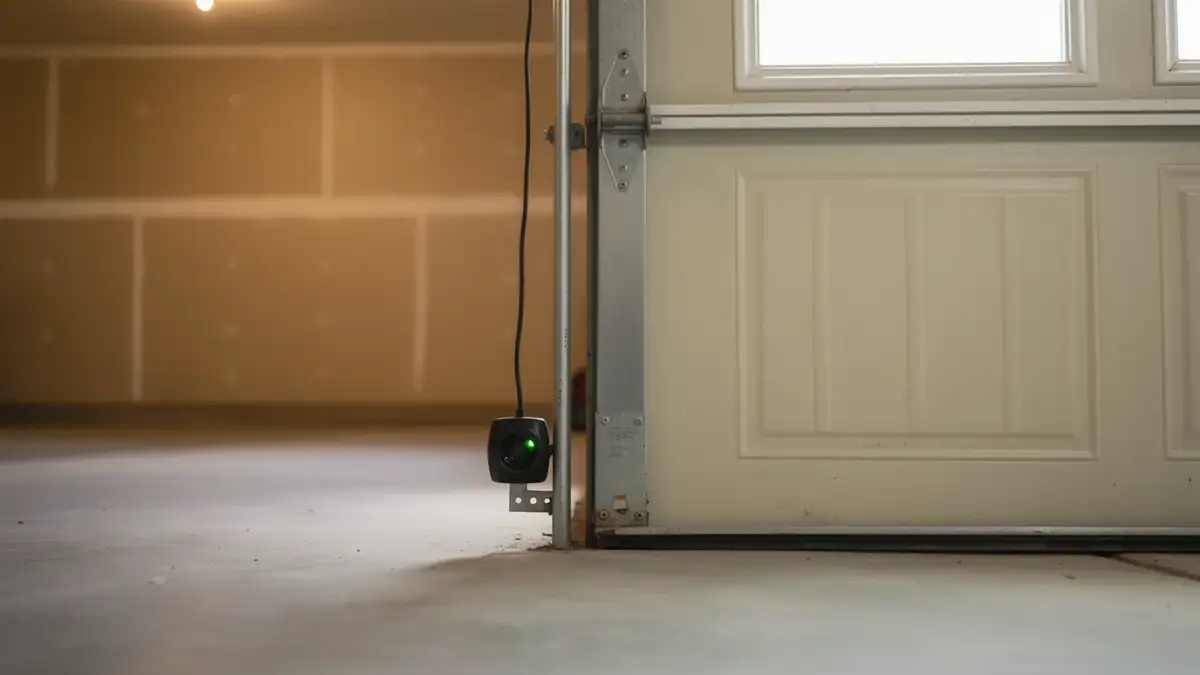
Safety sensors are the two small eyes near the bottom of the track, and they only work if they're staring dead at each other. Drift happens when one bracket moves relative to the other - not the sensor itself failing, usually, but the thing it's screwed to shifting. In a lot of the housing stock around here, built from 1938 through 2000 with a median year around 1976, the slab the track is anchored to has had forty-plus years to settle, and older concrete doesn't settle evenly on both sides of a door opening. One bracket sits on a slab edge that's dropped a quarter inch more than the other side, and now the beam that used to line up perfectly is aimed a hair off. You get a door that reverses for no visible reason, or won't close at all some days and works fine others. It's rarely the sensor. It's almost always what the sensor is bolted to.
What the Weather Here Does to It
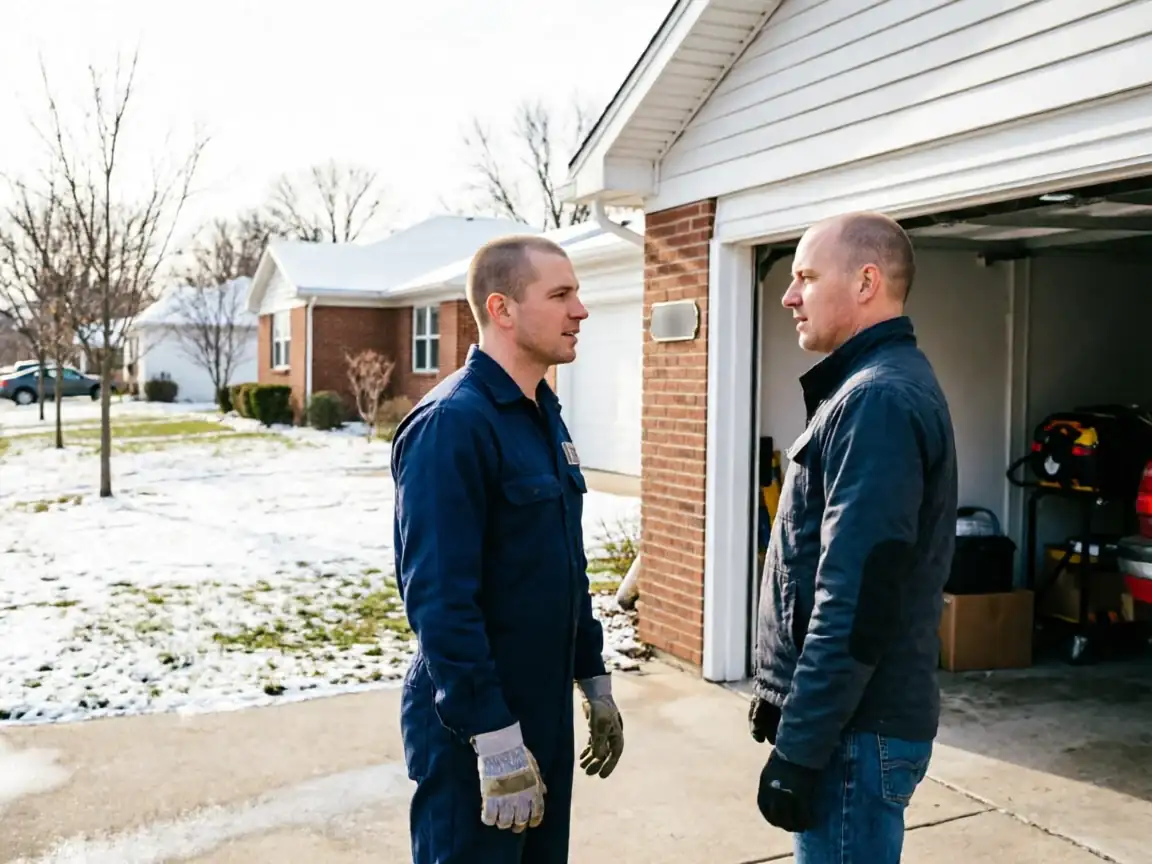
This area sits in a cold, severe climate band, and that matters more for sensor drift than most homeowners expect. Freeze-thaw cycles move concrete. The slab under your garage door track expands and contracts across a winter, and a bracket that was dead level in October can be off by enough to trip the beam by February. On older houses from the 1960s and 70s stock that's common here, the original mounting hardware wasn't designed with today's photo-eye sensors in mind - it was retrofitted later, often onto concrete that was already decades into its own freeze-thaw cycle. That combination - old slab, cold-climate heaving, retrofit hardware - is exactly why sensor calls spike here in ways they wouldn't in a milder climate with newer concrete.