Doing It Yourself
Most of what goes wrong with rollers in Thiensville isn't the roller itself - it's the stem
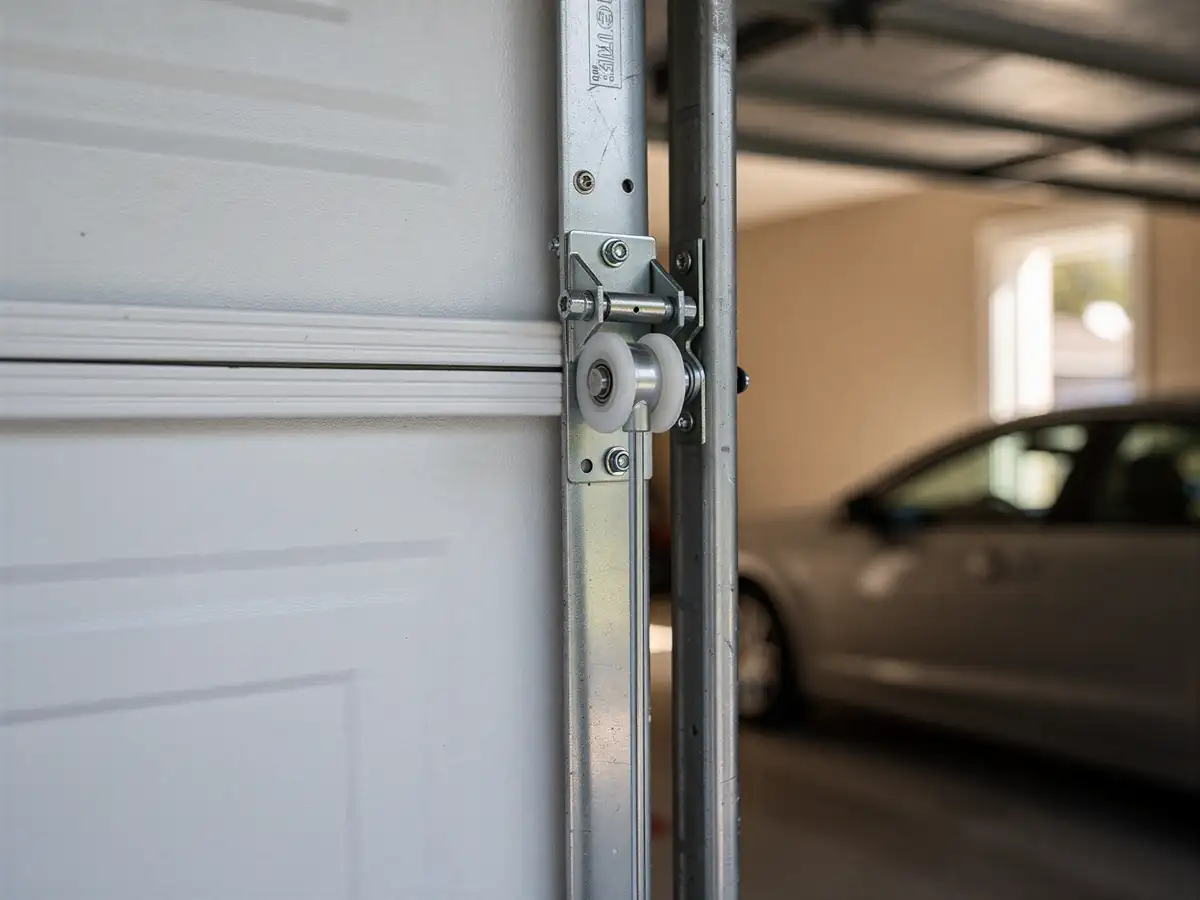
Homes here cluster around a 1966 build year, which means a lot of doors still running the original steel roller on steel track setup that came standard back then. The stem is the thin rod that rides in the roller's center hole, and after close to sixty winters of expansion and contraction, that stem wears thin right where it meets the roller wheel. You can grease a track all you want; it won't fix a stem that's worn to a point.
If you're hearing a grinding or popping sound as the door travels
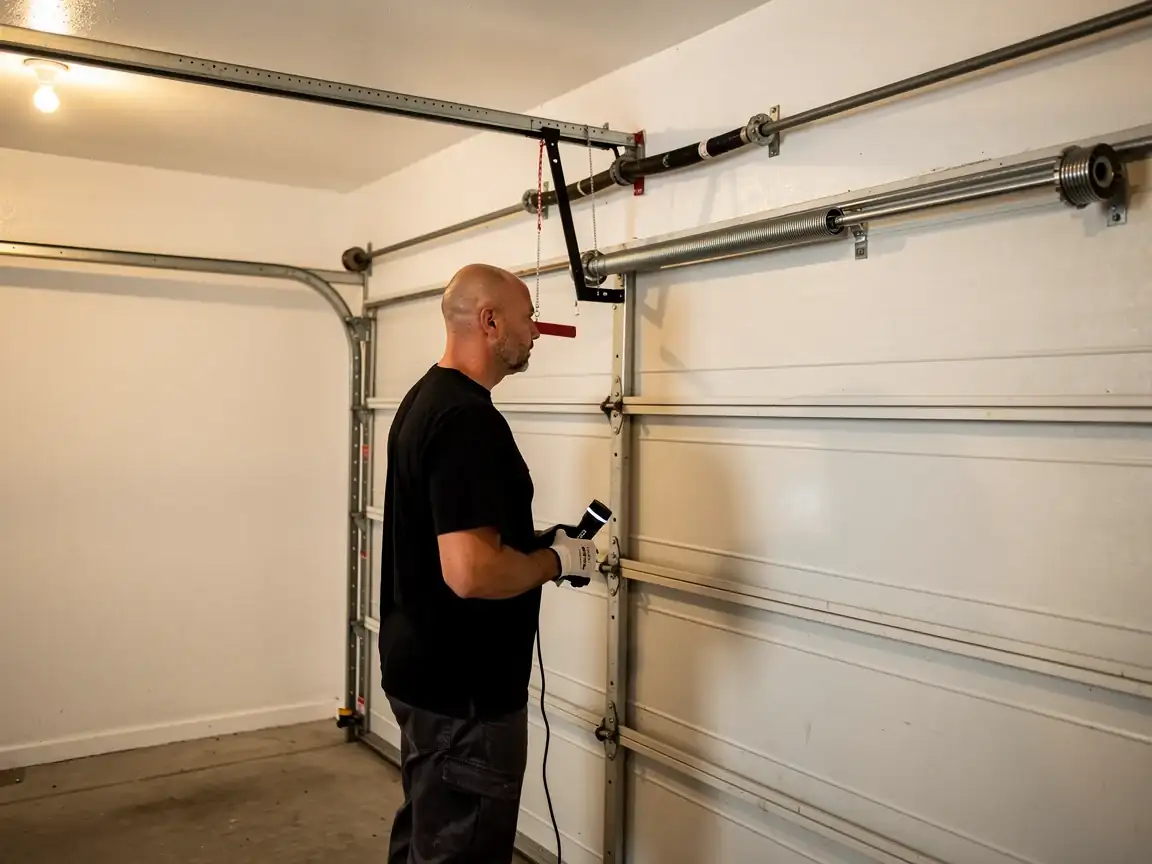
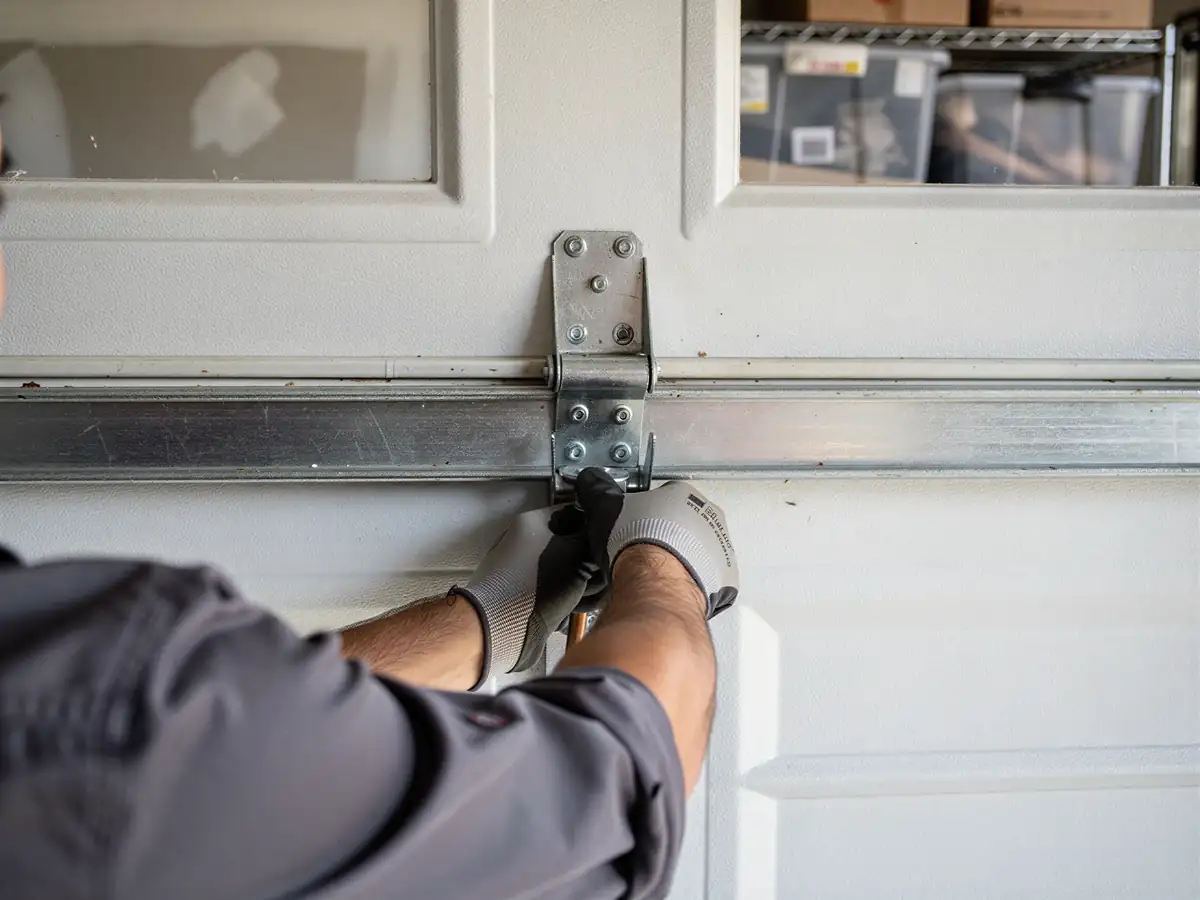
And you can see the roller wobble side to side in the track instead of rolling straight, that's stem wear, not a dirty track. Swapping one roller is a job you can do with the door disconnected from the opener and the section supported - but on an original steel-track door, the brackets are often rusted to the rail, and forcing them can bend the track. At that point you've turned a $20 roller into a $200 track replacement.
What You Are Seeing
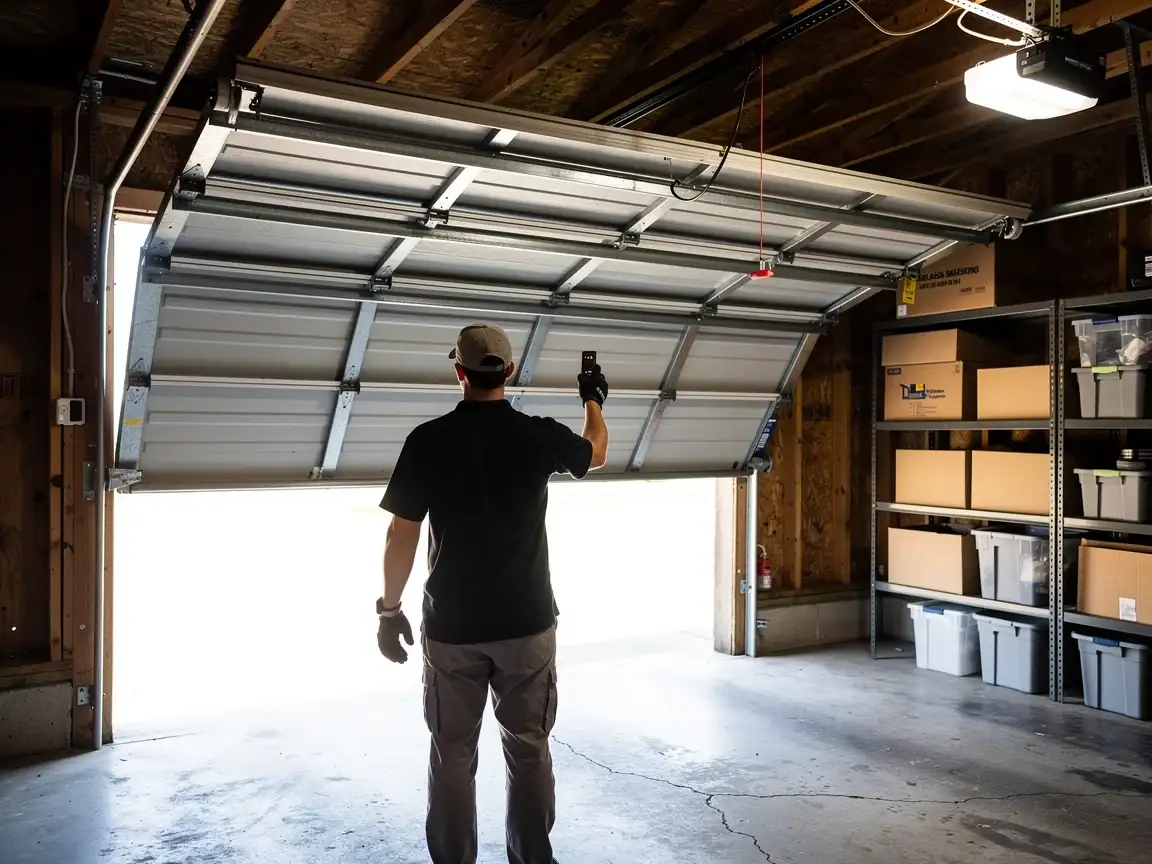
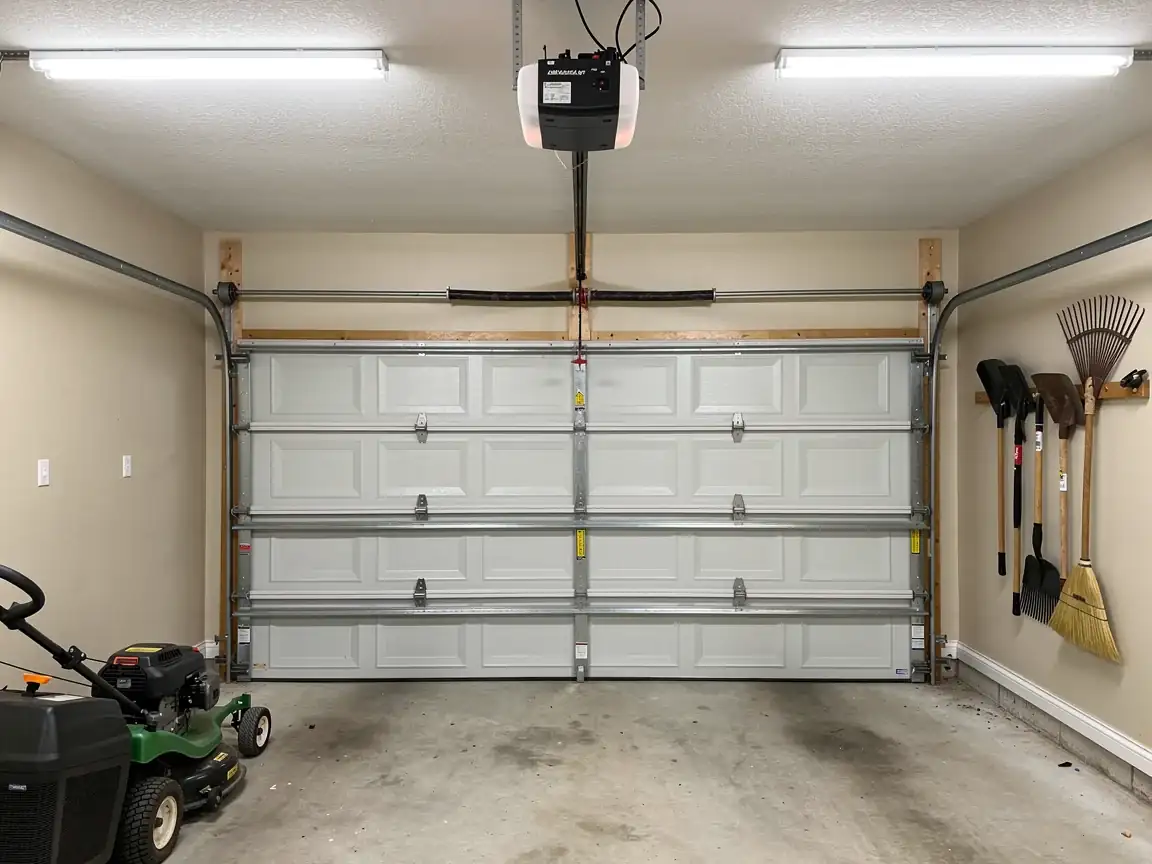
On a 1960s door, the symptom shows up as a hard spot in the travel - the door runs smooth for most of its path, then catches or shudders at roughly the same point every time. That's the worn roller passing through the curved section of track where the door changes from vertical to horizontal travel. Nylon rollers on newer doors handle that curve quietly for years; the steel rollers common to this vintage of house start singing at that same spot once the bearing wears loose.
You'll also see surface pitting on the roller wheel itself if you pull one out - tiny rust pockets from decades of a cold garage going through freeze-thaw cycles. That pitting roughens the roller's ride, and a rough-riding roller puts more drag on the opener, which is usually the first thing people notice: the opener straining or the door reversing partway up.
Why This Fails Locally
This area sits in a severe cold climate band, and a steel roller on steel track has almost no tolerance for that. Condensation that forms overnight in an unheated garage sits on bare steel rail and bare steel roller stems, and over enough winters it pits both surfaces. Nylon rollers don't corrode the same way, which is one reason newer installs in the area have mostly moved to them - but a door original to a 1966-era Thiensville house usually hasn't been touched.
The other factor is simple mileage. With 1,512 households in this suburb and most of the housing stock from that same mid-century build window, a lot of these doors are opening and closing on hardware that's original or close to it. Steel rollers are rated for a cycle count, same as anything with a bearing, and that count runs out whether the door gets used twice a day or six times. A door that's run through fifty-plus winters of this climate on its original rollers is past due, even if it still looks fine from across the garage.
How to Book
We run out of Menomonee Falls, about 9 miles from Thiensville
So when we schedule a roller job here we're planning the trip, not working from a branch down the street. That's worth knowing up front - it doesn't change the work, but it means we ask a few questions on the phone about roller type, track condition, and whether the door is binding, so we bring the right parts the first time instead of a second trip.
- 9 miles
If your door is sticking at the same spot every cycle or you can hear grinding as it travels, that's usually a roller job, not a spring or opener job
And it's a quicker fix than people expect. See our Thiensville garage door service page for the full range of what we handle in this suburb, and call to get a roller swap on the schedule.