Why This Fails Locally
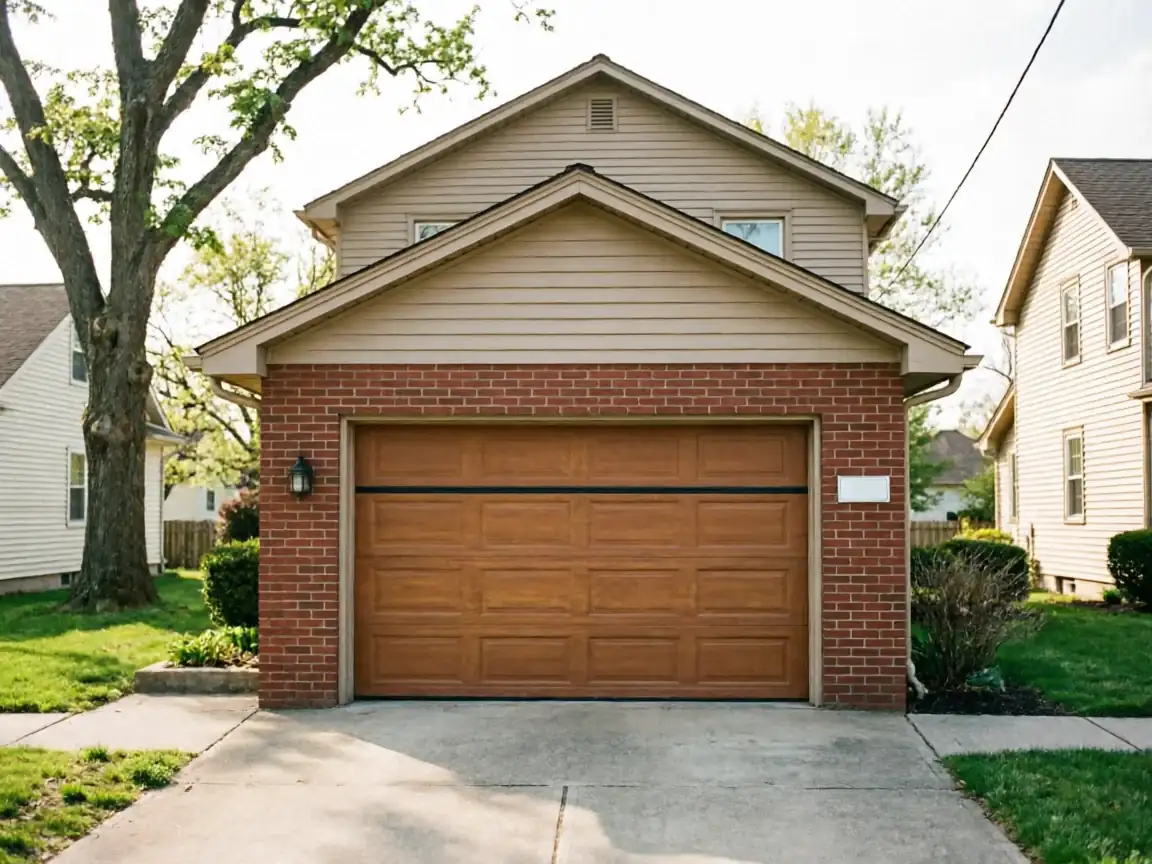
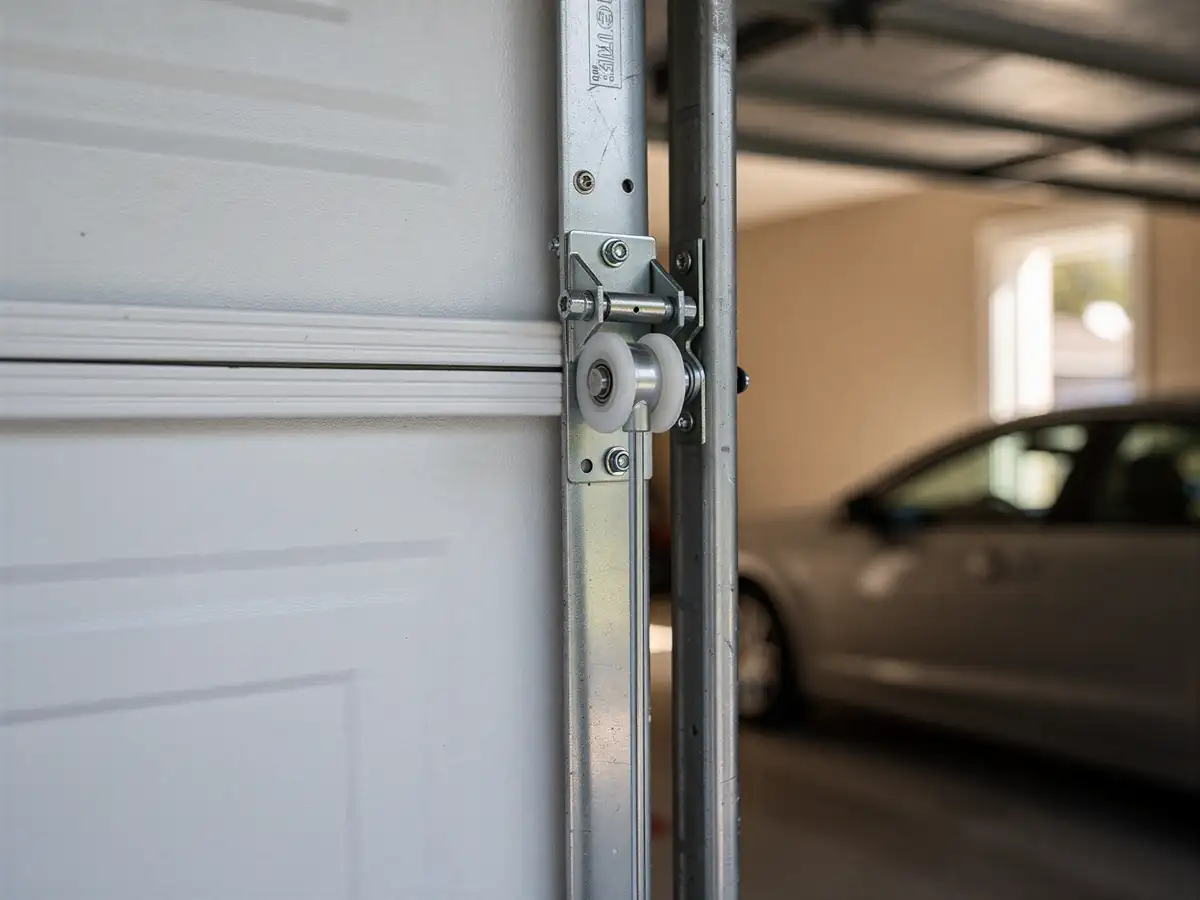
Winters here sit in the severe end of a cold climate band, and a garage door built around 1970 has had roughly five decades of freeze-thaw cycles working on its hardware. Steel springs lose tension faster in repeated cold snaps than people expect, and original steel rollers - common on houses from that era before nylon became standard - seize up in low temperatures right before they fail outright. On a door that's 50-plus years into its service life, the question usually isn't if something lets go on a cold morning, it's which part goes first: the spring, a seized roller binding the track, or a cable that's rusted through at the drum.
What You Are Seeing
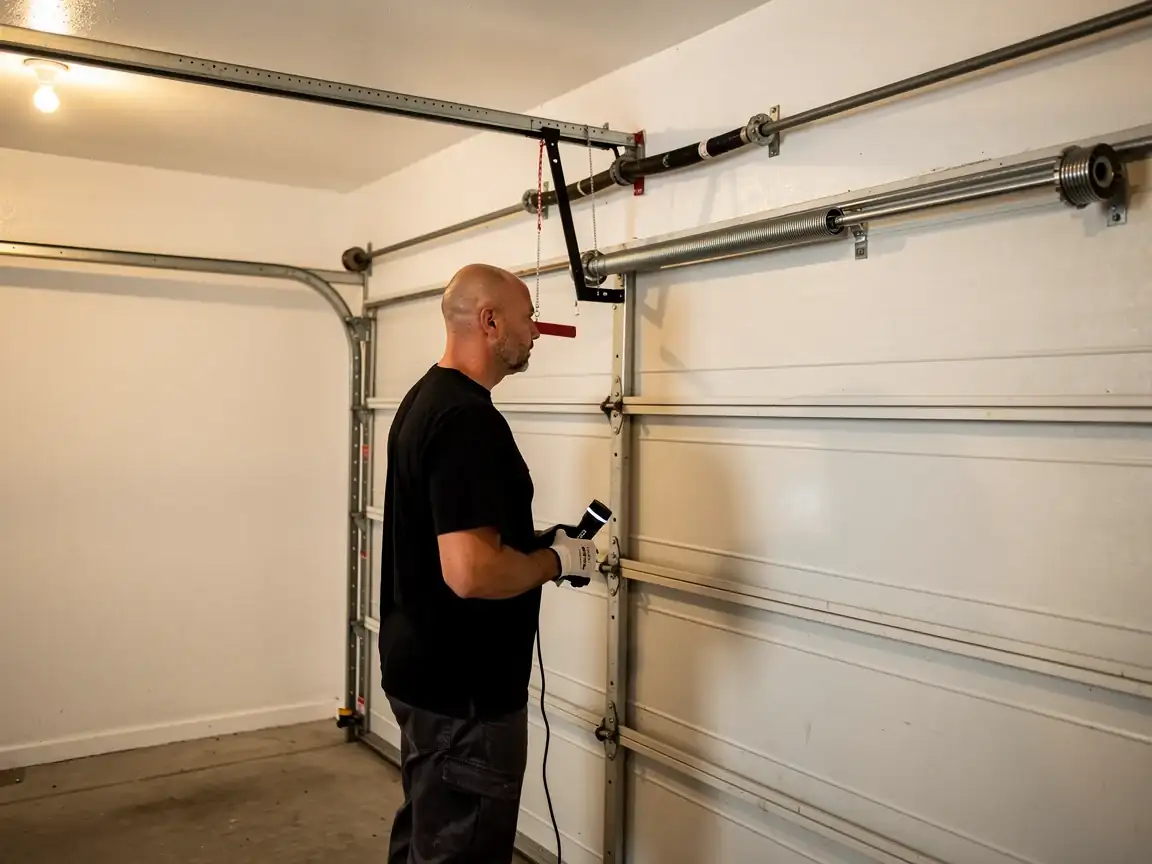
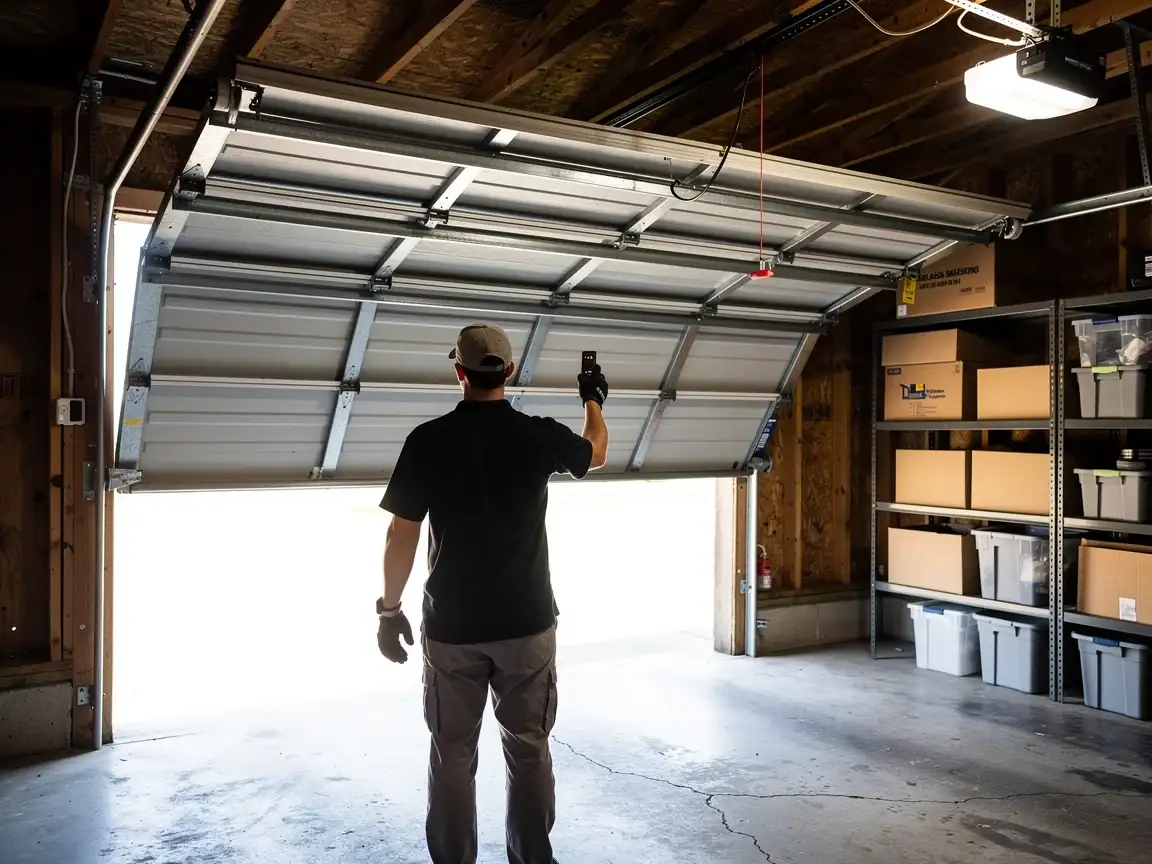
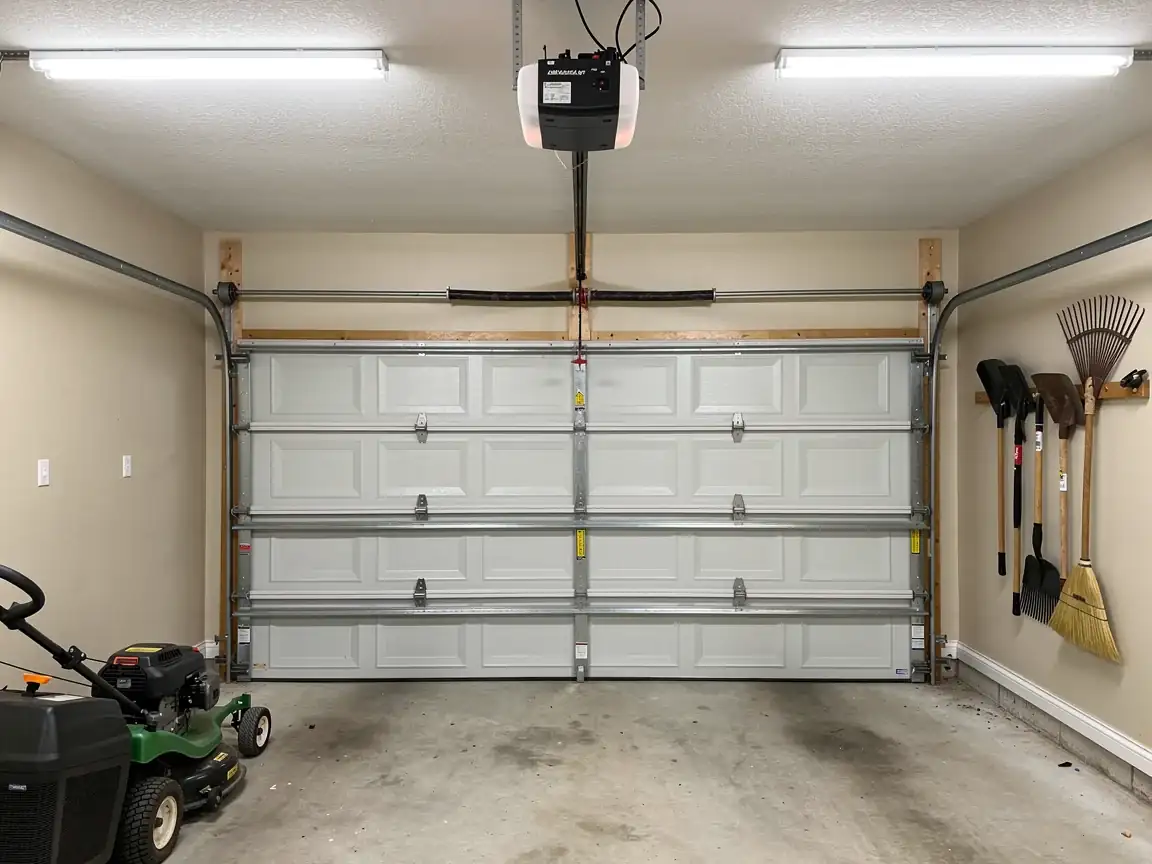
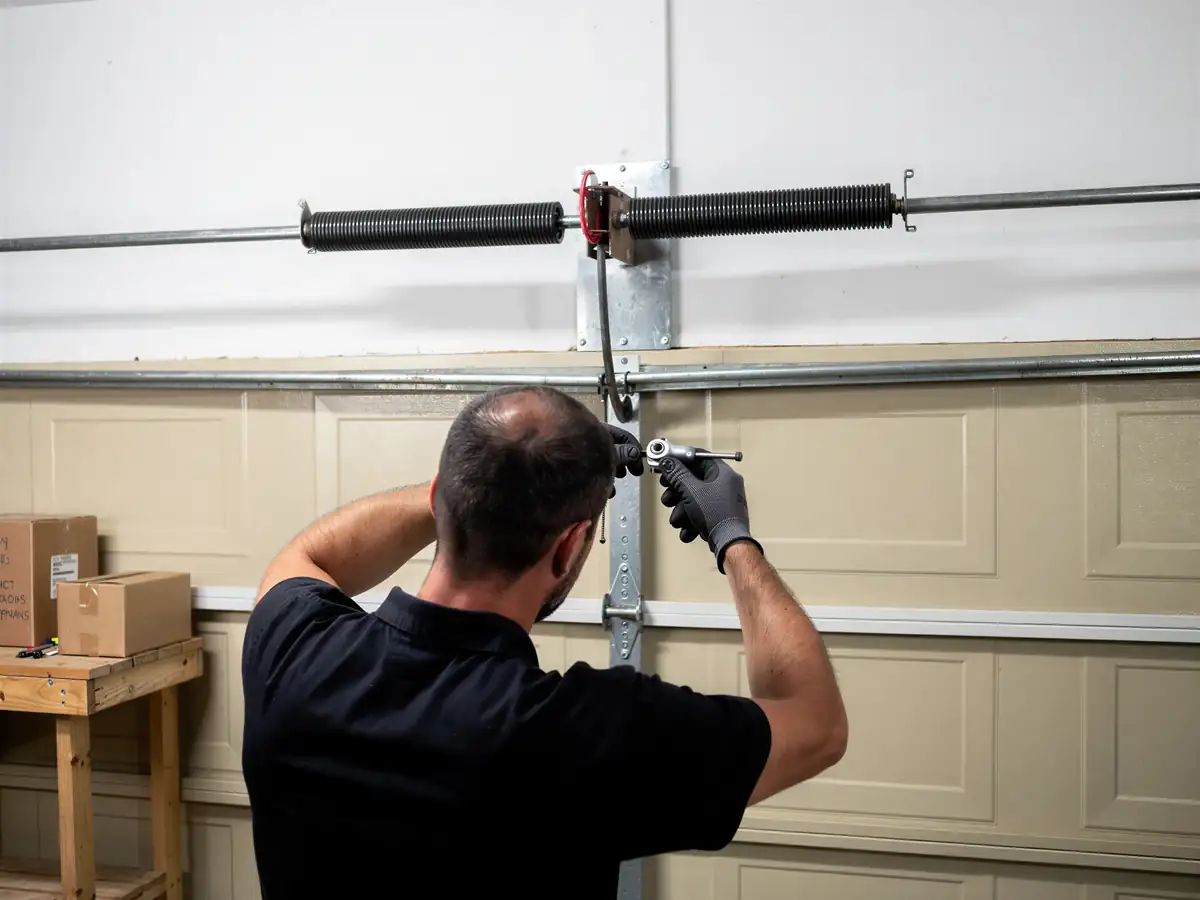
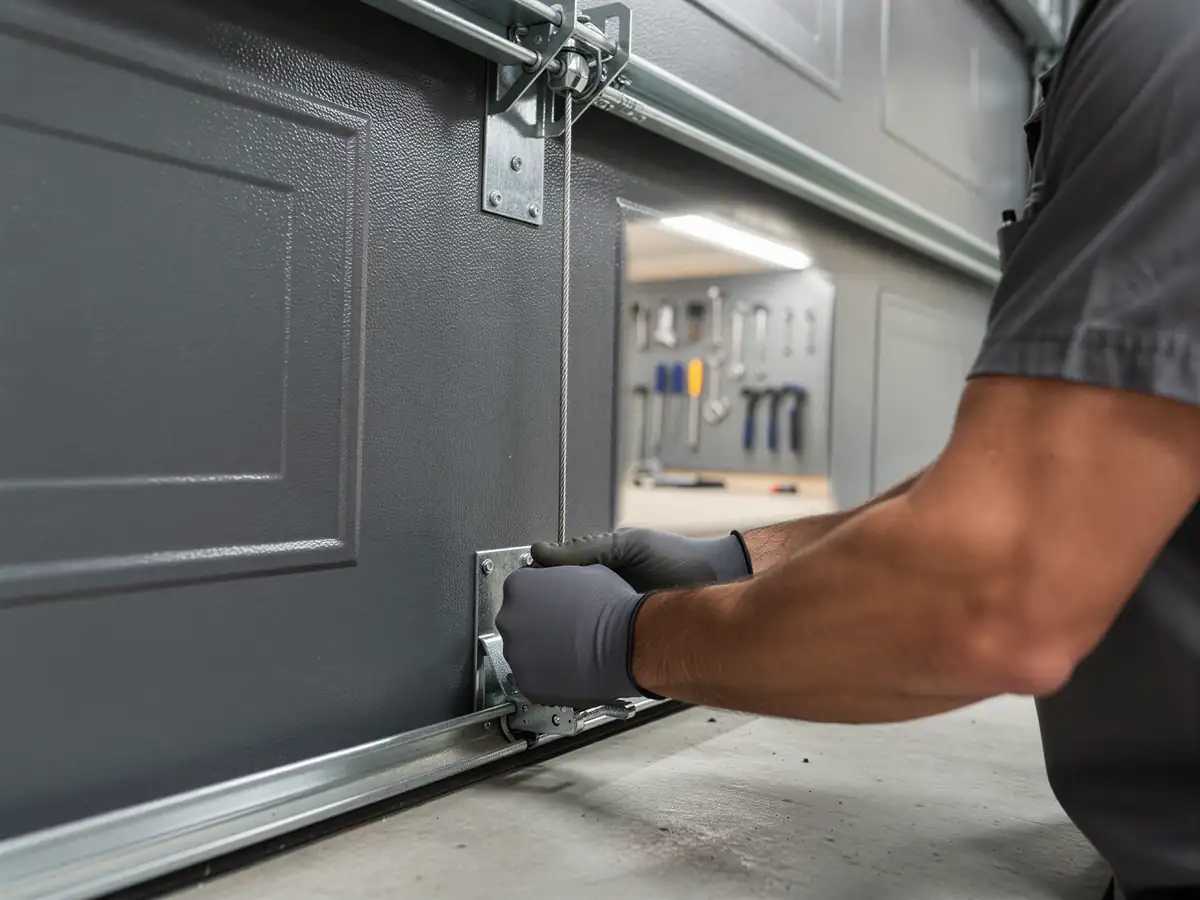
A door that won't budge and a garage full of cold air usually means a broken torsion spring - you'll often see a visible gap in the coil above the door. A door that opens but grinds, jumps, or drags on one side points to a seized or flat-spotted roller, more common on the older stock in this area than in newer construction. Cables that look frayed or have jumped the drum are a stop-everything situation; don't force the opener. If the opener runs but the door doesn't move at all, check the disconnect cord first - it's an easy thing to bump.
Doing It Yourself
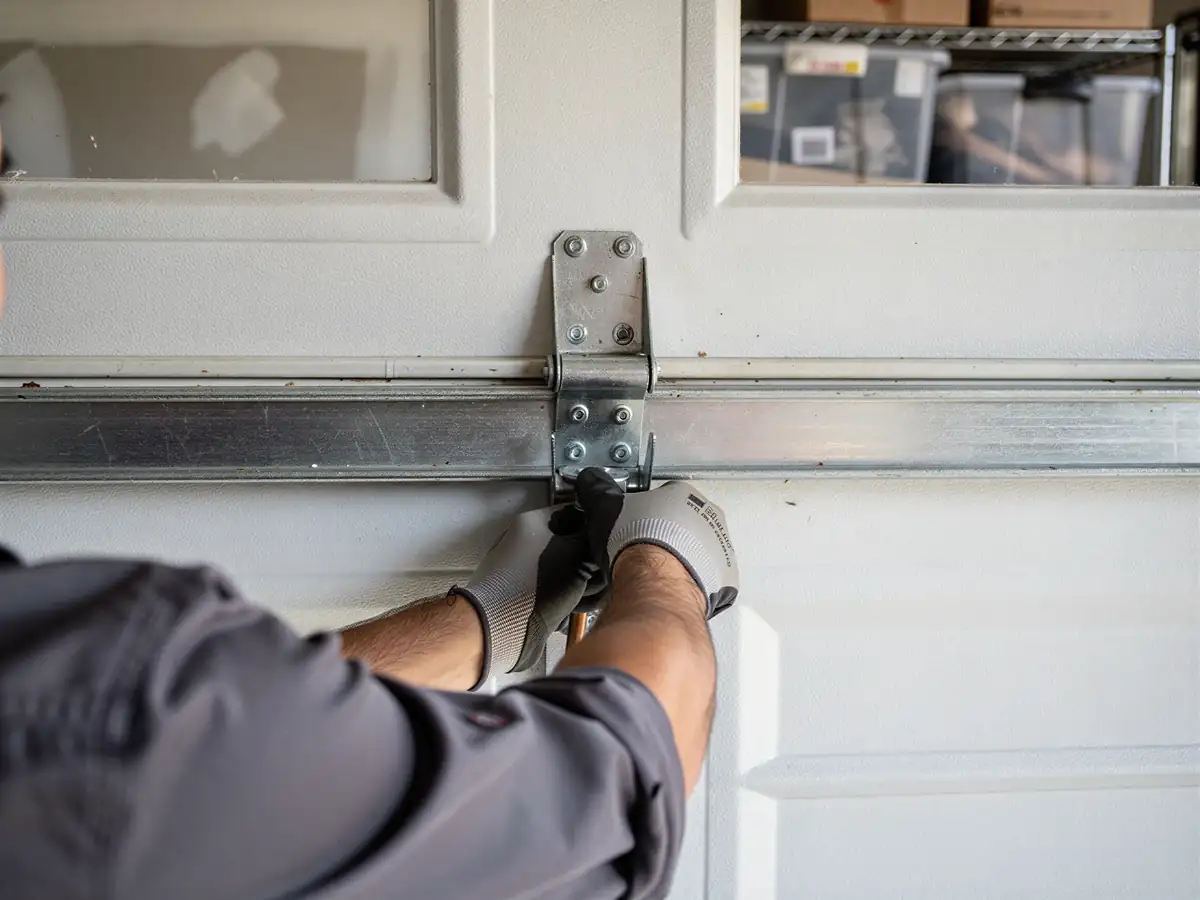
Don't touch a torsion spring yourself - the tension stored in one of those coils can break a finger or worse, and it's not a job where a tutorial substitutes for the right winding bars and a clamp. Clearing a stuck roller out of the track, tightening loose hardware, or replacing a disconnect cord are reasonable for a homeowner to handle. Anything involving the spring, the cable drums, or the torsion bar itself is a call-us job, especially on an opener or hardware set old enough to be original to a 1970-era house.